
Balenian Rhapsody: From Nephop to Singha Durbar
Devendra Subedi
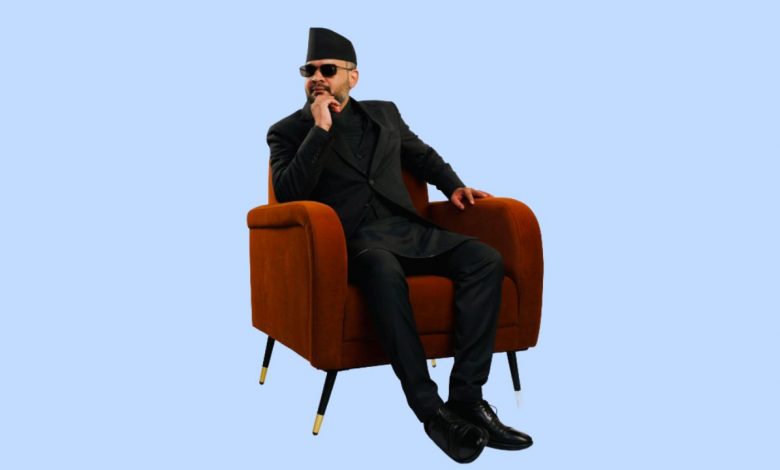
March 2026 will be recalled in Nepal’s political history forever. For decades, the halls of Singha Durbar were a revolving door for the same few faces. But today, the “Old Guard” has been dismantled.
With a near two-thirds majority, Rastriya Swatantra Party (RSP) has swept the nation. At the center of this political tsunami is a 35-year-old structural engineer and rapper. A man who didn’t just win an election, but led a revolution of the youth.
Born in 1990 to a Maithili-speaking family, Balendra Shah’s roots trace back to Mahottari, but his life was forged on the streets of Kathmandu.
To the older generation, he was an engineer with a Master’s in Structural Engineering. To the youth, he was Balen, a king of the “Nephop” scene.
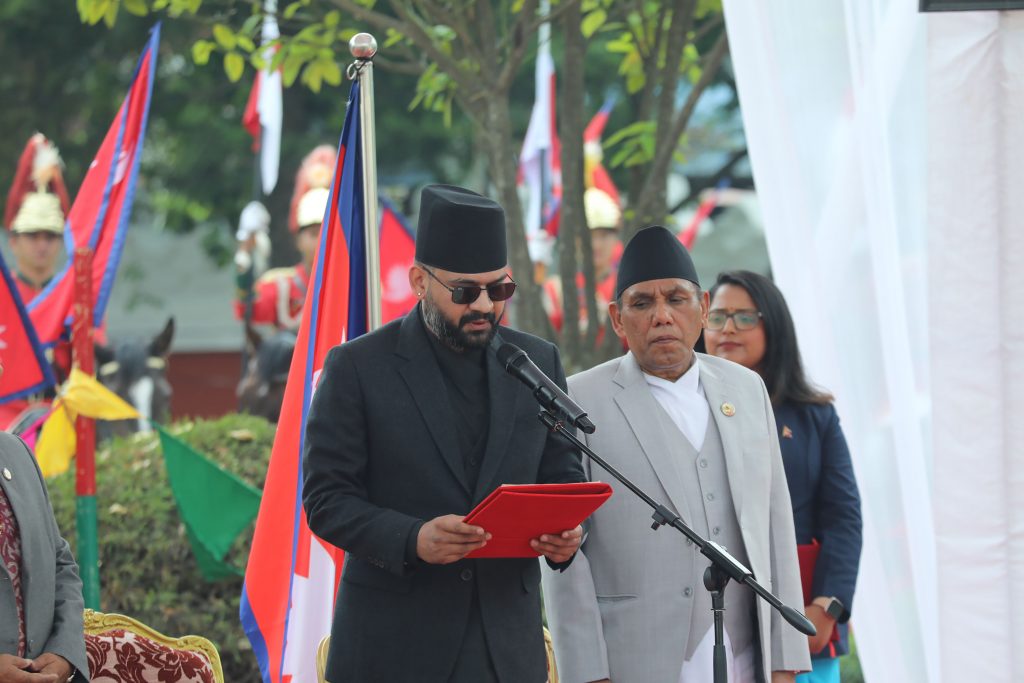
Unlike traditional politicians who spent years in underground party cadres, Balen built his followers through social media and music. His lyrics weren’t just about rhythm; they were rebellion against the decay of the system.
Balen’s engineering background gave him the aura of a ‘problem solver,’ while his rap persona gave him the ‘cool’ factor. It was the perfect hybrid for a frustrated electorate.
In 2022, Balen shocked the world by winning Federal Capital Kathmandu’s Mayorship as an independent candidate. This was his laboratory. He didn’t just talk about change; he brought out the bulldozers, literally.
Restoration of heritage sites, digitalizing municipal services, and clearing the city’s footpaths were some of the visible works of Balen the mayor.
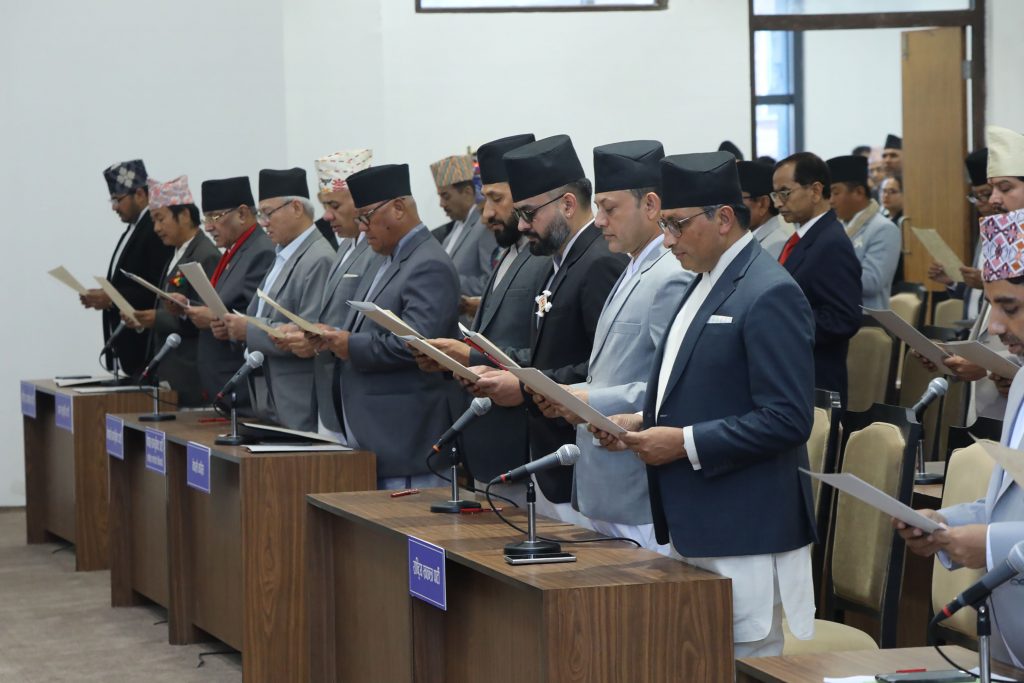
Critics called him “populist” and “authoritarian” for his aggressive demolition drives and his defiant stance against the central government.
By 2025, it was clear that the mayor’s chair was too small for Balen’s ambitions. The “Balen Effect” had outgrown the valley.
Late 2025 saw Nepal’s “Gen Z Revolution.” Fueled by economic stagnation and corruption scandals, the youth took to the streets. When the dust settled, an interim government under former chief justice Sushila Karki was formed, and early elections were called for March 2026.
Balen took the ultimate gamble. He joined the Rastriya Swatantra Party, took the leadership mantle, and headed to Jhapa-5, the home ground of former PM KP Sharma Oli.
The results were a bloodbath for the established parties. Balen didn’t just win; he decimated the competition, securing a mandate for change that Nepal hasn’t seen in decades.
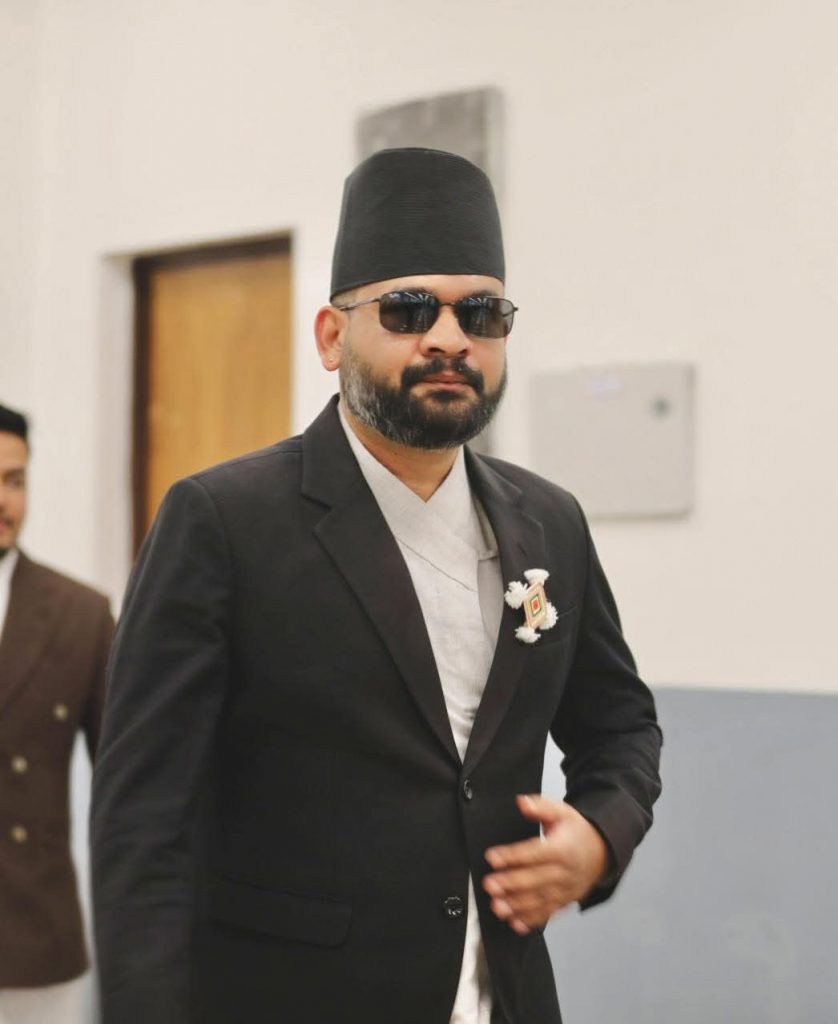
What does a Balen Shah premiership look like? His platform is likely to be built on these three pillars:
- Replacing political appointees with subject-matter experts.
- Reducing the brain drain by creating tech hubs and revitalizing local agriculture.
- Moving away from being a “buffer state” to becoming a bridge between India and China.
Balen, the Prime Minister, will have no luxury of a prolonged honeymoon period. The rapper turned politician inherits an economy in flux and a bureaucracy that is resistant to change.
Balen’s biggest challenge isn’t going to be the opposition, it’s the massive weight of expectation of over 30 million people and the overwhelming majority to his party RSP.
As the rapper who once rhymed about the struggles of the street takes the oath to lead the nation, the signature sunglasses may stay on, but the entire world is watching with clear eyes.
Balen Shah is no longer just a mayor or a musician. He is the Prime Minister. And for Nepal, the music has just started.


Comments