
Government Unveils Reform-Focused Policy and Programme for FY 2026/27
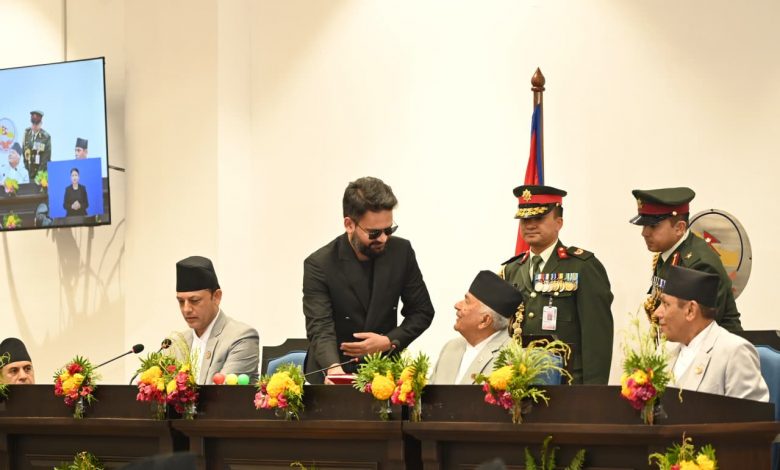
The Government of Nepal has unveiled an ambitious 100-point economic reform roadmap under its policies and programmes for the fiscal year 2026/27, outlining a broad strategy aimed at transforming the country’s economy and governance system.
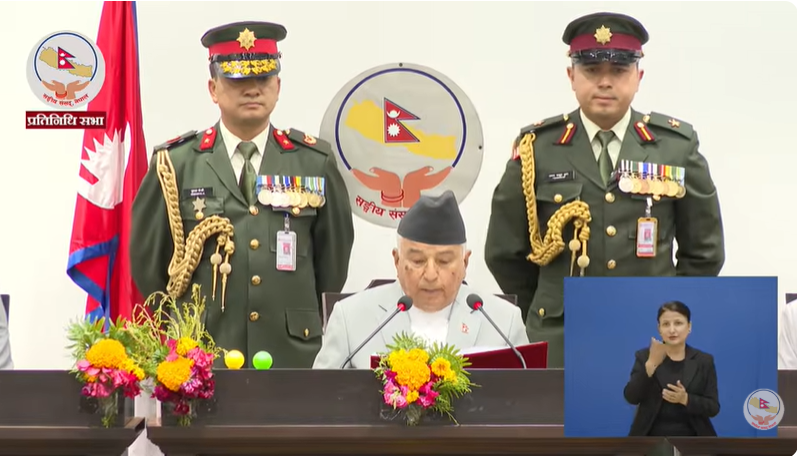
Presenting the policy framework at a joint session of the Federal Parliament, President Ram Chandra Paudel outlined the government’s long-term vision of achieving an average seven percent real economic growth over the next decade through a new phase of reforms focused on productivity, investment and institutional efficiency.
A major priority of the roadmap is the transition toward a fully digital and transparent economy.
The government announced plans to integrate all financial transactions into digital platforms as part of a gradual move toward a nationwide cashless system.
Tax administration reforms will also be introduced to reduce revenue leakage, automate VAT refunds and simplify tax structures to encourage voluntary compliance.
To strengthen fiscal discipline, the policy proposes mandatory valuation lists to control under-invoicing, consolidation of scattered taxes and fees, and a zero-delay procurement system aimed at improving public spending efficiency.
The government has also identified the information technology sector as a national strategic industry. Plans include the development of data centres, digital parks and the expansion of remote work and digital nomad opportunities.
A Nepal Investment Visa will be introduced to attract high-value foreign investors, while participation in the capital market will be expanded through non-resident Nepalis and pension funds.
In the energy sector, the government has set a target of generating 30,000 megawatts of hydropower over the next decade.
The policy also proposes a shift in compensation mechanisms for project-affected communities, moving from cash-based payments toward equity participation in hydropower projects.
The policy framework also seeks to reshape Nepal’s labour market through digital transformation and legal reforms aimed at reducing dependence on remittance-based income by enabling international remote work opportunities from within Nepal.
In tourism and infrastructure, the government has prioritised the full operation of Gautam Buddha International Airport and Pokhara International Airport, expansion of online visa services, and preparations for the “Visit Nepal 2085” campaign, with emphasis on religious and adventure tourism.
Additional initiatives such as green market villages, IT parks and guaranteed minimum support prices for agricultural products have also been included in the policy package to boost domestic production and employment generation.
The government says the reform agenda represents a comprehensive effort to accelerate economic transformation, improve governance efficiency and position Nepal for long-term sustainable growth.


Comments