
Red Panda Health Study Begins in Myagdi
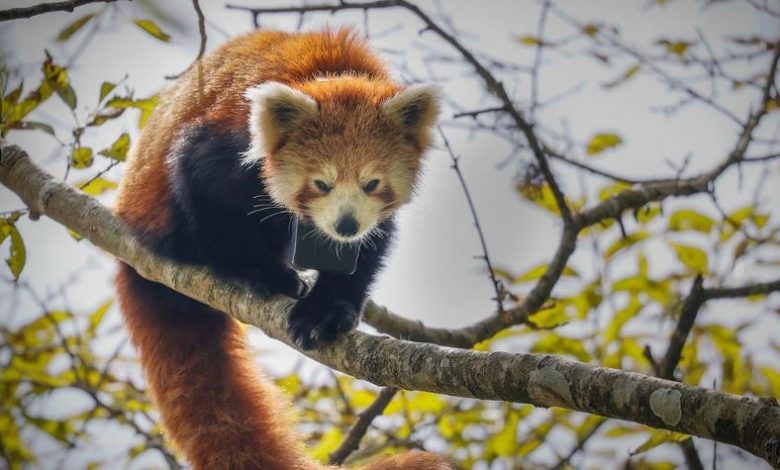
A health study of the endangered red panda (locally known as Habre) has begun in the Jaljala and Dhorpatan Hunting Reserve areas of Dhaulagiri Rural Municipality in Myagdi, focusing on fecal examination to assess the species’ health condition.
The study is being carried out by the Biodiversity Conservation Society Nepal (BIOCOS) with support from the donor agency Toledo Zoo.
The research covers Jaljala, Muna, Mareni and parts of the Dhorpatan Hunting Reserve, where red panda habitats have been identified.
BIOCOS Programme Officer Pawan Rai informed a technical team has been deployed to analyze red panda fecal samples to assess their health status and support conservation efforts.
Rai shared, “The study is focusing on parasites in the stomach and intestines of red pandas. We are also analyzing data from 12 camera traps installed at fecal detection sites to estimate their population.”
Red pandas, which live at altitudes between 2,200 and 4,500 metres, are listed as endangered wildlife species in Nepal.
According to Rai, earlier camera trap monitoring in Jaljala recorded red pandas in two out of three installed cameras, with an estimated population of six to 25 of this elusive mammal in the area.
Locals have previously reported sightings of red pandas in Gurjaghat of Dhorpatan Hunting Reserve and the Banchedanda area of Munna community forest.
Earlier studies supported by the WWF and other conservation partners also confirmed their presence through fecal evidence in Mareni.
Red pandas are nocturnal animals that rest in tree hollows during the day and feed mainly on bamboo shoots and other vegetation.
Suitable bamboo and forest habitats are available in Gurja, Lulang and Munna areas.
Recent estimates suggest Nepal is home to around 500 to 1,000 red pandas. The species is found only in Nepal, China, India, Bhutan and Myanmar.
Nepal is home to red pandas of the species Ailurus fulgen.
Under the National Parks and Wildlife Conservation Act, 2029 BS, red pandas are classified as a protected species. Poaching is punishable by one to ten years in prison, a fine of Rs 100,000 to Rs 500,000, or both. (RSS)


Comments