
Nepal seeks grant-based climate finance, warns against debt burden at COP31

Nepal has called for predictable, accessible and grant-based climate finance for countries vulnerable to climate change, warning that efforts to build climate resilience should not add to their debt burden.
Addressing a high-level event on climate finance needs and access for Small Island Developing States (SIDS) and Least Developed Countries (LDCs) at the UN Climate Change Conference (COP31) in Antalya, Türkiye, Foreign Minister Shisir Khanal urged the international community to simplify funding procedures and ensure direct access to financial resources.
Khanal said countries such as Nepal, which contribute negligibly to global greenhouse gas emissions, were bearing severe climate impacts and should not have to rely on additional debt to address them.
Referring to the August 26 Himalayan disaster in Nepal, which he described as a “Himalayan tsunami”, Khanal said the floods triggered by the sudden collapse of glaciers and rocks had caused extensive human and economic losses.
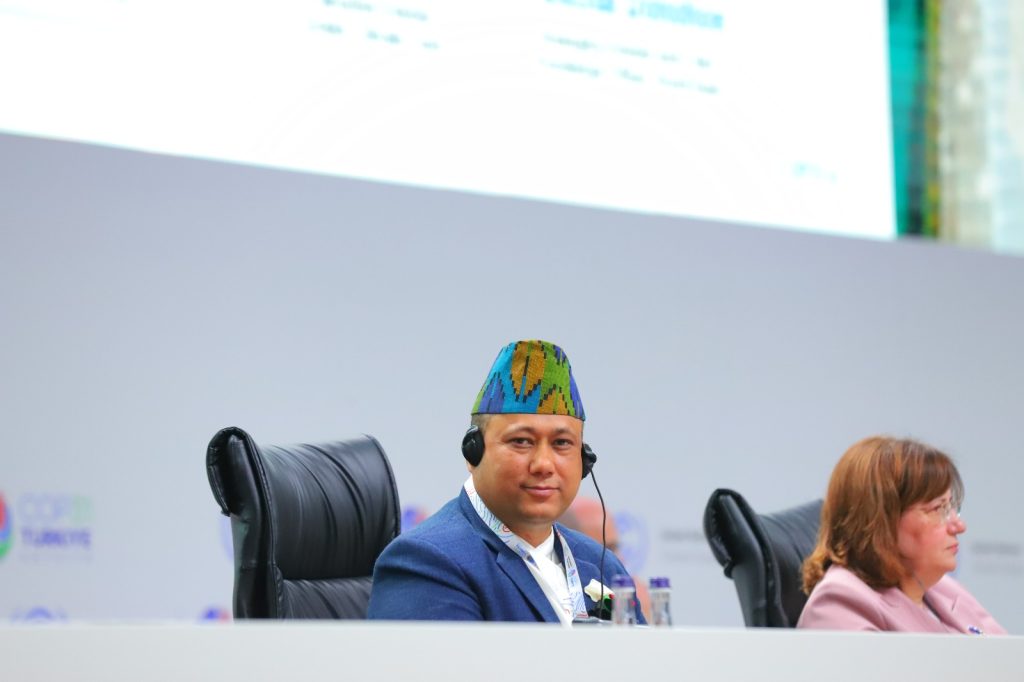
He said more than 1,400 people had died and over 5,000 remained missing, adding that the final toll could exceed 6,000. The disaster had also damaged settlements, critical infrastructure and assets equivalent to around 10 percent of the national economy, he said.
Khanal outlined three areas for reforming climate finance: prioritising public and grant-based funding, simplifying access to existing climate finance mechanisms, and accounting for the specific geographical and climate vulnerabilities of mountain countries, LDCs and small island states.
He called for easier access to funding through mechanisms including the Green Climate Fund, Adaptation Fund, Fund for Responding to Loss and Damage (FRLD) and Least Developed Countries Fund.
“Climate resilience must not come at the cost of debt sustainability. We need predictable public grants and highly concessional resources, not commercial loans,” he said.
Khanal also welcomed the advisory group’s initiative proposed by the COP31 presidencies of Türkiye and Australia to support LDCs and small island states, stressing that the process should be inclusive, transparent and guided by the needs of affected countries.
He said the effectiveness of climate finance should be measured by the protection it provides to people, the resilience it builds in communities and the development it safeguards.



Comments