
Indian Railways Approves Weekly Train Service Connecting Janakpur with Ayodhya
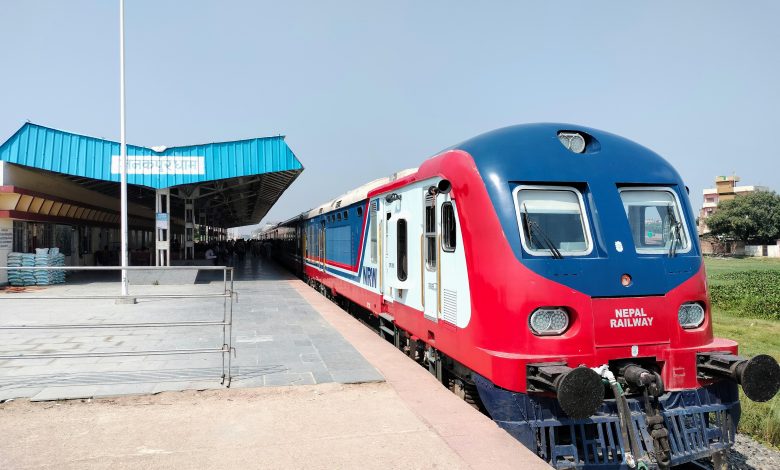
Indian Railways has approved the introduction of a weekly train service connecting Janakpur Dham in Nepal with Ayodhya in the Indian state of Uttar Pradesh, in a move aimed at strengthening cross-border connectivity and promoting religious tourism between the two neighbouring countries.
According to a press release issued by India’s Ministry of Railways and published by the Press Information Bureau (PIB), Delhi, on November 14, the proposed service will cover approximately 604 kilometres, linking two destinations closely associated with the Ramayana tradition.
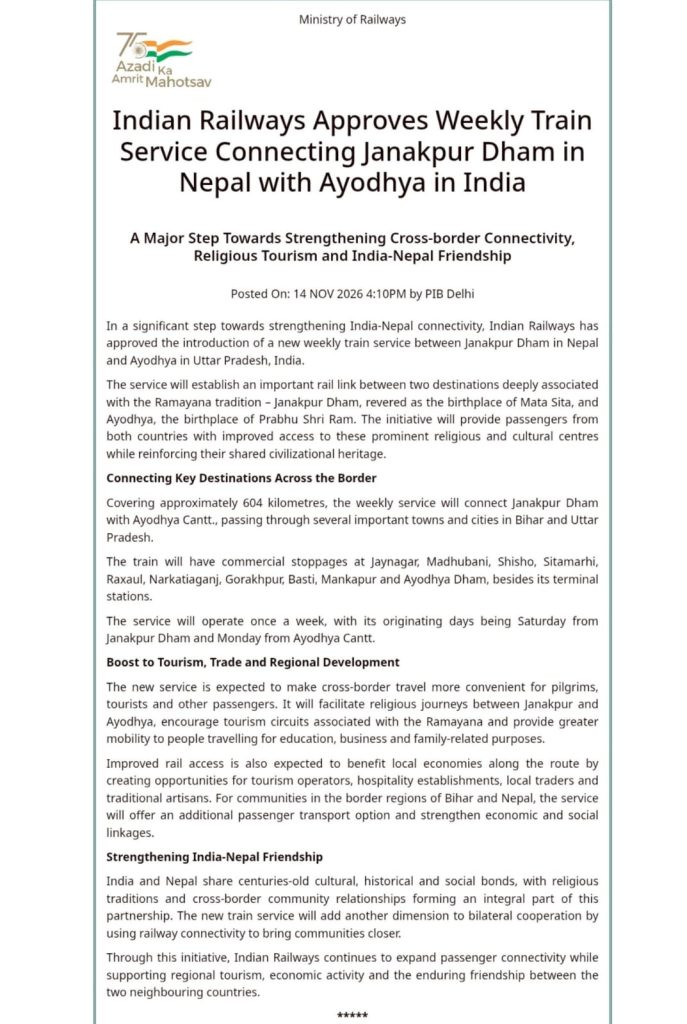
Janakpur Dham is revered as the birthplace of Goddess Sita, while Ayodhya is regarded as the birthplace of Lord Ram. The new rail connection is expected to facilitate religious pilgrimages and improve access to major cultural and religious destinations in both countries.
The weekly service will originate from Janakpur Dham on Saturdays and from Ayodhya Cantt on Mondays. Along the route, the train will make commercial stops at Jaynagar, Madhubani, Shisho, Sitamarhi, Raxaul, Narkatiaganj, Gorakhpur, Basti and Mankapur, as well as Ayodhya Dham, besides its terminal stations.
The initiative is also expected to support tourism, trade and regional economic activities by improving passenger mobility across border communities in Nepal and India.
According to the Ministry, enhanced rail connectivity could create opportunities for tourism operators, hospitality businesses, local traders and traditional artisans along the route. It is also expected to benefit people travelling for education, business and family-related purposes.
The proposed service adds another dimension to the longstanding cultural and historical ties between Nepal and India, with religious traditions and cross-border community relationships forming an important part of bilateral relations.
The announcement comes amid continuing efforts by the two countries to strengthen connectivity and expand cooperation in tourism and regional development.



Comments