
Nepal Raises Tobacco Tax by 10%
Sabika Shrestha
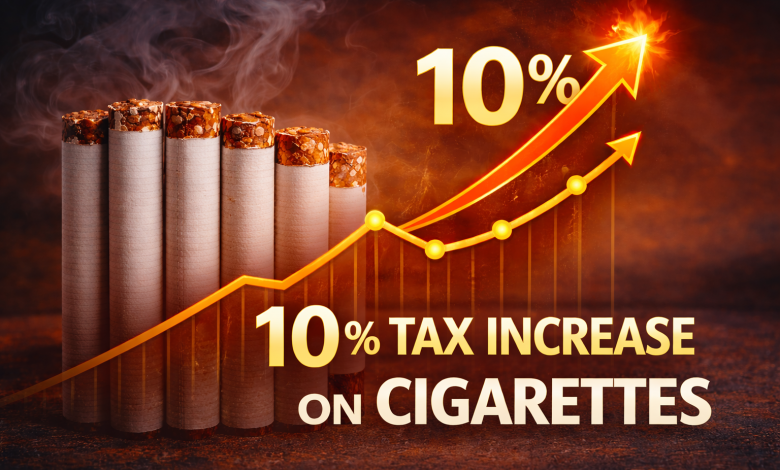
Nepal Government has announced a 10 percent increase in taxes on cigarettes as part of the national budget for the fiscal year 2026/27, in a move positioned as both a public health intervention and a revenue-boosting measure.
During the budget presentation in the Federal Parliament on Friday, Finance Minister Dr. Swarnim Wagle stated that the policy aims primarily to curb harmful consumption, rather than simply increase government revenue.
Alongside cigarettes, excise duties on alcohol and beer have also been raised, signaling a broader government shift toward reducing the consumption of tobacco and alcohol products, he added.
Officials argue that price increment remains one of the most effective deterrents, particularly among young people and low-income groups who are more sensitive to cost changes.
The policy is also expected to align fiscal tools with long-term health outcomes.
Public health concerns remain central to the decision.
Health experts have warned that Nepal is increasingly burdened by non-communicable diseases such as cancer, cardiovascular conditions, and chronic respiratory illnesses, many of which are directly linked to tobacco and alcohol use.
In such context, the tax hike is being viewed as part of a preventive health strategy aimed at reducing future healthcare costs and disease prevalence.
Minister of Health and Food Hygiene, Nisha Mehta emphasized the scale of the problemstating that the industry is increasingly targeting young people through flavored and visually appealing nicotine products, often promoted through social media.
Minister Mehta further highlighted that nearly 29 percent of people in Nepal still use tobacco products and more than 39,000 deaths occur annually due to related illnesses.
While most of the public health advocates have largely welcomed the tax increase, some argue that a 10 percent hike may not be sufficient to significantly reduce consumption among habitual users.
It is also cautioned that without strong enforcement, higher taxes could encourage illicit trade and smuggling, potentially weakening both health and revenue goals.
The government has also emphasized stricter enforcement of tobacco control laws and improved regulation of alcohol production.
Officials have called for coordinated efforts across all levels of government, civil society, and media to address what they describe as a growing and evolving public health threat.

Comments