
Nepal Marks 11 Years of Constitution
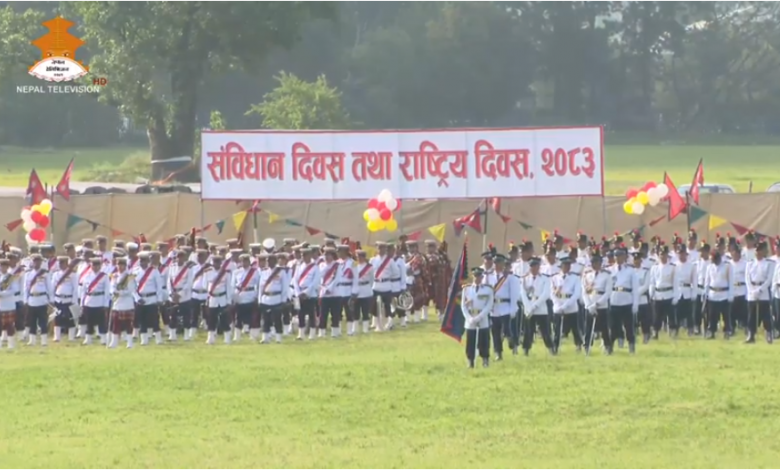
Nepal is marking the 11th anniversary of its Constitution, promulgated through an elected Constituent Assembly on September 20, 2015.
Observed as both Constitution Day and National Day, the anniversary highlights the political and institutional changes introduced by the document, while also renewing debate over its implementation and possible reform.
The Constitution established Nepal as a federal democratic republic and formally defined the powers of the federal, provincial and local governments. It guarantees fundamental rights and places sovereignty and state authority in the hands of the Nepali people.
Federalism, republicanism, democracy, inclusion and proportional representation form key elements of the constitutional system.
The Constitution has been amended twice since its promulgation first in February 2016 and again in June 2020.
Debate over further amendments has intensified over the past year, particularly following the political changes that followed the Gen-Z protests of September 2025.
The issue of constitutional reform had also been included in an agreement between the Nepali Congress and the CPN-UML when they formed the previous government, although the proposal did not advance during their tenure.
Following the formation of the current government, a task force was established to prepare a discussion paper on possible constitutional amendments.
The panel, coordinated by Prime Minister Balendra Shah’s political adviser Asim Shah, submitted its report to the Office of the Prime Minister and Council of Ministers in July.
According to the government, the task force held discussions with former political leaders, constitutional experts, legal scholars, former judges, government officials, civil society representatives and other stakeholders.
It also received tens of thousands of public suggestions electronically.
The report covers issues including the electoral system, judiciary, federalism, constitutional bodies and the structure of governance.
The government had yet to make the full report public as of early September.
Any constitutional amendment must follow the procedure laid down in Article 274 of the Constitution.
The Supreme Court’s Constitutional Bench has also recently intervened in the amendment process, issuing an interim order against the implementation of two provisions of the House of Representatives Rules, 2083.
The court ordered that Rule 140(11) and Rule 259 not be implemented for the time being and held that constitutional amendments require a two-thirds majority separately in both houses of the Federal Parliament.
Another provision that has attracted attention is Article 265.
It requires the Federal Parliament to review, after 10 years, the constitutional commissions established under the relevant part of the Constitution. It does not require a general review of the entire Constitution.
Since the Constitution came into force, Nepal has conducted multiple elections at federal, provincial and local levels, placing the institutions created under the new constitutional order into operation.
Nepal’s constitutional history, however, stretches back decades.
Its first constitutional document, the Government of Nepal Act, was introduced in 1948. It was followed by constitutional arrangements in 1951, 1959, 1962, 1990 and the Interim Constitution of 2007 before the present Constitution was promulgated in 2015.
Eleven years after its adoption, Nepal’s Constitution remains the foundation of the country’s federal democratic system.
This year’s anniversary comes at a time when the focus is increasingly shifting from the Constitution’s promulgation to its implementation and to the political and legal process through which any future changes may be made.

Comments