
Kamaiya Families Turn Riverbeds into Livelihoods
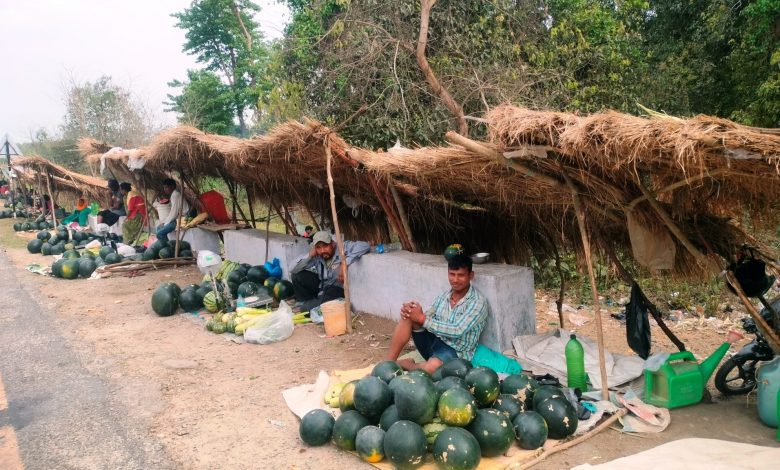
Along the East-West Mahendra Highway in Krishnapur Municipality–2, vehicles often slow down briefly at the Banahara area as passengers spot small roadside huts covered with straw. Inside, neatly arranged green cucumbers, watermelons, musk melons, and bottle gourds catch the eye of weary travellers seeking relief from the summer heat.
Many stop to buy fresh produce before continuing their journey. This small roadside trade has become a lifeline for former Kamaiya (Freed-Laborers) families, linking survival with dignity and growing self-reliance.
For the past four years, Neeraj Rana, a resident of the local former Kamaiya settlement in Krishnapur Municipality–2, has been earning a living by selling vegetables and fruits grown on the Banahara riverbed. His income from the roadside stall supports his household expenses.
The government had provided his family with five katthas of land during resettlement nearly three decades ago, where they built a basic home. But today, the riverbed farming has become their primary source of income.
From Magh (January–February), Rana and his family cultivate cucumbers, watermelons, musk melons, bottle gourds, and bitter gourds on the riverbank, while maize is grown near their home. The produce is then sold directly along the highway.
“We sell around Rs 5,000 worth of produce daily,” Rana said. “During the season, earnings reach between Rs 50,000 to Rs 100,000. This is what sustains our family.”
More than 80 households in the Banahara former Kamaiya settlement are now engaged in riverbed farming. Locals say the practice of cultivating and selling produce along the highway has been going on for about six years.
Farmer Shivlal Rana has leased land and riverbeds for cultivation. This year, he planted watermelon on seven katthas and bottle gourd, sponge gourd, and bitter gourd on 10 katthas.
“Last year we suffered losses because watermelons didn’t sell well, so this year we planted fewer and focused more on cucumbers,” he said. “We can earn up to Rs 500,000 in a good season, saving around Rs 200,000 to Rs 300,000.”
For many families, farming remains the only source of income.
“There is no other option for livelihood,” he added. “We must sustain ourselves for the entire year from this.”
Along the highway, cucumbers are sold at Rs 40 per kg, watermelons at Rs 25 per kg, bottle gourds at Rs 60 per kg, and bitter gourds at Rs 50 per kg. Fresh corn is sold at Rs 15 per cob.
During the hot season, many travellers stop in Banahara to buy fresh produce. Driver Ramesh Bohara said he often purchases fruits and vegetables here.
“Fresh vegetables and fruits are available right on the highway,” he said. “The cucumbers and watermelons are very tasty, and buying from local farmers also supports them.”
Despite its benefits, roadside trading comes with safety risks. Farmers say the proximity to fast-moving traffic makes the work dangerous.
Farmer Dhirendra Rana stressed the need for a safer marketplace. “If the municipality could build a proper selling area, it would make things much easier,” he said. “It would reduce the risk of accidents, but so far no initiative has been taken.”
Farming also requires significant investment. Farmers say starting cultivation costs between Rs 30,000 to Rs 100,000, with expenses on seeds, fertilisers, irrigation, and labour.
“It is not easy work,” said farmer Anita Rana. “It requires day and night effort. Only with proper care do we get good production.”
For many former Kamaiya families, riverbed farming has changed daily life. Earlier, they relied on wage labour in different villages; now, they can sustain themselves through their own production.
“The money from farming helps us buy rice, salt, and oil,” said local resident Jogmani Chaudhary. “It covers household needs.”
According to residents, the riverbed has become a symbol of hope and resilience. “Our hard work here never goes to waste,” said Bira Rana. “If we work properly, we earn well and sustain our families.”
Despite progress, farmers say government support in irrigation, seeds, subsidies, and market management remains limited. Most families still rely on their own investment and labour.
“If the government provides even a little support, we could increase production,” said Lila Badayak. “Better market facilities and agricultural assistance would improve our income.”
Today, the Banahara riverbank has become a foundation of dignity, independence, and survival for former Kamaiya families, who have turned their labour into livelihood and hope. NtvNews



Comments