
Himalayan Glaciers Near Tipping Point, Warns ICIMOD
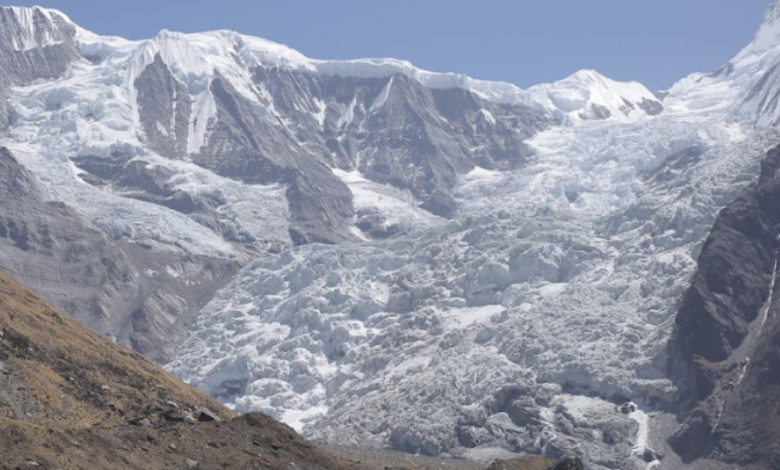
Glaciers in the Hindu Kush Himalaya are melting faster than ever, threatening water supply, farming, and energy in the region, according to the HKH Glacier Outlook 2026 by the International Centre for Integrated Mountain Development (ICIMOD)
The report, based on 50 years of observations, shows that nearly 9 out of 10 years since 1974 recorded glacier ice loss.
On average, glaciers are losing 0.62 meters of ice per year, and the melting rate has almost doubled since 2000. Overall, the Himalaya has lost about 24 meters of ice over the last five decades.
The Hindu Kush Himalayan region often called the “Third Pole” feeds major rivers like the Indus, Ganga, and Brahmaputra, which provide water for nearly two billion people downstream.
Scientists warn that continuing ice loss could affect water availability, farming, and hydropower in South and East Asia.
In Nepal, glaciers are vital for river flows, but faster melting is changing seasonal water patterns and increasing the risk of glacial lake floods, which can threaten mountain communities and towns downstream.
The report notes that only 38 out of about 63,700 glaciers are regularly monitored, meaning there is still a lot we don’t know.
Seven glaciers, including Mera, Yala, and Rikha Samba in Nepal, are important “benchmark glaciers” that help scientists track glacier changes.
ICIMOD warns that some Himalayan glaciers may be approaching tipping points, where ice loss could continue even if temperatures stop rising.
Icimod calls for better monitoring, regional cooperation, and climate action to protect glaciers and the millions of people who depend on them.




Comments