
RSP’s Women Lawmakers to Dominate in PR Seats: More Than 80% Mandatory
Sabika Shrestha
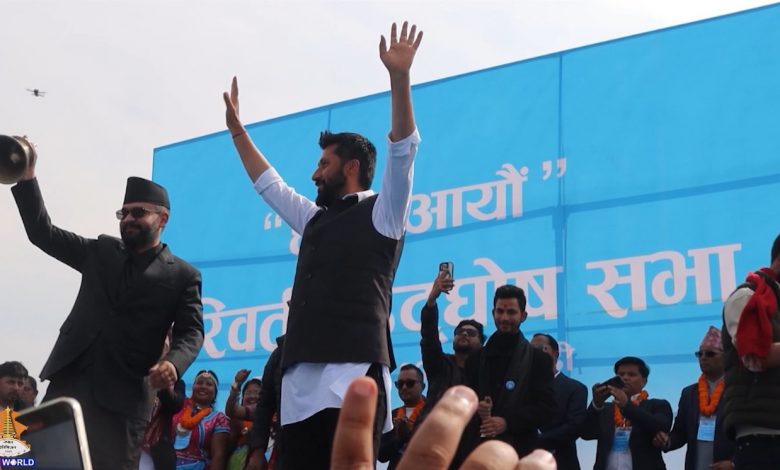
Rastrita Swantra Party RSP has almost bagged 2/3rd majority in Nepal’s House of Representatives with the conclusion of the vote counting.
RSP, the agent of the sweeping mandate, will not only have the burden of steering the country ahead but the party’s women lawmakers will also have to be the flagbearer in their gender in policy making.
The party has secured 125 seats under the first past the post system in which 13 are women candidates.
Under Nepal’s constitution, every party must ensure at least 33 percent combined women representation in the two houses of federal parliament.
Interestingly, the party with almost two third majority in the lower house will have no representation in the National Assembly.
This means, RSP will have to manage all the mandatory numbers of inclusive and proportional representation from within the House of Representatives.
As per the projection, RSP will have 58 seats under the PR system making it a collective strength of 183 in the lower house.
Since only 13 of the 183 possible House of Representatives members of the party are women, the party will have to nominate women candidates in 48 of the 58 PR seats to maintain the 33% women representation criteria.
In that case, RSP will have altogether 61 women lawmakers in the lower house of parliament.
Moreover, the selected women candidates must meet the cluster-based distribution mandated by the law provisioned to ensure both gender balance and social inclusion.
Election Commission Assistant Spokesperson Kul Bahadur GC says,“There should be certainty of 33% women’s representation in the federal parliament. At least 50% women candidates from each and every cluster have been ensured or we have collected 50% women candidates. So out of 50%, they can ensure 33% women representation. They should respect the inclusion clusters—for example, women 33% women, then accordingly Dalit, Janajati, backward region, Muslim, Khas Arya. According to their number of seats, they have to submit their candidates list. Otherwise, the Election Commission makes them revise those lists again.”
RSP meanwhile sees this mandatory provision and need to nominate more than 80% women under the PR system as an opportunity to balance the democracy by promoting women representation.
RSP Leader Dr. Tosima Karki added, “The constitution has demanded 33% representation of women in the parliament itself, right? But usually what happens is they are coming from the proportional set, not from the direct election. But the Rastriya Swatantra Party had given the maximum number of candidacy from the female side in direct election, which was 16, which is itself less in number, only 11%. But still, out of 16 women, 13 of them have brought a massive landslide victory, no? They are not only victorious, but landslide victory. So I think this is a good realization that the women era, women leadership era has started. People have started accepting women leadership. Coming to gender equality, 33% is itself not enough. It should be 50%, no? So we will definitely be advocating for that.
Within the party even the male winners are seeing this as the fresh mandate of the people and are eager to execute it according to constitutional provisions.
RSP Leader Bishwaraj Pokharel says,“The people gave nearly a two-thirds majority vote. This means the people have great faith and trust, believing that this change will bring a significant transformation to the life of the country and its citizens. Yesterday’s experience showed that without a stable government, development does not happen, and the journey toward prosperity does not move forward. Therefore, this time the people have given us a mandate, saying, ‘We are giving you a stable government and stable leadership; now, go to work.’ Having received this mandate, we must work actively to establish good governance, control corruption, and investigate past instances of corruption in line with the people’s expectations. If we fail to work in these areas, the people will lose faith in us again.”
The Election Commission is expected to submit the final report of the March 5 election to President Ram Chandra Paudel within a week as the counting of votes has concluded.
Public expectations are that the robust presence of women in the lower house of the parliament will not only to fulfill the constitutional provisions but also to make the representation inclusive and proportional in real terms.


Comments