
Swastima Khadka: Redefining Nepali Cinema Through Character-Driven Roles
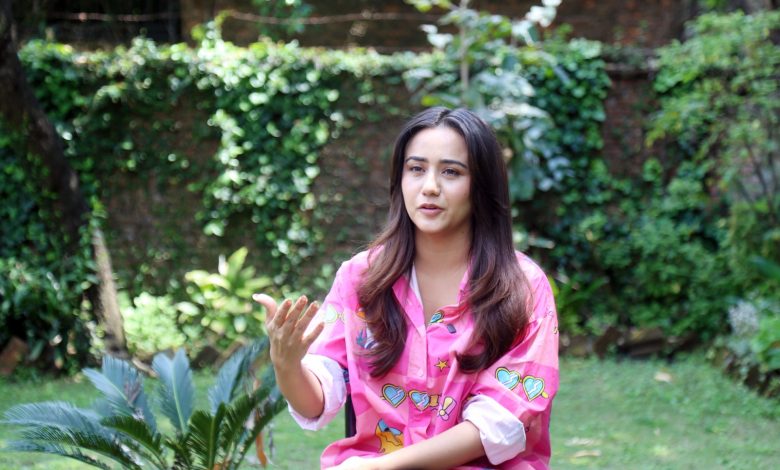
Actress Swastima Khadka has, in recent years, earned recognition as a performer known for deeply character-driven roles.
She began her acting career with Hostel Returns, but it was the hit song Kutu Ma Kutu that brought her widespread popularity among general audiences, earning her the popular tag “Kutu Ma Kutu girl.”
Beyond her image as a screen beauty, Khadka has steadily established herself in serious, performance-oriented roles.
Her portrayal of a tempo driver in Bulbul and a strong character speaking in a Sudurpaschim dialect in Chiso Manchhe helped cement her identity as a serious actor capable of immersive performances.
Her latest film, Lalibazar, has recently been generating strong public interest. The film, which begins screening from today, features Khadka in the role of a mother. A premiere was held in Kathmandu on Saturday evening in the presence of artists, filmmakers, and media professionals. In the film, she plays a woman from the Badi community, a role that first drew attention through the film’s striking promotional poster, which featured a pregnant woman standing at a doorway, adorned in traditional attire.
Below are edited excerpts from her conversation:
What drew you to acting?
I think it started with television. When I was young, we used to watch TV serials as a family, and we would imitate the characters we saw. That may have sparked my interest in acting.
How did your film journey begin?
I was still studying when I participated in a beauty pageant, Miss Teen. Later, I did modelling and some music videos. During that time, producer Sunil Rawal offered me a film role. I hadn’t planned to become an actor, but I met him, and during discussions I attended a workshop environment for films. That experience motivated me, and I eventually joined Hostel Returns.
How did you get into the song Kutu Ma Kutu?
By then, I was already slowly entering films, and I was married to director Nischal Basnet. He was involved in the film Dui Rupaiyan, which featured the song Kutu Ma Kutu. I was offered a guest appearance in the song. It was a time when folk music was increasingly being used in films. We shot it in Itahari. It was challenging due to personal circumstances, but the song eventually gave me wide recognition.
What made you accept Bulbul?
The offer came through my husband. The director had studied filmmaking with him. People around me said the character might not suit me, but I took it as a challenge. I learned to drive a tempo in the morning and attended workshops in the afternoon to prepare for the role.
What did Bulbul give you?
It introduced me to a completely different lifestyle. It was a new experience that expanded my understanding of life and performance.
Your role in Chiso Manchhe was also widely appreciated.
After Bulbul, Chiso Manchhe became another defining role. I learned the dialect of Sudurpaschim for the film. Even today, I can recognize people from that region just by speaking with them. It left a strong impact on me.
Why did you move into film production?
I didn’t initially plan to become a producer. I was more interested in directing in the future. But when I came across the script for Behuli from Meghauli, I was drawn to it. My husband also showed interest. We felt the story needed proper support to reach audiences, so we got involved in production.
Why did you audition for Lalibazar?
I had never done auditions before. But I don’t see auditions as unnecessary. For Lalibazar, the story itself attracted me. I did a look test to better understand the character. The positive response to the first poster made us more responsible in our approach.
We visited Badi communities, conducted field research, and spoke directly with women from the community. We found that much of the available digital information was limited or misleading. This film may also serve as a kind of documentation for future generations.
What is Lalibazar about?
The film tells the story of a mother and daughter, where the mother belongs to the Badi community. It portrays a woman’s struggle with society, her community, and the state for her daughter’s future. It highlights hardship and resilience without intending to harm any community.
Tell us about your character.
I play a character named Madhubala. We developed the role after speaking with Badi women in Bardiya. Our director Yama Thapa, who grew up around the community, also contributed deeply to the character design. The story reflects her struggle for survival and dignity.
How important is Lalibazar for you?
It is one of those films I will remember for a long time. Even the first poster created strong discussion. It showed a pregnant woman standing at a door, unable to rest for her unborn child. It clearly signalled a mother’s story. I believe Lalibazar, along with Bulbul and Chiso Manchhe, will remain important milestones in my career for years to come. NepalTVOnline

Comments