
New Zealand Counts the Votes in Knife-Edge Poll
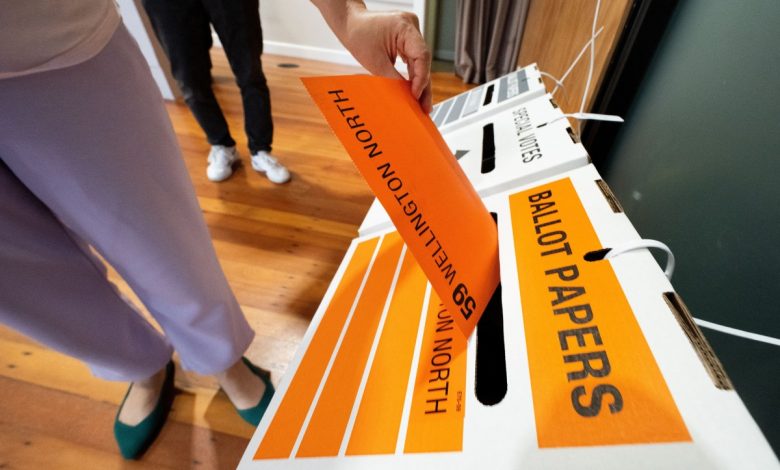
New Zealand began counting the votes Saturday in one of the closest elections in its history, with none of the parties expected to secure a majority of seats after a campaign dominated by worries over rising costs of living and the economy.
Kiwis are struggling to make ends meet — the price of basic goods remains stubbornly high and unemployment at its highest in more than a decade.
The war in the Middle East and the subsequent global fuel shock have been widely blamed for the hit to New Zealand’s trade-dependent economy.
Prime Minister Christopher Luxon is hoping his right-wing coalition can cling to power with promises of no new taxes, after three fractious years in office, two failed bids by his own National Party to oust him as leader and an economy in the doldrums.
He has told AFP he sees himself as a “super salesman” for the country and vowed to sign more free trade deals if re-elected.
Former premier Chris Hipkins’ centre-left Labour have promised help with living costs, from free doctor’s visits and prescriptions to a cap on public transport fares. He said Friday he was sure his party would “exceed expectations”.
But neither is expected to win enough seats in New Zealand’s parliament to govern alone, focusing intense attention on the country’s minor parties, in particular the upstart centrist Opportunity Party.
Under the country’s mixed-member proportional representation (MMP) system, voters must tick two options — a general party list as well as an individual member to represent their electorate.
Opinion polls in the lead up to the vote put Opportunity on over five percent — the threshold needed to gain seats in parliament without an electorate candidate win. (AFP)



Comments