
Nepal Faces Uphill Battle to Meet Growth Targets Amid Economic Slowdown
Sabika Shrestha
With growth projections slipping below 3 percent as external shocks and weak domestic demand weigh heavily, Nepal’s economy has an uphill climb to overcome.
Nepal’s economic momentum is facing a potential cooling period in 2026.
Despite a new political chapter, growth projections are currently being recalibrated, with estimates suggesting a dip below the 3 percent mark as external pressures mount.
Reports from the World Bank and the Asian Development Bank (ADB) indicate a projected GDP slowdown to 2.3%–2.7% this fiscal year.
This stands in contrast to the 4.6% growth seen in FY2025, posing a significant question: Can the government’s policy interventions counteract this downward trend?
At the core of the slowdown are mounting external risks, particularly tensions in the Middle East, which threaten remittance inflows — a key driver of Nepal’s economy.
Dr. Prakash Kumar Shrestha, Vice Chair of the National Planning Commission, warned the path ahead will be difficult.
Stressing the need for the government to accelerate spending, boost domestic production and rebuild investor confidence, Shrestha said the road ahead is tough. Middle East tensions could impact remittances and overall stability.
However, the challenge is not solely external.
Structural hurdles persist.
The recent political transition has led to a ‘wait-and-see’ approach among private investors.
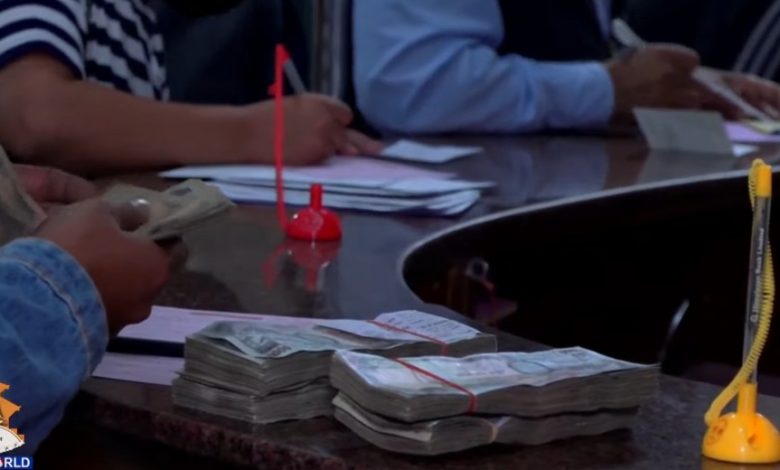
On the streets of the capital, the disconnect between macroeconomic data and consumer confidence is palpable.
This sentiment reflects a core concern flagged by the International Monetary Fund: that weak domestic demand could stifle the broader recovery.
Key sectors are under pressure. Tourism faces rising costs linked to global energy volatility, while trade imbalances continue to widen despite modest export growth.
The data presents a complex paradox.
Nepal Rastra Bank reports a stable environment with inflation at 3.25% and robust foreign exchange reserves of 22.76 billion US dollars.
Yet, the widening trade deficit and energy volatility affecting tourism keep the economy in a vulnerable state.
As the government moves to convert these stable reserves into active economic momentum, the focus remains on policy clarity.
As the government looks to convert macroeconomic stability into tangible growth, the focus will be on policy clarity and execution. Faster capital spending, improved investment climate, and stronger domestic demand will be critical in regaining momentum.
The key question remains: can timely and effective policy interventions steer Nepal back onto a higher growth path, or will global headwinds and internal constraints make the climb even steeper?

Comments