
Nepal Champions Economic Diplomacy: Foreign Minister Khanal Seeks Proactive Role of Honorary Consuls
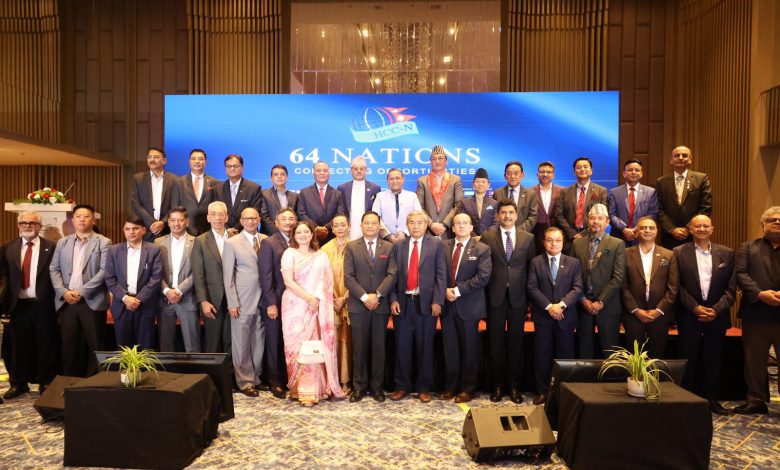
Nepal’s Foreign Minister Shishir Khanal, advancing economic diplomacy as a major priority of Nepal’s foreign policy, has urged honorary consuls to play a more active and results-oriented role in trade, investment, tourism, and technology transfer.
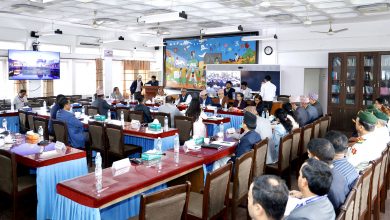
Addressing the 19th Annual General Assembly and Charter Day of the Honorary Consul Corps–Nepal in Kathmandu on Thursday, Minister Khanal emphasized that the contribution of honorary consuls must become more effective in expanding Nepal’s economic partnerships with various countries.
Appreciating the role honorary consuls have played in strengthening friendship and economic ties between Nepal and their respective countries, he said: “Your role is particularly important in promoting economic and trade relations between Nepal and the countries you represent.”
He noted that honorary consuls have served as vital bridges in expanding Nepal’s relations with countries that do not have resident diplomatic missions in Kathmandu, and praised their contributions in expanding people-to-people, trade, cultural, and institutional ties.
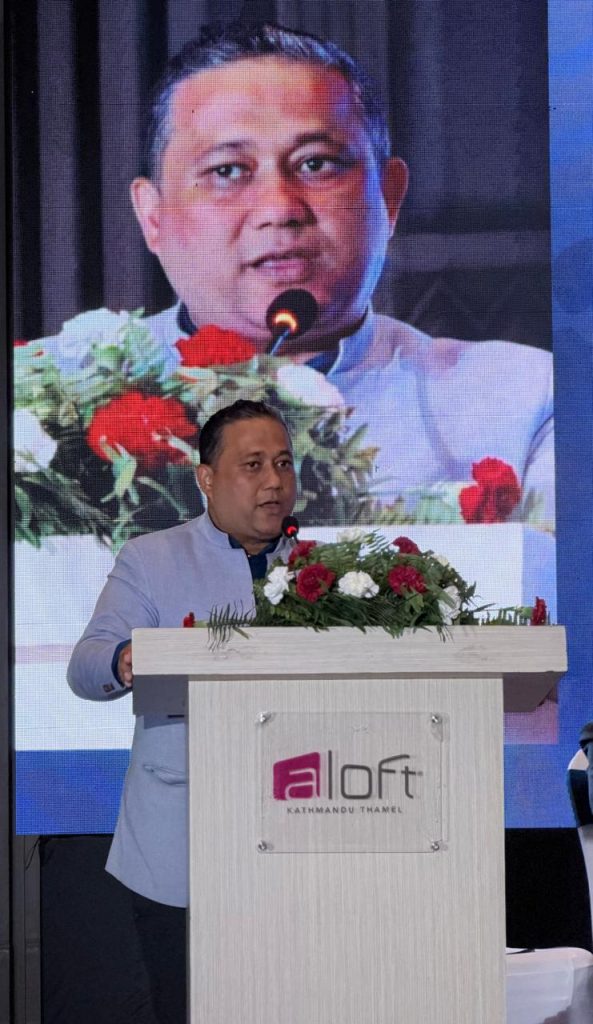
Minister Khanal stated that the Ministry of Foreign Affairs is committed to facilitating honorary consuls’ work more effectively: “The ministry will review existing rules, facilities, and procedures related to honorary consuls in a timely manner and initiate reforms in line with national and international legal frameworks and practices.”
Discussing Nepal’s contemporary political situation, he highlighted that recent political changes have laid the foundation for stability, policy continuity, and predictability. He stressed that the current government is committed to good governance and inclusive economic development, prioritizing legal and institutional reforms to curb corruption.
Clarifying the core objective of foreign policy, Minister Khanal said: “Nepal’s foreign policy will focus on promoting national interests by driving economic transformation, attracting investment, expanding trade, fostering innovation, and creating opportunities for citizens.”
He added that strategic partnerships, foreign direct investment, market access, technology collaboration, tourism, and sustainable development have been advanced as key priorities in Nepal’s international relations.
Highlighting the growing importance of honorary consuls in implementing economic diplomacy, he remarked: “You are indispensable partners in these efforts. Through your professional networks, local market knowledge, and close ties with both public and private sectors, you can promote trade, investment, tourism, education, and cultural exchange.”
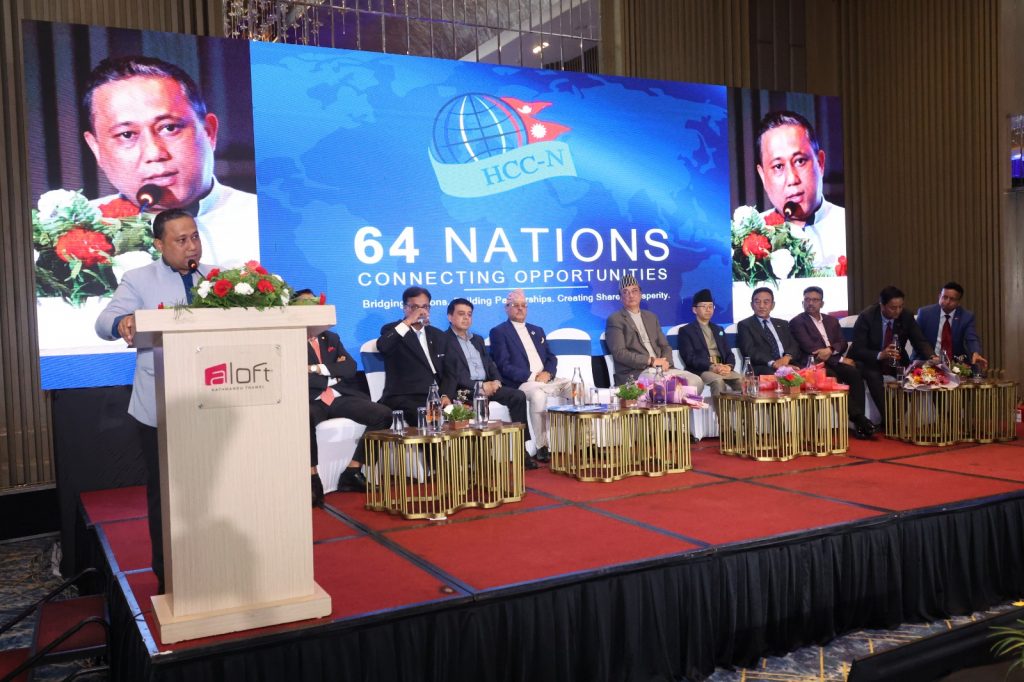
Minister Khanal underscored the need to transform traditional relations into concrete and measurable achievements, presenting three priorities for honorary consuls. According to him, each honorary consul general should prepare a country-specific strategic plan focusing on tourism, technology transfer, foreign direct investment, renewable energy, and trade facilitation.
He urged them to regularly organize business-to-business (B2B) programs to promote trade and investment: “It is now necessary to transform our longstanding cordial relations into tangible and measurable outcomes.”
Emphasizing citizen-friendly, accessible, and effective consular services, he said: “As public servants, we must be sensitive to citizens’ expectations. I urge all members to ensure services that are simple, effective, accountable, and citizen-friendly. Quality service delivery strengthens bilateral relations.”
He also called on honorary consuls to expand exchanges in education, culture, and youth engagement to further strengthen people-to-people ties. Expressing confidence, he said that Nepal’s diplomatic missions abroad, Nepali honorary consuls overseas, foreign missions accredited to Nepal, and foreign honorary consuls based in Kathmandu can expand private sector cooperation and reinforce mutually beneficial economic partnerships.
Concluding his address, Minister Khanal reiterated the shared commitment to international friendship, economic cooperation, peace, prosperity, and sustainable development, while highly appreciating the contributions of honorary consuls.
He wished success to the 19th Annual General Assembly and expressed confidence that the Honorary Consul Corps–Nepal will continue to play a vital role in strengthening Nepal’s economic diplomacy, trade relations, and international cooperation in the days ahead.
Vaidya Elected Dean
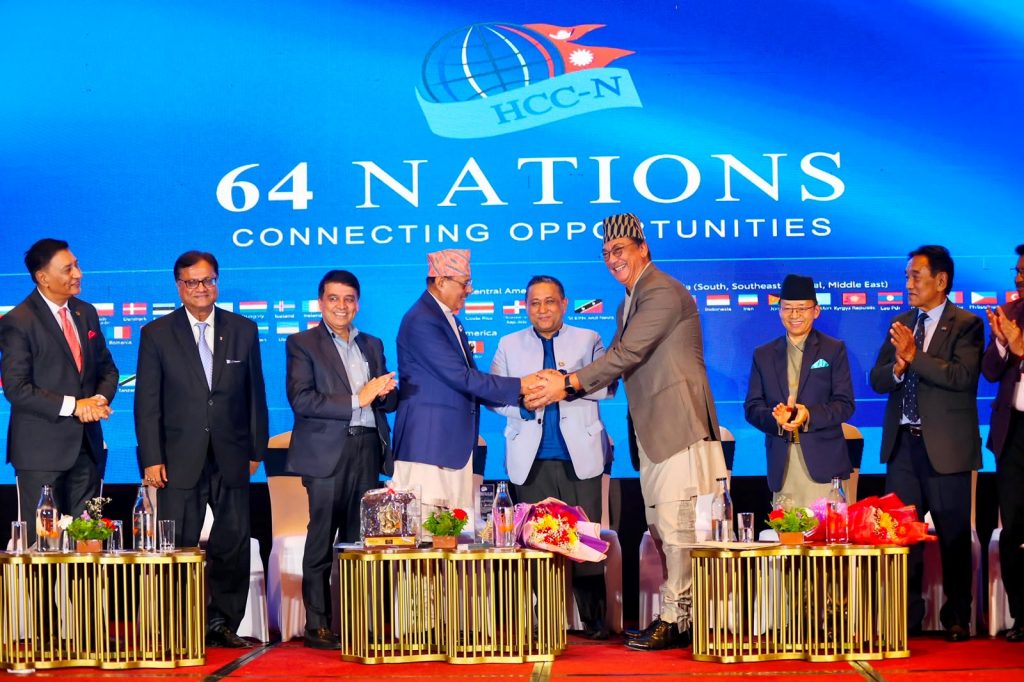
Meanwhile, Suraj Vaidya, the Honorary Consul General of the Philippines to Nepal, has been elected Dean of the Honorary Consular Corps of Nepal.
Vaidya, the former president of the Federation of Nepalese Chambers of Commerce and Industry, was unanimously chosen as the new dean at HCCN’s general assembly held on Thursday.
Previously, Bhola Thapa, the Consular General of Bulgaria to Nepal, was the HCCN Dean. The conference has selected Pasang Dawa Sherpa as the Vice Dean of HCCN.
Newly appointed Dean, Vaidya, said that during his tenure, he will make bringing foreign direct investment to Nepal, promoting tourism, and strengthening economic diplomacy his main priorities.
On the occasion, Dean Vaidya mentioned that HCCN currently represents more than 64 countries around the world and pointed out that these nations are making significant contributions to the global economy, international trade, technology, innovation, tourism, and investment.
Outgoing HCCN Dean Bhola Bikram Thapa said that a draft Memorandum of Understanding (MoU) was submitted to the Ministry of Foreign Affairs with the aim of making HCCN a strategic partner of the government in economic diplomacy.

Comments