
Incessant Rainfall for Four Days Results in 27 Casualties in 542 Disaster Incidents
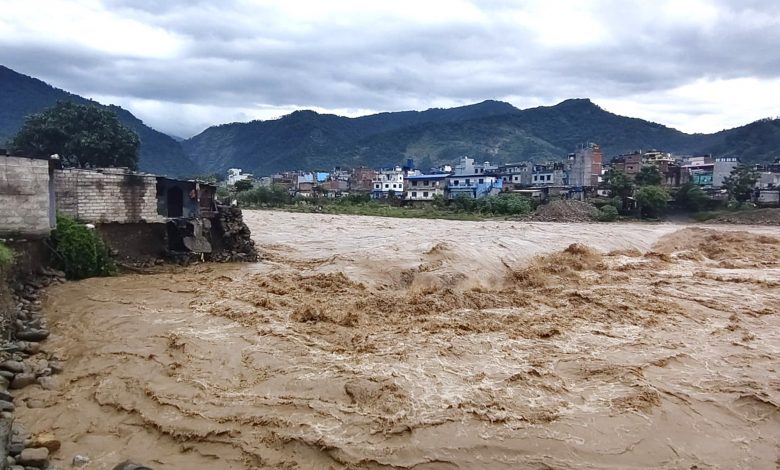
Twenty-seven people have died in 542 disaster incidents across the country, triggered by the recent heavy rains. The National Disaster Risk Reduction and Management Authority (NDRRMA) said that four people went missing and eight were injured in the disasters that occurred from September 24 to 27.
The disaster incidents affected 1,082 families and 114 livestock were killed. According to the authority, during this period there were 304 landslide incidents, resulting in 20 deaths, while four people went missing and seven were injured. In the same way, 87 flood incidents were reported during the period which had resulted in four deaths.
In 151 incidents related to heavy rainfall, three people died and one person was injured. Due to heavy rain, 227 houses are completely damaged while 142 houses have suffered partial damage. Floods and landslides have damaged 31 bridges. According to NDRRMA, during the four days of rainfall, more than 100 millimeters of rain was recorded at 186 rainfall measurement centers across the country.
The highest rainfall was measured in Dedhgaun of Nawalparasi (Bardaghat Susta East) with 544.2 millimeters, and 500.2 millimeters in Panchase of Kaski, and 472 millimeters in Atraulitaar of Tanahun. Heavy rainfall took place in various parts of the country during this period due to the low-pressure system developed in the Bay of Bengal, the NDRRMA stated.
Disaster warning issued to one million people To reduce the risk of possible disasters, NDRRMA had intensified disaster early-warning and preparation measures even before the rain started. During the last monsoon period, NDRRMA’s ‘situation room’ continuously monitored weather and disaster risks, shared information, and coordinated between agencies for 76 hours. Through telecom service providers, flood warning SMS was sent to over 980,000 citizens.
Among them, more than 5,000 were engaged in response activities, and around 9,000 tourists were also informed about weather and disaster-related risks, according to the NDRRMA’s report. During that time, the Authority had increased the flood forecast period for major rivers from three days to five days, and for flash floods in small rivers and streams from 24 hours to 48 hours.
Around 2,000 people rescued NDRRMA spokesperson Shanti Mahat informed that around two thousand people at risk due to annual floods were relocated to safe places. According to her, people trapped in floods and landslides in remote districts like Jajarkot, Myagdi, and Baglung were rescued by helicopter.
Security personnel including the Nepal Police, Armed Police Force, and the Nepali Army were deployed for search, rescue, and relief efforts. “Seventy-eight people at risk in Annapurna Rural Municipality-5, Pauddhar in Myagdi were rescued by helicopter and transferred to a safe place on September 27,” she said. The report also mentions that four people stranded on an island in the Bheri River in Jajarkot were airlifted.
Alert issued after rivers dammed by landslides in Manang and Mustang According to spokesperson Mahat, heavy rainfall caused landslides on the evening of September 27 in Chame, Manang, which disrupted the flow of the Marsyangdi River. Similarly, landslides blocked the flow of the Kaligandaki River in Thasang Rural Municipality-3 of Mustang.
In view of the possible risk, the NDRRMA had sent a notice to the officials of the concerned districts and local bodies to adopt high alert in the lower riverbank areas of both rivers and to evacuate families living in risky areas to safe places. NDRRMA stated that the water level in major rivers across the country, including Narayani, has been gradually decreasing and the situation is moving towards normal since September 28. (RSS)



Comments