
Haritalika Teej Festival Being observed today
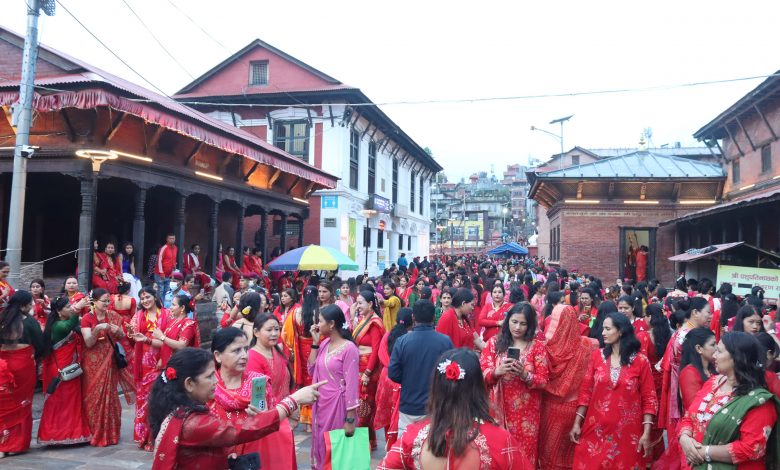
The major festival of Nepali Hindu women, Haritalika Teej, is being celebrated across the country today, amidst religious and cultural rituals. A significant crowd of devotees has gathered since early morning at Pashupatinath Temple in Kathmandu and various other Shiva temples for offering of worship and paying obeisance on the occasion of Teej.
The Haritalika Teej festival is considered not only a religious belief but also a festival of social and cultural expression for women. On the previous evening of the Teej, women gather at their parental homes or with relatives to eat ‘dar’ (a pre-fast meal), sing songs, dance, and exchange good wishes.
On the day of Teej, women, especially, observe a religious tradition of worshipping Lord Shiva and praying for the happiness, peace, prosperity of their families, and success in their marital life. Both married and unmarried women observe fasts, worship Shiva and Parvati, and visit temples for darshan.
On the occasion of Teej, devotees have thronged not only Pashupatinath but also Gokarneshwor, Doleshwor, Kumbheshwor, Ashapuri temples and other Shiva temples in the Kathmandu Valley. Devotees have also visited Shiva temples in various districts across the country for puja and darshan.
The Teej festival connects religious faith, family relationships, and the cultural diversity of Nepali society. On the main day of Haritalika Teej today, puja, darshan, and religious activities will take place in Shiva temples across the country throughout the day. Women also use Teej as an occasion to express the hardships, pain and difficulties they have experienced during the year.
Through Teej songs, women publicly share their grievances, including difficulties they face after leaving their birth homes to live with their husbands’ families. Mythological origins of Haritalika Teej According to various Puranic accounts, Parvati, the daughter of the Himalayas, performed penance at Gaurighat near Pashupatinath during the Satya Yuga and received a boon to have Lord Mahadev as her husband.
Her father, Himalaya, wanted to marry her to Lord Vishnu against her wishes, prompting Parvati to share her predicament with her friends. After learning of her problem, her friends took her away and hid her in a place where nobody could find her. The Puranas say Parvati then observed a waterless fast in the place where her friends had hidden her and ultimately attained Mahadev as her husband.
According to religious scholars, the tradition of observing the Haritalika Teej fast began from the day Parvati was taken away by her friends, which fell on Bhadra Shukla Tritiya. On Teej, millions of women line up at Pashupatinath and other Shiva temples across the country. Women also use the festival to meet old friends, relatives and acquaintances, sharing the joys and sorrows of the past year. (RSS)


Comments