
Government Brings New Decision Process Regulation, Authorizes Use of AI
Nepal government has introduced the “Government Decision Process (Simplification and Digitalization) Regulation, 2083″ with the aim of making the decision-making system in public administration more responsible, swift, and effective.
The earlier “Government Decision Process Simplification Directive, 2065” has been repealed and converted into a regulation. Compared to a directive, a regulation carries greater legal authority and enforceability.
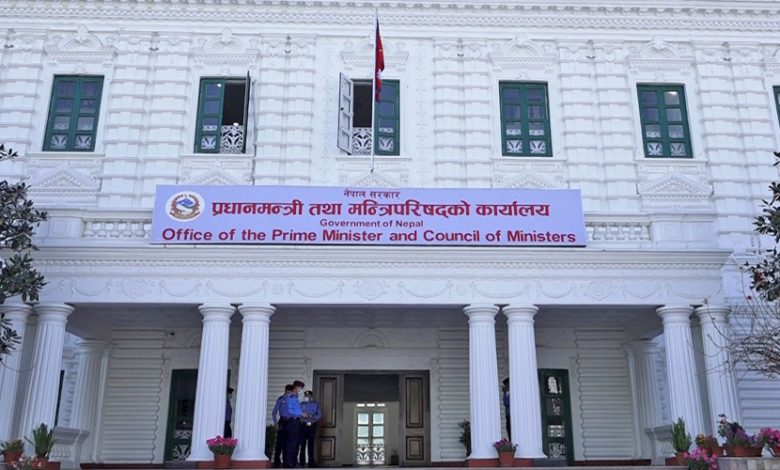
The proposal, advanced by the Office of the Prime Minister and Council of Ministers to digitize the process and eliminate administrative delays, was approved in Wednesday’s Cabinet meeting.
With the implementation of the new regulation, digital systems have been made mandatory as the primary medium for decision-making in government bodies.
Under this, all tasks—file registration, comments, opinions, approvals, digital signatures, archiving, and monitoring—will be conducted through an integrated electronic decision system.
Each file registered in the digital system will be assigned a unique identification number and QR code.
To make the process smoother and less cumbersome, the number of comment layers has been reduced. For policy-level and major administrative decisions made at the ministerial level, there will be a maximum of three layers of comments, while for general administrative matters, only up to two layers will remain.
Once a file is registered in the system, time calculation will begin automatically. If no action is taken within the stipulated time, the file will automatically escalate to a higher decision level within 24 hours.
To modernize public service delivery, artificial intelligence (AI) may be used as a supportive tool in legal research, precedent analysis, risk assessment, and preparation of draft comments.
Likewise, service recipients will be able to track the progress of their files using the tracking number received via online platforms, mobile apps, or SMS. Service delivery will operate through a one-door system.
Public bodies will be required to register files digitally, and such electronic files will be recognized as official government records.
Additionally, to measure office performance, a “Decision Delay Index” will be implemented, monitored through a unified dashboard by the Office of the Prime Minister and Council of Ministers.
The regulation has introduced strict provisions whereby officials causing unnecessary delays or failing to fulfill responsibilities will face departmental action and score deductions in performance evaluations.




Comments