
Children at Risk of Monsoon Drowning
Sabika Shrestha
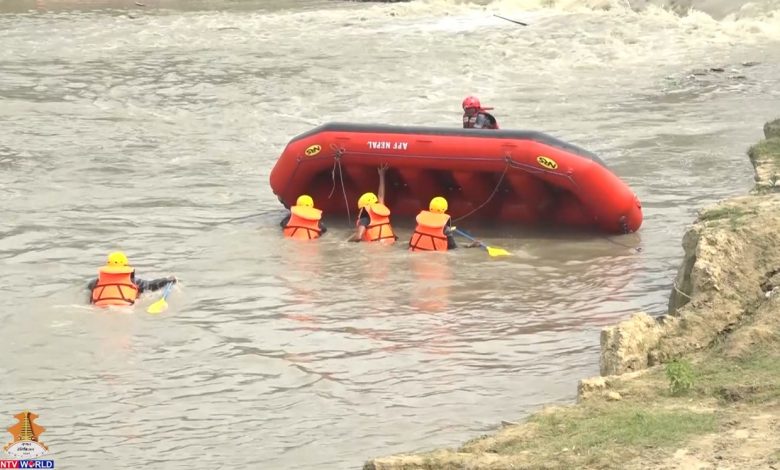
Drowning of children has emerged as a recurring tragedy in Nepal, particularly during the rainy season, as inadequate management and monitoring of ponds, water bodies, waterlogged areas, rivers and streams continue to put children at risk.
According to the data, nearly 70 percent of drowning deaths in lakes and ponds occur in Madhesh Province, while Bagmati Province records the lowest number.
According to Nepal Police statistics covering the five-year period up to the last fiscal year, a total of 1,485 children lost their lives due to drowning across Nepal of which 1,025 were boys and 460 were girls.
A total of 429 children drowned in lakes and ponds, while 464 lost their lives in rivers and streams, making these the leading sites of drowning incidents.
In addition, 9 children drowned in wells, and 12 children died after drowning in septic tanks, highlighting the wide range of water-related hazards that continue to pose a serious threat to children’s safety across Nepal.
The data further shows that Madhesh Province recorded the highest number of child drowning deaths in lakes and ponds, with 239 fatalities over the five-year period.
Nepal Police say several factors, including open excavation pits being left unmanaged, absence of protective barriers or fencing around ponds, lakes, rivers and streams, and insufficient parental supervision contribute to these accidents.
Abhi Narayan Kafle, Spokesperson and DIG of Nepal Police, said, “Since such incidents are more frequent during the rainy season, it is crucial to remain alert towards this and to coordinate with the relevant authorities, specifically the local administration, local bodies, and stakeholders.
In this regard, the primary responsibility lies with the parents. Such tragic incidents have occurred when parents failed to look after their children. Similarly, if someone digs a pit for any purpose, then protective safety measures must be adopted for that pit, or for that river, lake, or pond, so to speak. This includes things like putting up fencing or installing awareness-raising signboards. Special attention must be paid to these matters.”
Child rights advocates stress that reducing these risks requires greater vigilance and responsibility from parents, communities, local governments and all state agencies concerned to ensure children’s safety during the rainy season.


Comments