
Bulldozer Development Fuels Landslide Risk
Sabika Shrestha
Roads are synonymous to development in any country and Nepal is not an exception.
Whether at the local or provincial level, governments have prioritized extending roads to every village.
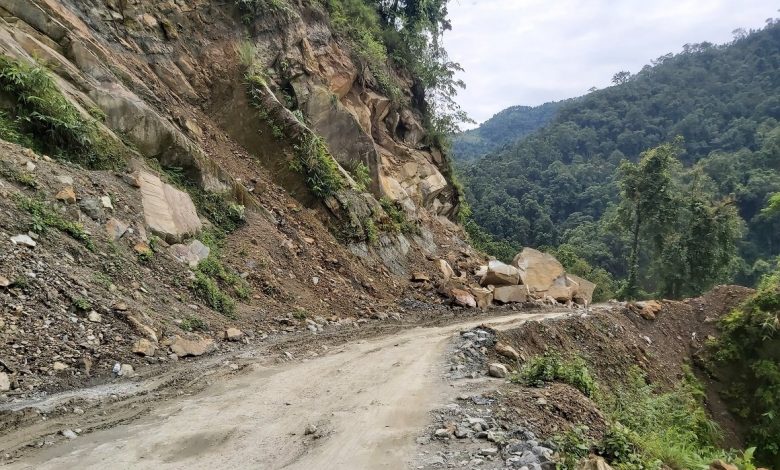
However, due to the tendency of opening tracks without assessing soil conditions, rock formations, or conducting geological studies, many rural roads are creating serious risk of landslides in the highlands.
With the onset of the monsoon each year, landslides frequently block these rural roads, disrupting transportation.
Beyond road closures, landslides also destroy fertile land, while making the hilly settlements and slopes increasingly unsafe.
Experts describe this trend as “bulldozer development.”
Making the matter worse is the changing meteorological pattern much due to climate change, that has totally changed the precipitation, with intense rainfall in short periods.
Such heavy downpours significantly heighten the risk of landslides along the tracks and rural roads opened without proper planning or scientific assessment.
Despite experts’ recommendation to open tracks and roads after conducting thorough geological studies and planning, the trend of bulldozer development continues, especially at the end of the fiscal year that happens to be peak monsoon.
Landslide Expert Basanta Raj Adhikari says, “Steep slopes are being cut without proper stabilization or drainage, while roads are often built without geological and engineering studies. Such ‘dozer-driven development’ has become a major factor behind the growing risk of landslides.”
In the hilly and mountainous terrains of Nepal, natural landslides cannot be completely averted.
However, experts argue that long-term solutions, such as constructing tunnels along major highways based on geographical conditions, could substantially reduce landslide risks.
They have stressed strong legal provisions to discourage the practice of opening tracks and roads haphazardly which they say can significantly reduce the risk of landslides each monsoon.




Comments