
Nepal Marks 20 Years of Historic Peace Accord and Political Transformation
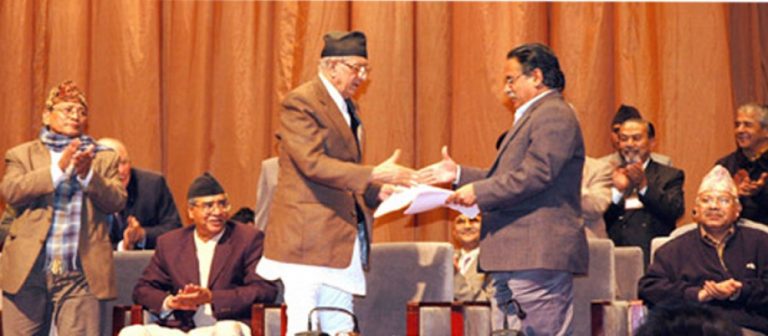
Nepal is marking 20 years of the Comprehensive Peace Accord, a historic agreement that ended a decade-long armed conflict and set the country on a path of peace, political transformation and democratic change.
Signed on November 21, 2006, by then Prime Minister Girija Prasad Koirala and Maoist leader Pushpa Kamal Dahal, the agreement brought an end to the armed conflict that began in 1996 and claimed around 17,000 lives.
The accord marked a defining moment in Nepal’s modern history, paving the way for the abolition of the monarchy, the establishment of a federal democratic republic, the promulgation of a new constitution and the integration and rehabilitation of former Maoist combatants.
Over the past two decades, Nepal has made significant strides in consolidating its democratic system and transforming the commitments of the peace agreement into political and institutional changes.
The peace process also demonstrated the country’s ability to resolve a prolonged armed conflict through dialogue, political understanding and a commitment to peaceful transition.
As Nepal commemorates this milestone, completing the remaining aspects of the peace process, particularly transitional justice, has emerged as a key priority.
The accord had envisioned truth-seeking, accountability, justice and reparation for victims of the conflict through dedicated transitional justice mechanisms.
The Truth and Reconciliation Commission and the Commission of Investigation on Enforced Disappeared Persons were subsequently established to advance this commitment.
However, thousands of complaints from conflict victims and their families remain to be addressed.
On the 20th anniversary, then Maoist Leader Pushpa Kamal Dahal has called on the government, political parties and concerned stakeholders to expedite the remaining tasks of the peace process, particularly transitional justice and efforts to establish the whereabouts of disappeared persons.
The National Human Rights Commission has also stressed the importance of completing the process and ensuring justice and meaningful support for conflict victims.
Twenty years on, Nepal’s peace accord stands as a significant chapter in its democratic journey.
The progress achieved so far provides a foundation for the country to move forward, with completing transitional justice seen as an important step towards lasting peace, reconciliation and national unity.



Comments