
IFRC Gen Secy Urges Urgent Action to Turn early Warnings into Disaster Preparedness
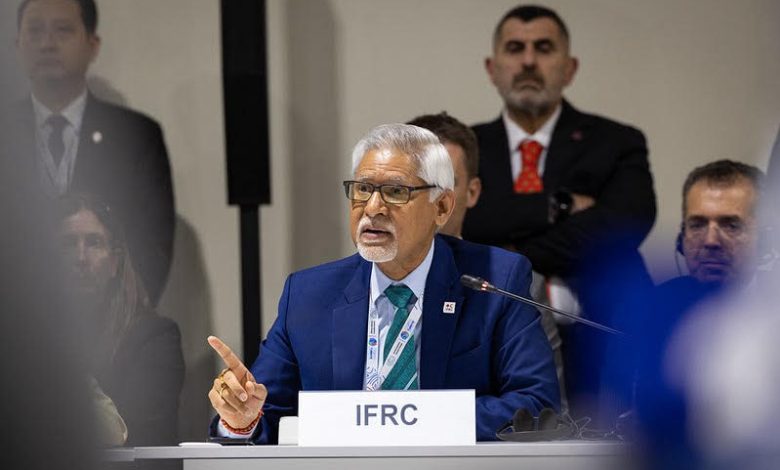
Jagan Chapagain, Secretary General of the International Federation of Red Cross and Red Crescent Societies (IFRC), has urged stronger links between early warning systems and timely preparedness, saying advance warnings must lead to practical steps that protect communities from natural disasters.
Speaking at a special session on Early Warning for All at the 31st Conference of the Parties (COP31) to the United Nations Framework Convention on Climate Change (UNFCCC) in Antalya, Chapagain said countries had made significant progress in expanding early warning systems and strengthening national preparedness since the initiative began in 2022. The number of countries with anticipatory action frameworks has more than doubled, from 35 in 2022 to 75.
Nearly four in 10 countries now have arrangements to trigger action before disasters strike, he noted. Chapagain cautioned, however, against treating 2027—the target year for the Early Warnings for All initiative—as the finish line. Instead, he described it as an important milestone. “The work of protecting every person from hazardous events will not end in 2027,” he said, calling for political commitment, funding and implementation to continue beyond the target year. He said the central challenge is no longer simply forecasting disasters.
Countries are increasingly able to identify approaching hazards, the areas they may affect and the people most at risk. The priority now, he stressed, is making sure warnings prompt timely and effective preparedness. “Early action is what makes early warnings work,” he stressed.
Citing recent evidence, Chapagain said four in five people affected by disasters received a warning, but one in three couldn’t act on it. The figures, he said, reveal a major gap between receiving risk information and taking steps to stay safe. The IFRC sees this challenge in communities around the world, Chapagain said. With humanitarian resources increasingly stretched, he warned, it is crucial to move beyond responding after disasters strike and take preventive action before crises unfold.
Investing in anticipatory action helps protect lives, livelihoods and human dignity, while avoiding the far greater costs of emergency response and recovery, he said. In 2025, anticipatory action supported 9.6 million people across 54 countries, helping communities protect their lives and livelihoods before disasters occurred.
Chapagain also highlighted the growing role of community participation and technological innovation in strengthening early warning systems. Communities, he said, should be seen not as the last mile of early warning systems, but as the first. People facing risks often know best where local vulnerabilities lie, what matters most and which solutions will work in practice—making timely, effective preparedness possible.
He also pointed to new technologies that make it possible to bring local knowledge together with better forecasting, risk information and decision-making tools. This can help authorities and humanitarian organizations turn information into timely action.
Chapagain stressed that pairing early warnings with early action is not just a humanitarian duty; it is also a practical investment in reducing disaster risks and building community resilience. Launched in 2022, the Early Warnings for All initiative aims to protect everyone on Earth from hazardous weather, water and climate events through early warning systems by 2027. Achieving this will require more than expanding coverage: vulnerable communities must also have the resources, knowledge and capacity to act when warnings are issued. (RSS)




Comments