
Nepal in UNGA: “Climate Action Should Not be Charity But Justice” FM Khanal
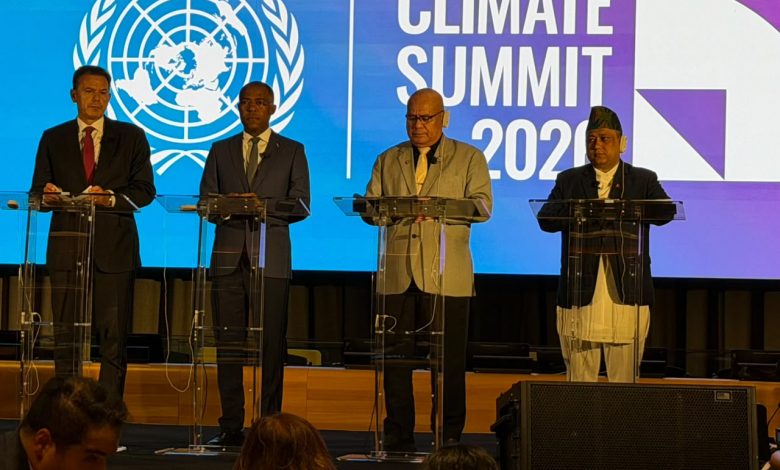
Foreign Minister Shishir Khanal has emphasized that the international community must move decisively from commitments to implementation to confront the crisis created by climate change.
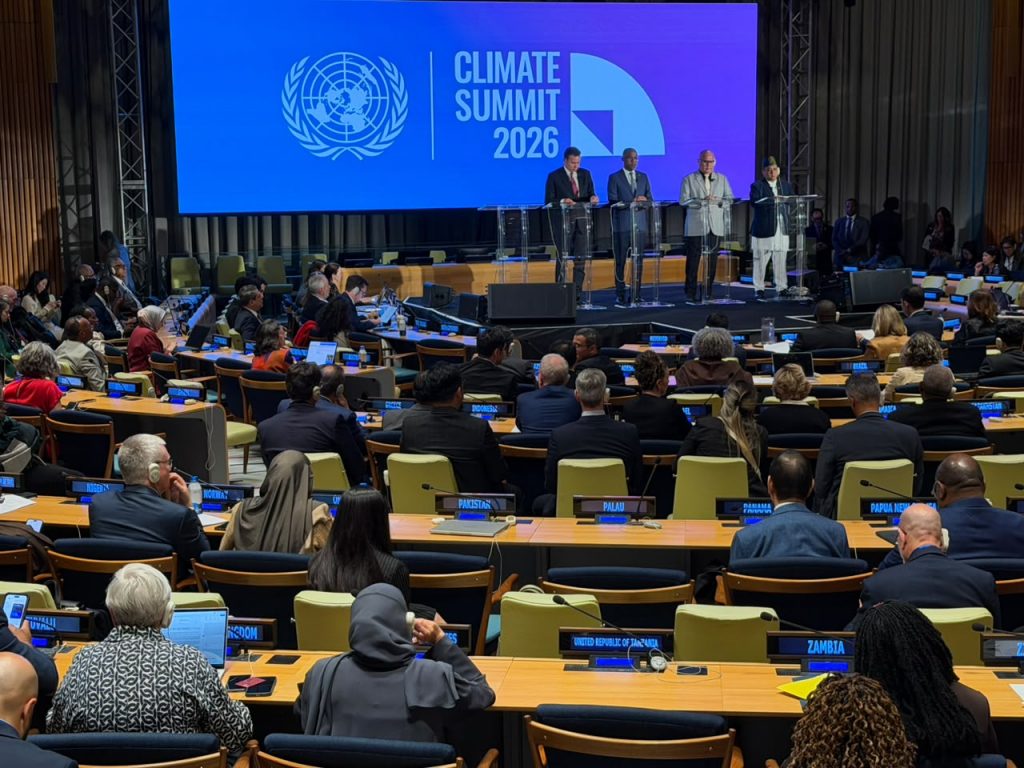
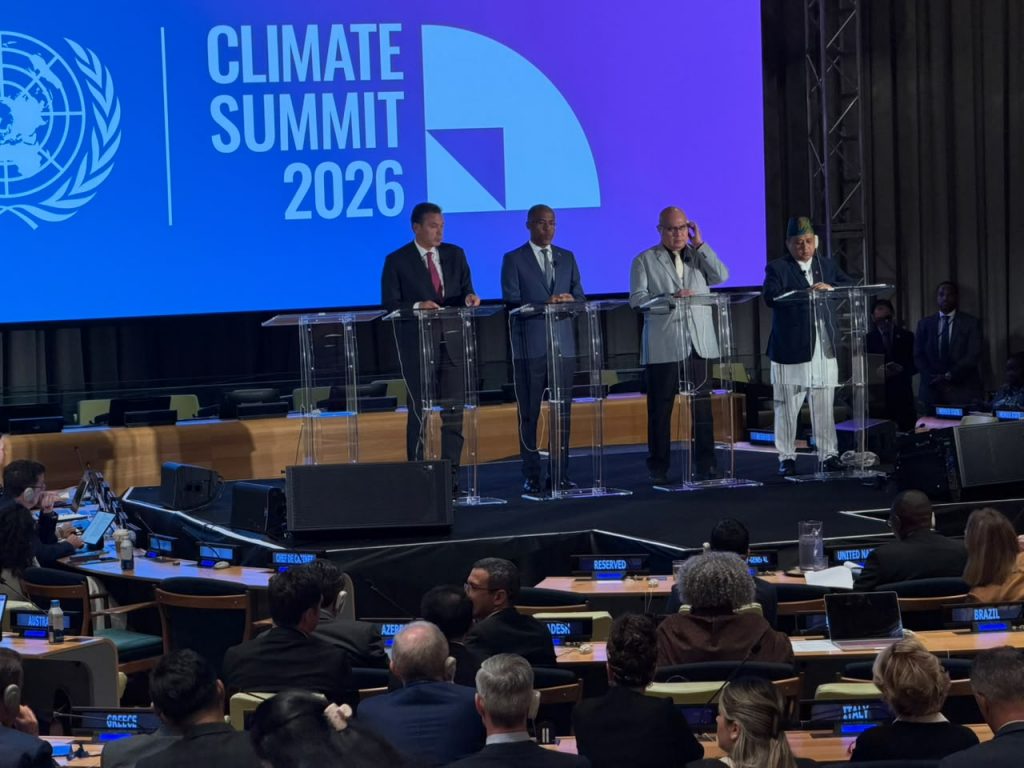
Speaking at the High-Level Meeting on Climate Action and Just Transition at the United Nations Headquarters, he said fragmented, uncertain, and delayed assistance makes it difficult for climate-vulnerable countries to cope with the present crisis.
He highlighted the devastating floods Nepal recently endured, which caused massive human and physical losses, claiming hundreds of lives and severely damaging homes, infrastructure, agriculture, and livelihoods.
Hydropower infrastructure also suffered serious damage, pushing back decades of development gains. Preliminary assessments indicate that recent climate-induced disasters have cost Nepal more than USD 5 billion, about 15 percent of its GDP.
“Nepal did not create this crisis. Our contribution to global greenhouse gas emissions is less than 0.1 percent. Yet we are bearing its impacts disproportionately and repeatedly,” he said.
He described climate disasters as not only humanitarian emergencies for Nepal but also development emergencies, crises of justice, and existential challenges for communities and future generations.
Recalling the UN Secretary-General’s call from the foothills of Mount Everest three years ago to “stop the madness,” he warned that the Himalayas are “crying out for help,” and questioned whether the international community has truly listened with seriousness, wisdom, and resolve.
Khanal stressed that Nepal’s disaster is not a local event alone but a grave warning for other climate-vulnerable countries: “What happens in the Himalayas does not remain confined to the Himalayas. The Himalayas are an integral part of Earth’s life-support system.”
He urged the global community to transform its approach, moving from post-disaster aid to pre-disaster preparedness, by ensuring adequate, advance, and easily accessible climate finance. He stressed that adaptation must be prioritized, clarifying that for countries like Nepal, adaptation is not optional but a matter of survival.
He called for universal access to global early warning systems, reliable mountain-ecosystem technologies, climate information services, and resilient infrastructure.
He also underlined the need to adequately capitalize the Loss and Damage Fund, make it swift and accessible, and ensure that multilateral development banks mobilize rapid and affordable financing during crises.
Khanal pointed out that climate impacts must be addressed in an integrated way from the mountains to the seas, and urged stronger global efforts to keep the 1.5°C temperature goal alive: “This is about the survival of mountain and coastal communities.”
Referring to the recent disaster in Nepal as a “Himalayan Tsunami,” he portrayed it as one of the most tragic crises Nepal has faced, warning that greater risks loom if the world fails to act urgently.
He appealed to heads of state and government, ministers, philanthropic organizations, media, civil society, the private sector, and academia to confront the climate crisis with courage and clarity.
“Climate action must be taken not as charity, but as justice,” Foreign Minister Khanal declared.



Comments