
Where the Streets Still Sing: Pradip Bajracharya’s UTSAV Brings Kathmandu’s Jatras to Canvas
Suvekshya Rajak
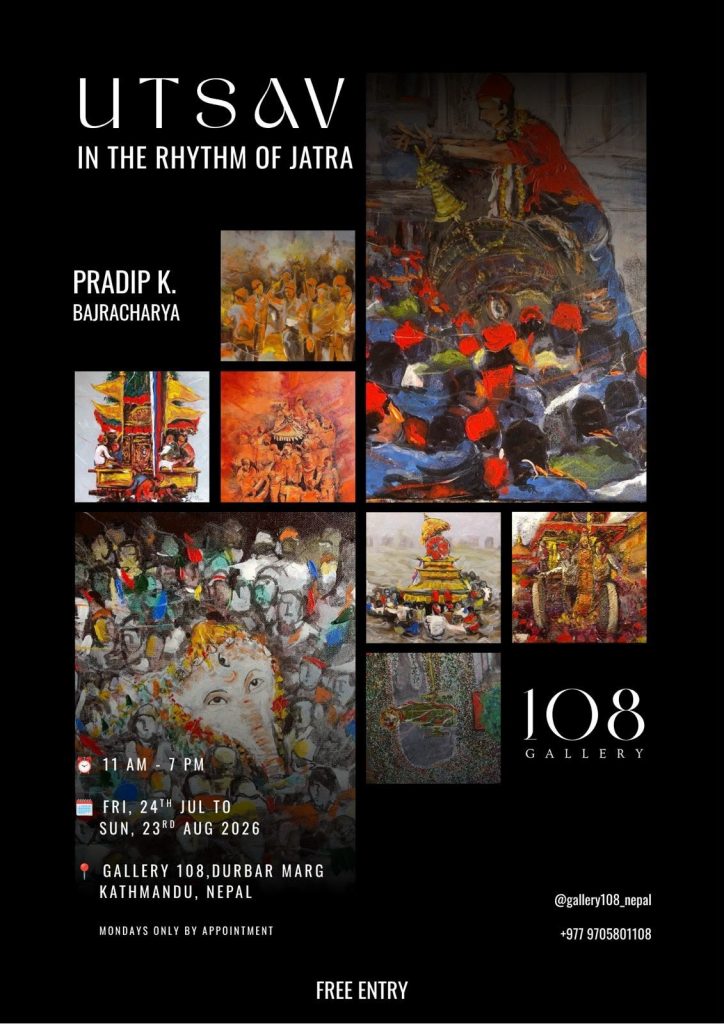
Long before the last drumbeat of a jatra fades into Kathmandu’s narrow alleys, artist Pradip Kumar Bajracharya has already captured its pulse in paint. His latest solo exhibition, UTSAV: In the Rhythm of the Jatra, opens at Gallery 108 on Durbar Marg, running from July 24 to August 23, 2026, offering viewers not a record of festivals past, but a living, breathing immersion into them.
Bajracharya, who grew up steeped in the rituals and street celebrations of the Kathmandu Valley, doesn’t paint jatras so much as he channels them.
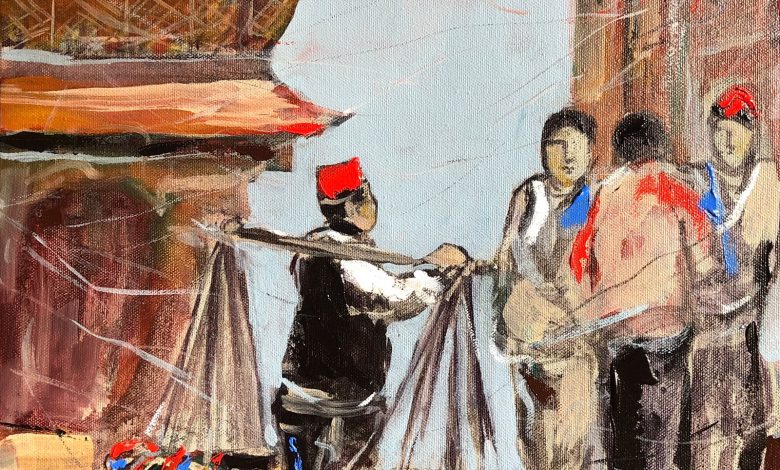
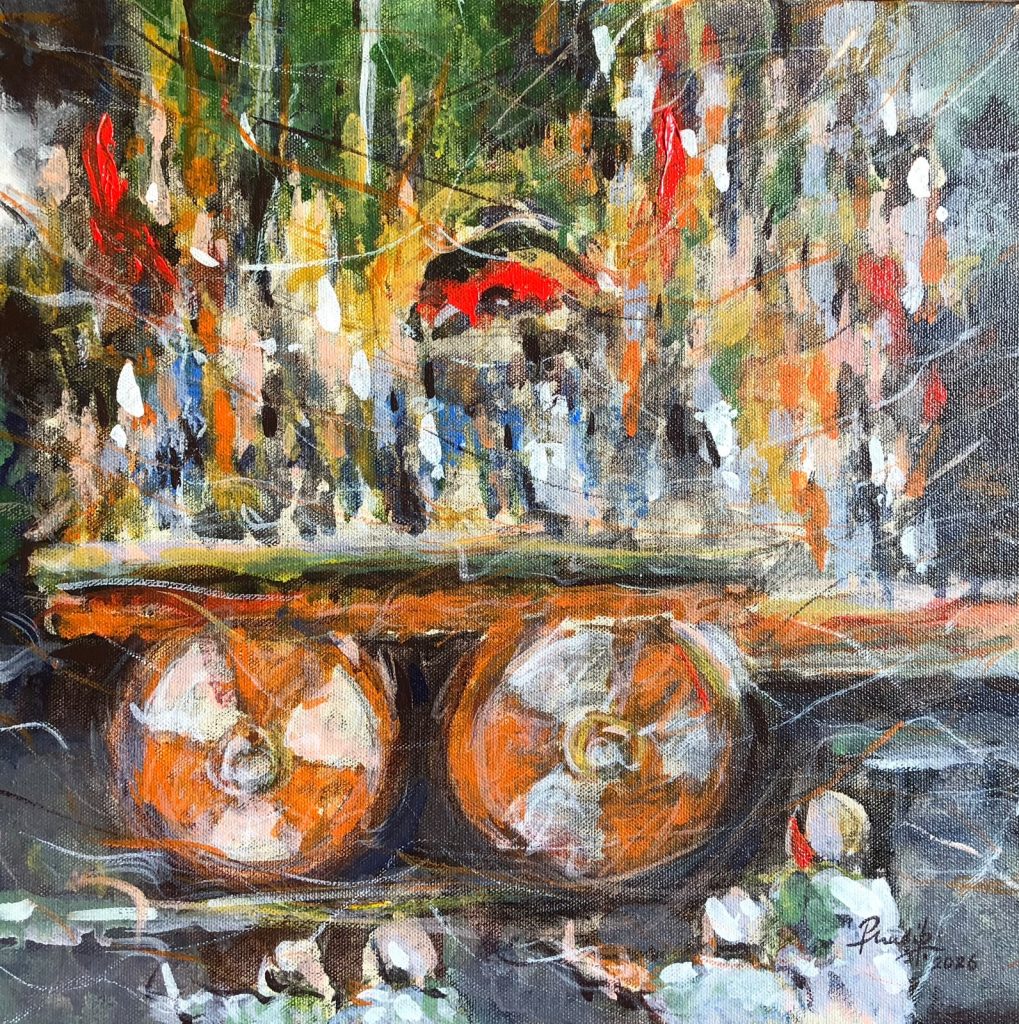
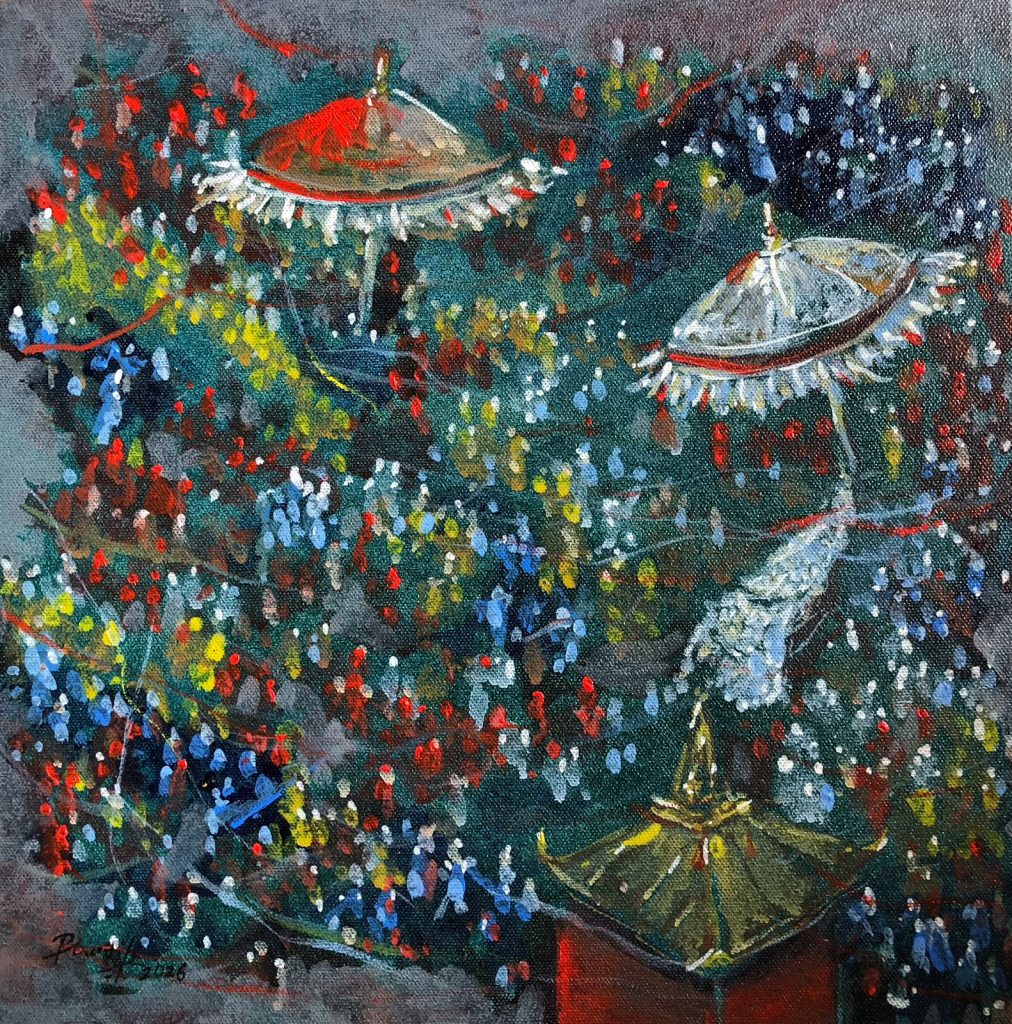
Drawing from the Machhindranath Jatra, Bhoto Jatra, Sindoore Jatra and other age-old processions of Kathmandu, Patan, Bhaktapur and Hadigaun, his canvases pulse with crowded lanes, swaying palanquins, crimson-daubed devotees, and the golden glint of temple chariots cutting through hazy city light. Figures blur into gesture and colour; faces dissolve into rhythm. This is not documentary painting — it is sensation rendered in oil.
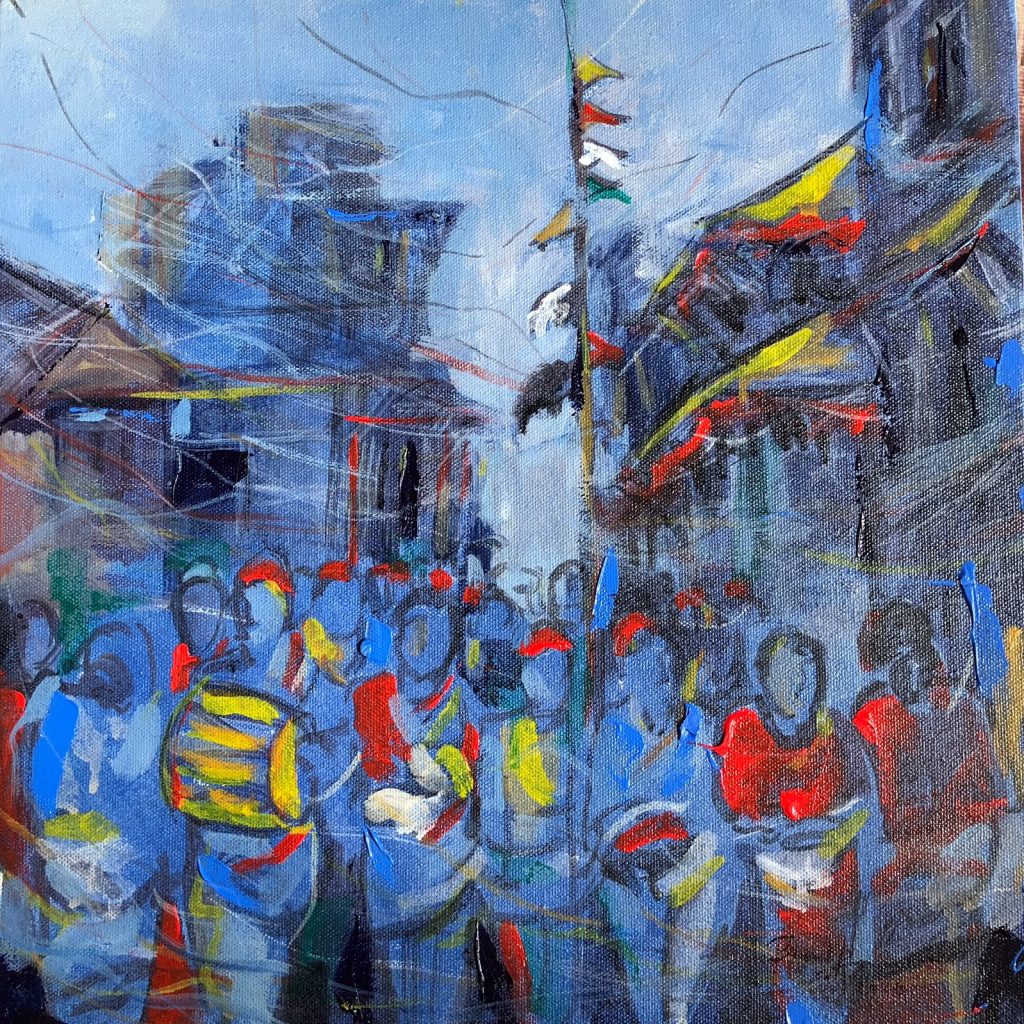
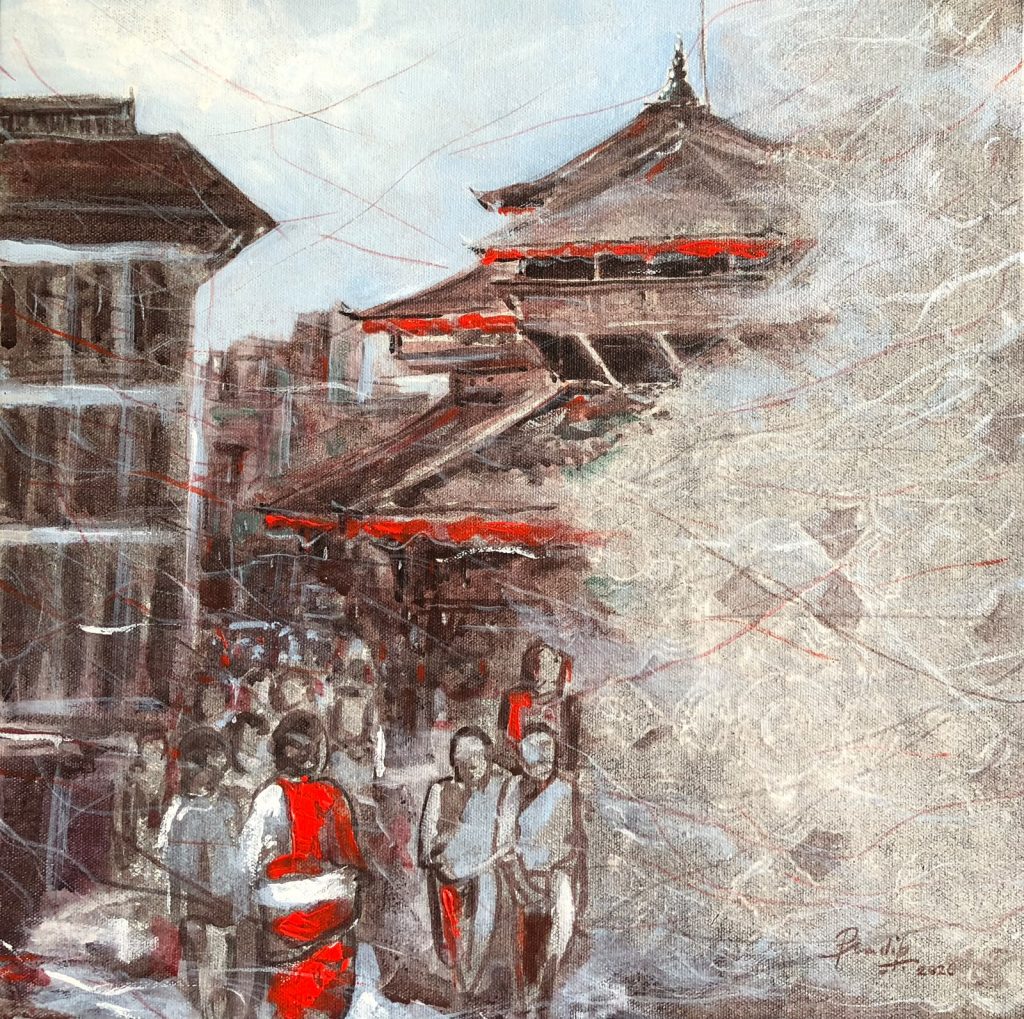
What strikes first is his palette: deep forest greens shot through with scarlet umbrellas, dusty greys pierced by vermillion sindoor, and streets awash in cobalt blue crowds beneath fluttering pataka flags.
Look closer, and the compositions reveal Bajracharya’s layered technique — loose calligraphic lines scratched across the canvas like static, evoking the visual chaos and electricity of festival streets, while more grounded, figurative passages anchor the scenes in recognisable devotion: a fruit-seller’s baskets, a temple roof glimpsed through fog, a procession of dhime drummers marching toward the frame’s edge.
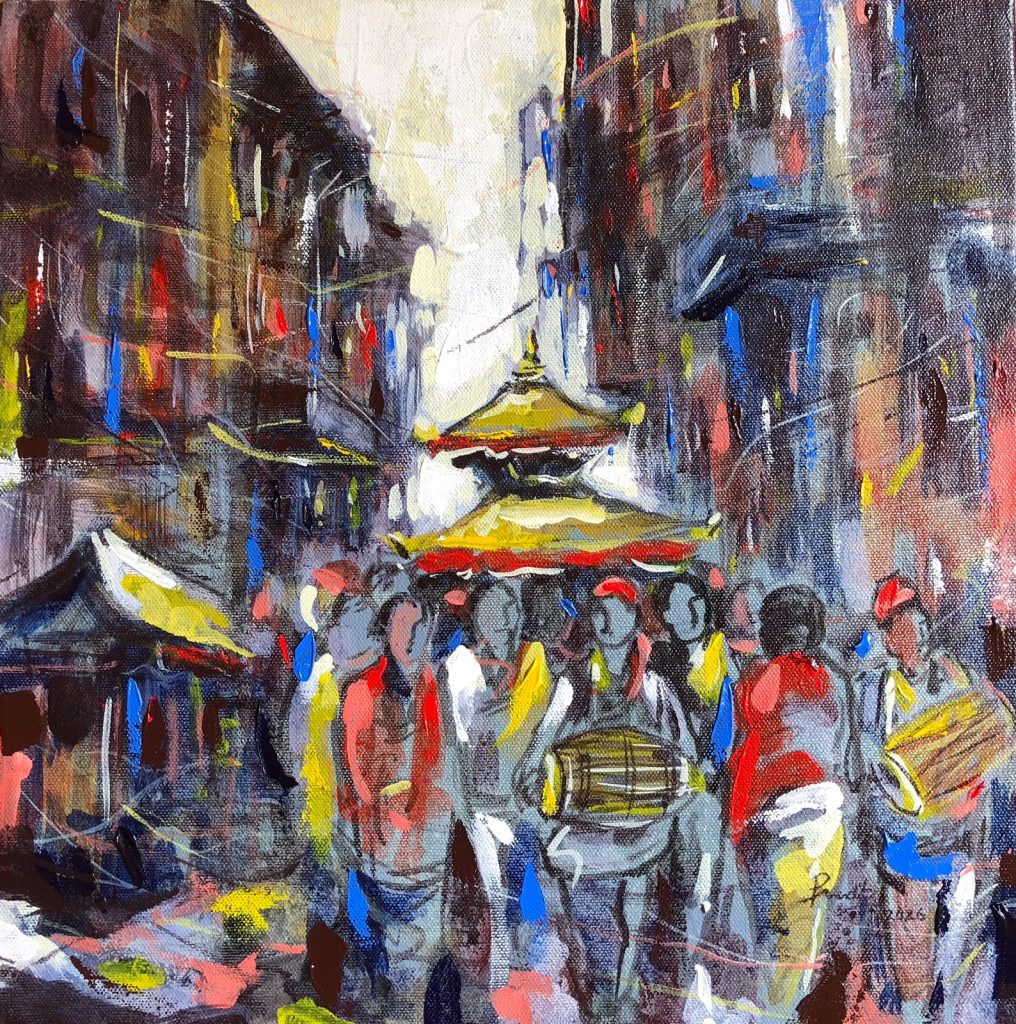
A defining structural choice unites the entire body of work — every single painting is rendered in the same square format. It’s a subtle but deliberate decision, one that gives the exhibition its title’s promise of rhythm: viewed together, the canvases feel less like individual artworks and more like beats in a single, sustained composition, echoing the cyclical, communal nature of the jatras themselves.
As gallery essayist Sugat R. Shakya notes, the show arrives at a moment when Nepal is reckoning with how to preserve not just its monuments, but the living traditions — the music, movement, and faith — that animate them. Bajracharya offers no nostalgia here, only urgency and colour.
UTSAV runs daily from 11 AM to 7 PM (Mondays by appointment only) at Gallery 108, Durbar Marg, Kathmandu. Entry is free.
Comments