
When Hope Becomes Power: For Whom the Bell Tolls
Shivanee Thapa Basnyat
Nepal’s 2026 Parliamentary election has delivered a result few political systems experience in a generation.
What began as an unexpected surge has now transformed into a nationwide sweep. The Rastriya Swatantra Party (RSP), a relatively new political force largely driven by young technocrats and reform-oriented figures, is now headed toward what appears to be a commanding two-thirds majority in the lower house.
For a country that has spent the past decade navigating fragile coalitions and unstable alliances, the scale of this victory is extraordinary.
But elections are never only about numbers.
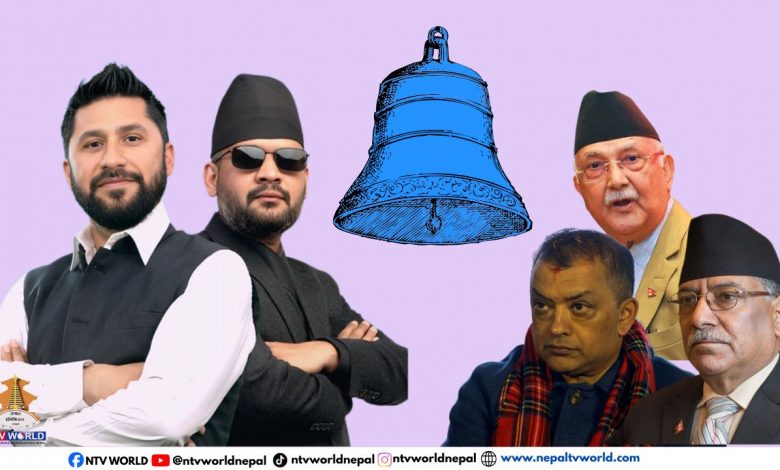
Behind this sweeping result stands a figure who was not merely a candidate but a symbol of a deeper political shift, Balendra Shah.
If the bell became the sound of this election, Shah became its echo.
His rise began earlier when he won the Kathmandu mayoral race as an outsider. His appeal was simple yet powerful: urgency in action, and a visible commitment to solving everyday urban problems. In a political culture often defined by speeches and promises, Shah emphasized execution.
That approach resonated far beyond Kathmandu.
But perhaps even more significant is what this result represents.
For years, skeptics argued that Nepal’s mixed electoral system, created under the Constitution of Nepal 2015, made a clear single-party majority nearly impossible. The combination of direct and proportional representation, critics said, would always produce fragmented mandates and hung parliaments.
The voters have now proven otherwise.
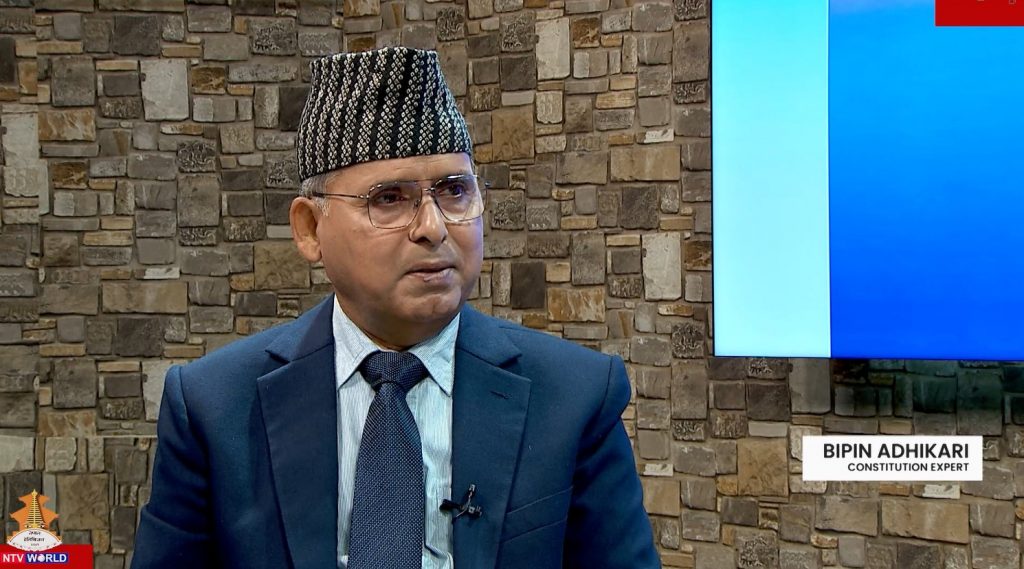
As constitutional scholar Bipin Adhikari observed during our post-election discussion, the system itself has not failed. What failed, in many ways, was the ability of traditional parties to read the mood of the electorate.
The public frustration that built up over years, over corruption, poor service delivery, and a widening gap between political rhetoric and everyday governance, eventually found an outlet.
Democracies often produce such moments.
They do not happen frequently. But when they do, they can reshape political landscapes overnight.
This election appears to be one of those moments.
Dr. Adhikari’s interpretation of the RSP’s rise is strikingly calm.
While many analysts have framed the result as a political earthquake, he argues that it is in fact a normal democratic correction. When voters believe that the existing political establishment is no longer responding to their needs, they consolidate behind an alternative.
And this time, that alternative was unmistakable.
“The system has not failed. What failed was the political establishment’s ability to read the mood of the electorate.” Dr. Bipin Adhikari
The bell became more than an electoral marker; it became a political siren. Across the country, voters rallied behind a promise- not necessarily detailed policy blueprints, but a broader expectation of competence and integrity.
Many voters may not have known their individual candidates well but they knew what they were rejecting.
And they knew what they were hoping for.
If the current results hold, Nepal will soon have something it has rarely experienced in recent years: a government with overwhelming legislative authority.
A two-thirds majority changes the mechanics of governance dramatically.
First, it gives the government the ability to move legislation quickly through parliament. Reform agendas that once stalled in coalition negotiations could now be pursued with far greater speed.
Second, it allows the ruling party to introduce ambitious structural changes, including constitutional amendments, at least within the lower house.
But Nepal’s political system remains complex.
While the RSP may dominate the House of Representatives, the National Assembly and many provincial governments remain controlled by traditional parties. Local governments too are largely in the hands of established political forces.
This creates the possibility of friction across Nepal’s federal structure.
Power at the center does not automatically translate into harmony across the system.
Dr. Adhikari is careful to emphasize that electoral victory and effective governance are two very different things.
RSP is still a young institution. It must now transform itself from a movement into a governing structure.
That means building internal discipline, developing nationwide organizational capacity, and establishing clear codes of conduct for its members.
It also means confronting the realities of the state machinery.
Nepal’s bureaucracy, often criticized but undeniably experienced, remains the engine through which policy is implemented. Dr. Adhikari argues that depoliticizing administrative appointments and allowing the bureaucracy to function professionally could become one of the most decisive factors in determining the success of the new government.
In his words, political interference in administration must stop.
Without bureaucratic cooperation, even the most ambitious reform agenda risks stagnation.
Domestic governance will not be the only test.
Foreign policy management may prove equally challenging.
Nepal, a buffer state, occupies a delicate geopolitical space, balancing relationships with powerful neighbors while engaging with global partners and development institutions. A new political leadership, many of whose members are entering government for the first time, will need clarity in its international positioning.
Diplomatic ambiguity is rarely sustainable for long.
How the new government navigates these relationships will signal whether its technocratic energy can translate into strategic maturity.
One of the most sensitive questions emerging from this election concerns constitutional amendment.
A two-thirds majority naturally raises speculation about amendments to the 2015 Constitution. Yet Dr. Adhikari offers a cautionary perspective.
Nepal, he argues, may not need immediate constitutional overhaul. The more urgent task is implementation.
Many of the constitution’s provisions, including social rights frameworks and governance structures, remain only partially operational because the necessary legislation has not been fully enacted.
In other words, Nepal’s challenge may not be the constitution itself, but the political will to make it work.
Even Dr. Adhikari acknowledges that what Nepal is witnessing is unusual.
Political waves of this magnitude do not occur frequently. They are typically the culmination of long periods of frustration, when voters collectively decide that the existing order must change.
In Nepal’s case, years of perceived non-delivery appear to have created precisely such a moment.
But moments like this come with enormous stakes.
If the new government succeeds, it could mark the beginning of a new era of governance- one defined by institutional reform, administrative professionalism, and renewed public trust.
If it fails, the consequences could be equally profound.
Because this election was not simply about policy preferences.
It was about hope.
Millions of voters cast their ballots believing that politics in Nepal could function differently. That the state could become more responsive, more competent, and more accountable.
A government can survive policy disagreements.
But when hope collapses, rebuilding trust becomes far harder.
Nepal’s democratic journey over the past three decades has been dramatic: from monarchy to republic, from centralized rule to federalism, from political upheaval to constitutional consolidation.
This election now adds another chapter.
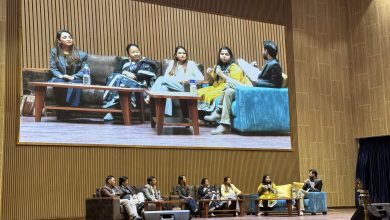
But as I reminded viewers at the end of our conversation with Dr. Adhikari, elections are only the opening act.
The true test of this political moment will be whether an electoral wave can be transformed into something more enduring: stable governance, functioning institutions, and a political culture that rewards delivery over promises.
The bell has rung across Nepal.
Now the country waits to see whether the echo becomes reform or simply another moment in its restless democratic history.
Comments