
Voters Education Campaign: Never too Late?
Sabika Shrestha
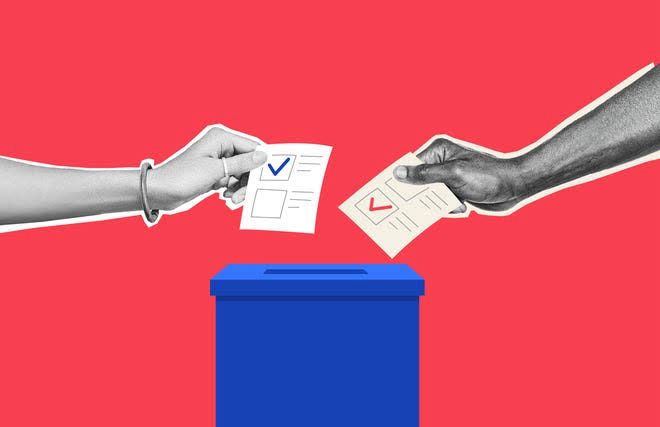
About 15 days ahead of the House of Representatives (HoR) election, the Election Commission is launching a nationwide voter education drive.
The fortnightly drive starting February 15 is aimed to reduce invalid votes and strengthen electoral participation.
Similar awareness efforts in past elections were also rolled out late that aided in increasing the number of invalid votes.
Election officials say voter education is crucial to reaching citizens in remote areas, many of whom are illiterate or have limited formal education.
Volunteers are being mobilized for voters’ education from urban areas to remote hills and mountains.
One volunteer are deployed in each of the country’s 6,743 wards across 753 local levels.
The program will run till March 1.
This time the campaign combines door-to-door outreach with digital tools to help reduce errors and misinformation.
They educate voters on proper voting procedures, correct marking and folding of ballot papers, the importance of ballot secrecy and common reasons behind ballots rejection.
Voters will be informed about how to avoid such errors.
Information officer of Election Commission Suman Ghimire said Compared to previous elections, programs are moving forward to reduce the number of invalid votes in this election.
“From the way the ballot papers are folded to the way they are stamped, how to stamp so that the vote is valid, every voter is provided with ample information on how to vote correctly.”
Voters this time are also made digitally aware of social media campaigning and promotional advertisements done by election commission.
Because of this, the Election Commission is confident that the number of invalid ballots will be minimized this time.
However, the voter education strategies vary depending on the type of election, as ballot designs and voting systems differ across federal, provincial and local polls.
Still, eliminating invalid votes may not be possible, say the experts adding that targeted grassroots campaigns can help in reducing the number.
The representatives have been connected through an official Election Commission WhatsApp group to facilitate communication and timely dissemination of instructions.
Election data show that, on average, more than four percent of votes cast between1991 and 2022 were invalid.
In the 2022 federal and provincial elections alone, 5.06 percent of votes were rejected.
The Election Commission has allocated Rs 250 million which is approximately 2 million dollars for voter education campaign.
An informed voter is the foundation of a credible and successful election.


Comments