
Sohrai: Living Harvest Festival of The Santhals in Eastern Nepal
Dr. Tanka Upreti
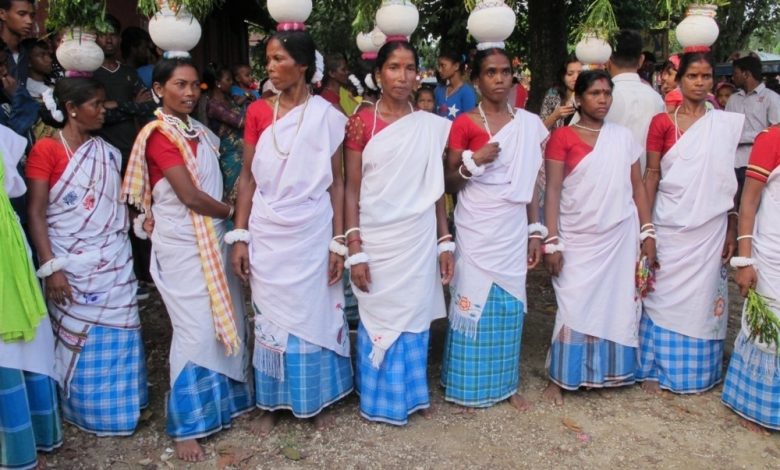
In the eastern plains of Nepal, across Jhapa, Morang, and Sunsari, as paddy fields turn golden and the monsoon retreats, the Santhal community prepares for Sohrai, a week-long traditional harvest festival deeply rooted in land, livestock, and ancestral belief. While neighbouring towns glow with Tihar lights, many Santhal villages celebrate prosperity in a different rhythm, through cattle worship, earth-based art, and collective thanksgiving.
According to National Census of Nepal (2021) there are over 57,000 Santhals making 0.2% of the total population of the country. Out of them, 53, 677 can speak their mother tongue, representing 0.18% of the total languages.
In Nepal, Sohrai festival is celebrated from December to February as per the convenience of the Santhal people living in different areas. According to Shanthal researcher Shibu Murmu, there is growing consensus among Shantals to celebrate it during the ‘Full Moon Days’ of January.
A Festival Grounded in the Eastern Terai
For Santhal families living in rural pockets of Jhapa’s southern villages, Morang’s agricultural belts, and Sunsari’s forest-edge settlements, Sohrai marks the end of the farming cycle. Agriculture and cattle-rearing remain central to daily life, and Sohrai is a moment to pause and express gratitude to nature, animals, and Marang Buru or the Great Spirit.
In villages such as Pathri, Rangeli, Urlabariof Morang district, Damak outskirts, Rajgard, Arjundhara, Garamani, Anarmaniof Jhapa districtand Itahari-adjacent rural areas of Sunsari district, cattle are washed in ponds or hand-pumped water sources, and their horns are coloured with vermilion and oil. The elders lead prayers, while younger members gather firewood, prepare food, and practice traditional dance steps.
Sohrai and Tihar in the Eastern Plains of Nepal
In Jhapa, Morang, and Sunsari, Sohrai and Tihar often fall within the same period, creating a unique cultural overlap. While mainstream settlements celebrate Laxmi Pooja with decorative electric lights and rangoli, Santhal neighborhoods focus on cattle worship and community feasting.
| Aspect | Sohrai(Santhal – Eastern Terai) | Tihar(Mainstream Nepal) |
| Main Focus | Harvest & cattle | Goddess Laxmi & wealth |
| Location | Rural villages of Jhapa, Morang, and Sunsari | Urban & rural |
| Ritual Style | Collective, community-based | Household-centered |
| Art | Mud-wall Sohrai paintings | Rangoli, lights |
This coexistence highlights the cultural diversity of eastern Nepal, where multiple traditions thrive side by side.
Sohrai Art: Earth, Walls, and Identity
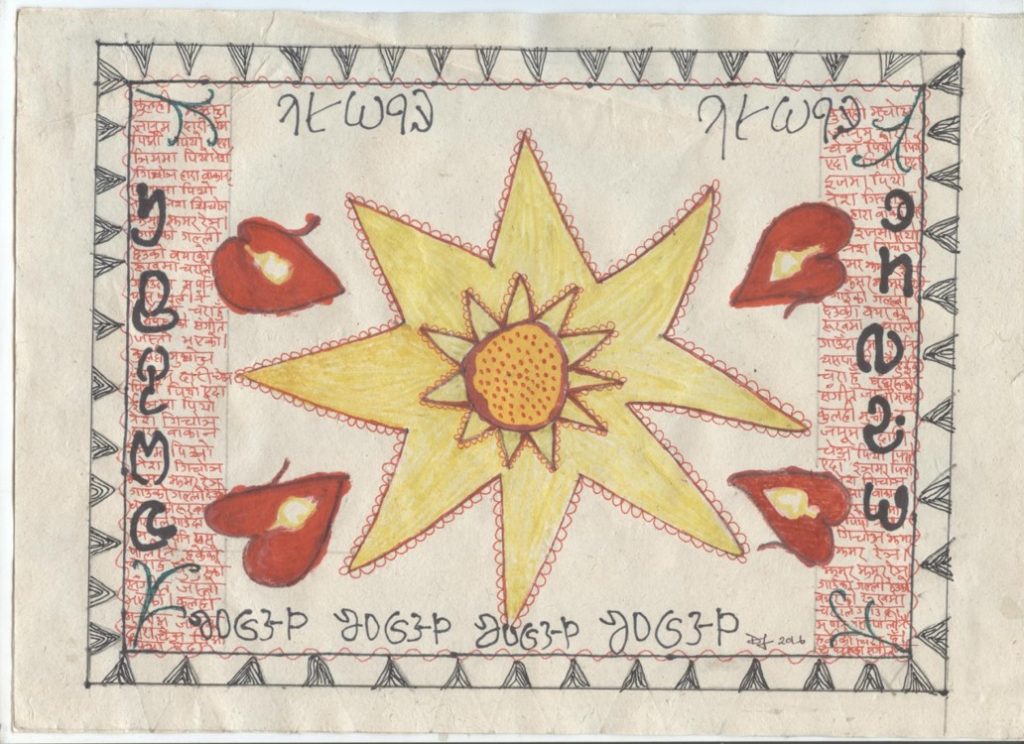
A painting created based on traditional Sohrai motifs using natural pigments.
In Santhal settlements of Jhapa, Morang and Sunsari, one of the most distinctive sights during Sohrai is the painting of house walls. Using mud, cow dung, rice paste, charcoal, and natural plant colors, women paint motifs that reflect their environment.
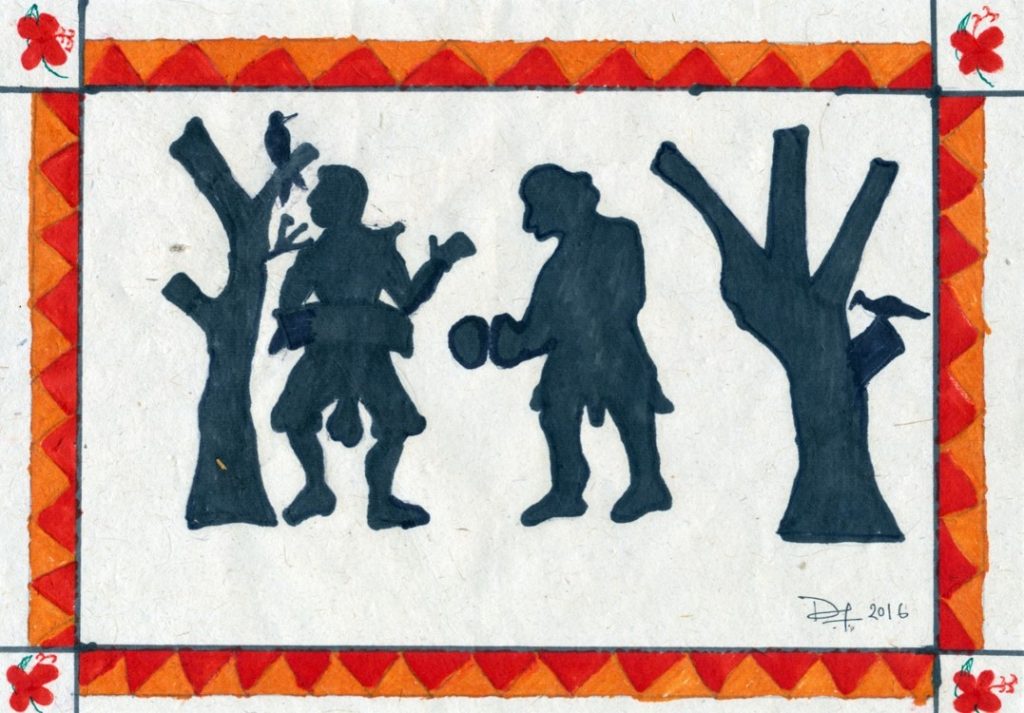
Common images include:
- Cows and oxen symbolizing livelihood
- Birds, trees, and forest animals common to the Terai
- Geometric patterns representing balance and protection
These murals are temporary, washed away by time, yet recreated every year, symbolizing renewal and continuity.
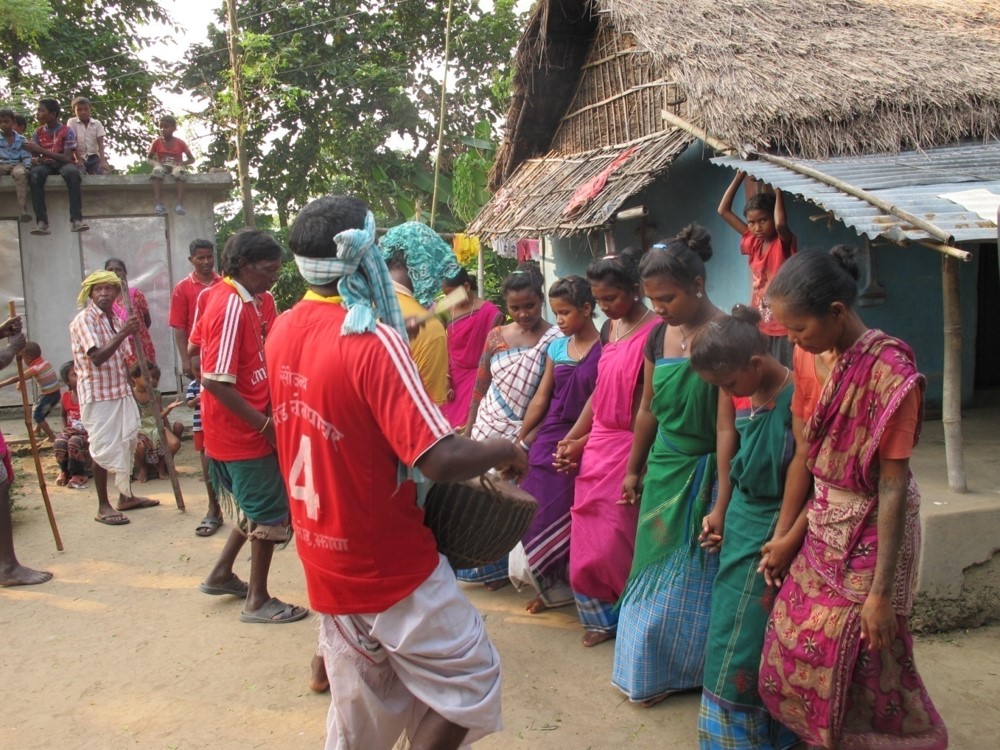
Community dance marks Sohrai celebrations in rural Jhapa.
In the eastern Terai districts of Jhapa, Morang, and Sunsari, the Santhal community celebrates Sohrai with vibrant dance, music, and collective rituals that reflect their deep connection to nature and community life. The festival begins after the harvest, when families clean their homes, decorate cattle, and prepare traditional food and rice beer known as handia. As evening approaches, open courtyards and village spaces turn into centers of celebration.
Dance is central to Sohrai celebration. Santhals gather in groups, often forming long lines or gentle circles, moving in rhythm with the beat of traditional drums. The dancers step forward and backward in coordinated patterns, their movements simple yet expressive, symbolizing harmony with the land and the agricultural cycle. Women usually lead the dance, wearing colorful saris, bangles, and flowers in their hair, while men follow with steady footwork and drumbeats.
During the festival Santhals celebrate Raska or the joy of life with music created by indigenous instruments such as the tamak and tumdak drums, accompanied by bamboo flutes. The songs sung during Sohrai tell stories of harvest, cattle, forests, ancestors, and daily life in the eastern plains. The rhythm is continuous and hypnotic, encouraging participation from all age groups, from children to elderly people.
Celebration during Sohrai is not limited to dancing. Cattle, considered essential partners in farming, are bathed, oiled, and marked with vermilion before being offered special feed. Elders perform prayers to ancestral spirits and Marang Buru, seeking protection and prosperity for the coming year. Community feasts follow, where food and handia are shared equally, reinforcing social unity.
In eastern Nepal, Sohrai is celebrated mostly within villages rather than on public stages. Yet, through dance, music, and shared rituals, the Santhal people keep their cultural identity alive, passing traditions from one generation to the other in a spirit of joy, respect, and togetherness.
Challenges in Preserving Sohrai Festival
Despite being an important festival in Nepal, the preservation of Sohrai faces several challenges due to social, economic, and cultural changes. Some of them can be spelled out in this way:
1. Modernization and Cultural Change
Rapid modernization and exposure to mainstream culture have influenced younger generations. Many Santhal youths are gradually losing interest in traditional rituals, songs, dances, and customs related to Sohrai, leading to cultural erosion.
2. Migration and Urbanization
Many Santhal families migrate to urban areas or abroad in search of employment. This weakens community bonds and reduces participation in traditional festivals, making it difficult to organize collective celebrations of Sohrai.
3. Lack of Documentation
Traditional knowledge, rituals, stories, ballads, and practices of Sohrai are mostly transmitted orally. Due to limited documentation and research, much of this cultural heritage is at the risk of being extinct.
4. Economic Constraints
Poverty and financial challenges force families to prioritize daily survival over cultural practices. Expenses related to festival rituals, decorations, and community feasts become difficult to manage, reducing the scale of celebration.
5. Weak Institutional Support
There are limited government and institutional support for promoting and preserving indigenous festivals like Sohrai. Lack of funding, policy focus, and cultural programs reduces opportunities for awareness and safeguarding.
6. Decline in Traditional Livelihood Practices
Sohrai is deeply connected to agriculture and cattle rearing. With the decline of traditional farming and livestock practices, the symbolic meaning and relevance of the festival are gradually weakening.
7. Influence of Dominant Cultures
The growing dominance of mainstream religious and cultural festivals often overshadows indigenous celebrations, resulting in reduced recognition and participation in Sohrai.
8. Inter-generational Knowledge Gap
Elder community members possess deep cultural knowledge, but younger generations often lack opportunities or interest to learn these traditions, leading to a widening knowledge gap.


Comments