
Sights of Gaza Ceasefire: Reflections from a Newsroom Faraway

Shivanee Thapa Basnyat
The night Gaza went quiet, I sat in my newsroom in Kathmandu, watching the live updates scroll by. Outside, a faint smell of smoke drifted in, remnants of a recent arson incident not far from my workplace. It was small compared to the inferno of Gaza, but the smell of burning has no geography. Whether it rises from a supermarket in Naxal or from a city torn apart by war, it carries the same pungency, of fear, of loss, of endings, of something fragile slipping away.
As a journalist, we often learn and train ourselves to hold our distance, to describe and not dissolve. But that night, detachment felt dishonest. The images of buildings turned to dust, a father digging through ruins, a woman staring into the empty sky, an entire city reduced to rubbles, pierced through the distance. The ceasefire had come, yet nothing about it felt peaceful. It looked like exhaustion.
For months, the world had watched Gaza burn. And when the bombs stopped, the silence felt heavier than the noise. Cameras followed families returning to what was left of their streets and alleys, scavenging through the debris pool that once they called home, tracing out streets that no longer had names. Those were the “sights” of the ceasefire, not peace, but pause. A pause filled with the fragile hope that maybe this time, it would last.
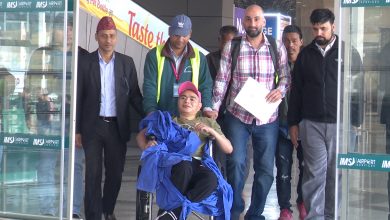
Here in Nepal, these stories were painfully close. Young Nepalis who had gone to Israel under the “Learn and Earn” program became part of that conflict’s cruel ledger. Some never came back. Their families endured long stretches of prayer and rumor, hope and heartbreak. Their loss made the war personal for us. Even from afar, no one is untouched by conflict.
From a newsroom half a world away, I wonder whether we are truly watching or merely witnessing. The difference, perhaps, is empathy. And that, the world still seems to be learning.
Across the world, statements were issued, and negotiations celebrated. But for the people of Gaza, diplomacy meant survival. Every ceasefire clause translated to a day without bombs, a chance to search through rubble, to find what or who was left.
Watching from afar, I kept thinking how peace often seems like a privilege negotiated elsewhere. In the grand halls where power is exchanged, the cost of war is reduced to briefings and statistics. Yet behind each number stands stories of defiance, of doctors who refused to leave their hospitals, of mothers rebuilding their kitchens beneath tarpaulins, of children drawing suns on soot-streaked walls.
I come from a country that has known its share of waiting for peace talks, for promises, for the next dawn to be better than the last. Maybe that’s why the story of Gaza stirs something deeper.
I come from a country that has known its share of waiting for peace talks, for promises, for the next dawn to be better than the last. Maybe that’s why the story of Gaza stirs something deeper. It is not just about war and politics, maybe it is about the endurance of ordinary people who refuse to give up their right to live with dignity.
The ceasefire may have quieted the sky, but not the ache beneath it. Uncertainty looms but at least the continuous shelling has stopped, the only solace for now.
From a newsroom half a world away, I wonder whether we are truly watching or merely witnessing. The difference, perhaps, is empathy. And that, the world still seems to be learning.

Comments