Sabitra Bhandari, A Plea, and the Question of Choice
Oped
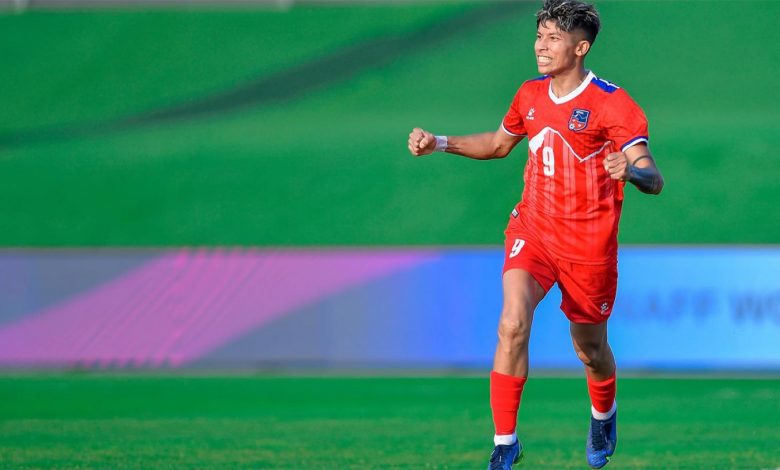
Sabitra Bhandari has spent her career protecting Nepal’s pride. Today, she finds herself asking a far more difficult question: who protects the player?
Her public plea Monday on her social media handle, seeking support for a complex knee surgery, has shaken Nepal’s sporting fraternity. Not because injuries are rare in sport, but because of what her situation reveals. It exposes the uncertain ground on which Nepali athletes stand when their bodies, their only professional capital, give way.
Yet Sabitra Bhandari’s story was never meant to begin with uncertainty.
She was born in the rugged terrains of Lamjung – restless, irrepressible, and bursting with energy. Long before stadiums chanted her name, she was a village girl chasing a volleyball across uneven hill slopes. She fondly recalls how as a young girl, she walked up to a distant Army barrack seeking an opportunity to play volleyball. She was stepping into a space where girls were never expected to arrive.
But Sabitra Bhandari did not wait for permission. She forced open her own door.
Football came later. And when it did, it found its most relentless striker.
Her parents still recall the day she told them she would fly abroad to play football. They did not believe her. Not because they doubted her courage but because such futures did not exist in their imagination. They shrieked at the very idea that a mere metal box would carry their daughter to a faraway land.
Today, in her village, there stands a landmark in her name – a depiction of how far that improbable journey travelled.
Sabitra Bhandari went on to become Nepal’s all-time leading goal scorer. South Asia’s most feared striker. The first Nepali woman to play professional football in Europe. From France to Israel, Australia to New Zealand, she carried Nepal with her not just as a player, but as proof that Nepali football could belong to the world.
She changed the psychological ceiling of Nepali sport.
Her goals did more than win matches. They altered belief.
For decades now, Nepal’s women’s team has punched above its weight operating with limited resources but extraordinary resolve. At the centre of the recent resistance stood Samba. Her presence alone shifted the balance of a game. She was Nepal’s sharpest weapon. The opponent’s greatest concern.
She seemed unstoppable.
Until now.
In her public statement, she revealed she is battling a severe injury to her ACL graft and MCL – requiring complex surgery and months of rehabilitation. Currently in New Zealand, she wishes to return to Aspetar Hospital in Qatar.
The estimated cost is 80,000 US dollars.
Bhandari says her club has stretched efforts to help her while also expressing willingness to facilitate treatment locally. Also, Nepal’s football governing body, ANFA, has said it has taken initiatives and pledged financial support. It has also clarified that her injury occurred during club duty.
On paper, this appears sufficient. In public debate, it has raised a pointed question: if treatment is possible in New Zealand, Nepal, or India within available support, why insist on Qatar?
But this question, while practical, risks missing the deeper point.
This is not Sabitra Bhandari’s first encounter with career-threatening injury. In 2021, when her ACL collapsed, she underwent surgery at Aspetar Hospital in Qatar -one of the world’s leading sports medicine centres. She recovered. She returned. She scored. She carried Nepal again.
Elite athletes do not simply seek treatment. They seek certainty.
Because in elite sport, recovery is not about walking again. It is about returning at the same speed, the same sharpness, the same instinct. A failed recovery does not just delay a career. It ends it.
This is where her choice becomes not indulgence but professional judgment.
Is it wrong for an elite athlete to choose where she wants her career saved?
More importantly, it raises a quieter question not of blame, but of structure.
The real issue is not legitimacy of choice but whether systems exist to accommodate elite athletes.
This is the more important structural question because elite national assets often receive special medical facilitation, negotiated treatment arrangements and extended institutional backing.
This happens because federations also protect their competitive interests.
When a player who has carried a nation’s footballing identity for over a decade suffers injury, should her path to recovery feel negotiable? Or should it feel assured?
Because Sabitra Bhandari is not merely another footballer in the system.
She is the system’s greatest outcome.
This is where the romance of sport meets its reality.
Nepal celebrates its athletes with emotion. Stadiums erupt in their honour. Social media immortalizes their victories. But celebration is not protection.
Athletes exist within a fragile professional structure where contracts are short, insurance is limited, and institutional responsibility often ends at the touchline.
Sabitra Bhandari’s plea forces recognition of that fragility.
It is uncomfortable precisely because it contradicts the image Nepal has built of her. A national icon. A symbol of achievement. A player who conquered geography, poverty, and expectation.
Yet even she is not insulated from vulnerability.
If the country’s greatest footballer must navigate uncertainty, what security exists for those who follow?
This is not simply her battle.
It is a moment of reflection for Nepali sport itself.
Sabitra Bhandari has always fought her way forward. From Lamjung’s hills to European stadiums. From disbelief to national reverence.
She ended her plea with the same defiance that defined her life, “I am tired. But I have not lost. I will return.”
She probably will. She always has.
But her story leaves behind a question that will outlast this injury.
In a nation that takes pride in its heroes, is pride alone enough to protect them?