
Political Parties Gear Up for Upcoming Nepal’s Election
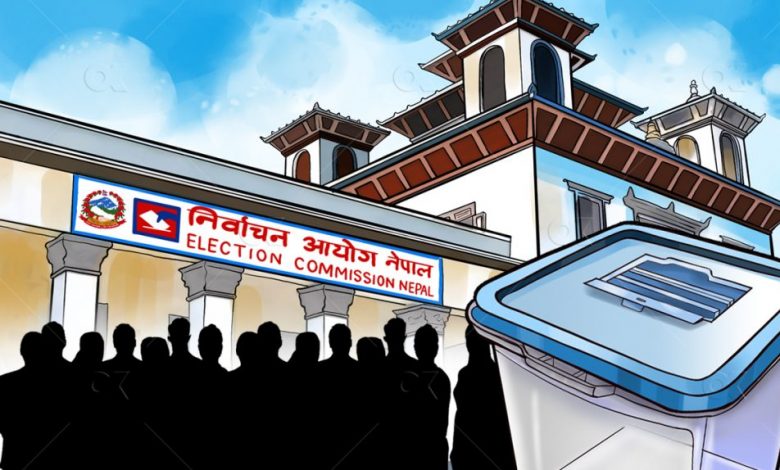
Nepal is moving toward its upcoming parliamentary election, set for March 5, with political parties wrapping up their registration process today.
The country’s Election Commission had set November 25 as the final deadline for parties wishing to contest the vote.
According to the Commission, around 80 political parties have now registered, among which are- Nepal’s largest and most established groups, as well as several newly formed parties seeking national recognition among others.
Under Nepal’s electoral regulations, all parties, old or new, must formally register for each election cycle, even if they were previously certified.
That requirement saw major players such as the Nepali Congress and the Communist Party of Nepal–Unified Marxist Leninist CPN-UML complete their registrations this week.
The CPN-UML, which held the second-largest number of seats in the now-dissolved House of Representatives, registered on Sunday.
The Nepali Congress, Nepal’s largest traditional party, had already confirmed its participation earlier.
The upcoming vote is viewed as a significant test for Nepal’s political landscape, which has seen frequent government changes, shifting coalitions, and growing public frustration over governance and economic challenges.
Number of Parties Entering the Race
Nepal’s political landscape is once again showing signs of fragmentation and rapid re-alignment.
The country has long seen parties split, merge, and re-emerge, and that shifting pattern is evident in the run-up to the March parliamentary election.
Back in 1959, Nepal’s first democratic election saw just nine registered parties.
Today, that number has increased nearly tenfold, with more than 90 parties entering the race this year.
Analysts say that while the number of contestants keeps rising, the number of parties capable of becoming national parties remains limited.
Even factions that broke away in recent years, including groups from the UML and Maoist camps, have now reunited under broader left alliances.
Smaller groups have also rushed to register, some claiming they can deliver what mainstream parties have failed to do.
But political experts warn that this proliferation of parties contributes to Nepal’s chronic coalition politics, frequent government changes, shifting alliances, and an ongoing struggle to secure a stable majority. Despite large participation, history shows only a handful of parties manage to survive beyond a single election cycle.



Comments