
‘No Point Throwing the Constitution in Gutter’ Prof. Subedi (Video)
Sarah Sapsanamma Rai
Nepali people witnessed an extraordinary surge of civic energy led by the country’s Generation Z, a movement that shook the political establishment, forced the government out, and compelled early elections well ahead of schedule. What began as an expression of dissent on social media quickly became a nationwide demand for accountability, transparency, and change in leadership.
As Nepal prepares to head back to the polls, fundamental questions arise: What do these developments say about the evolution of Nepal’s democracy?
Are we witnessing a generational shift that could redefine governance? Or are we risking a repeat of political instability under a new name?
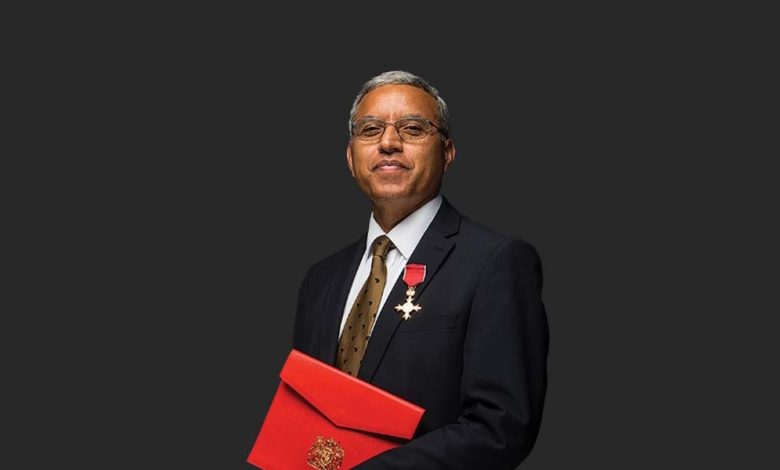
NTV World’s News Editor Sarah Sapsanamma Rai spoke with Prof. Surya P. Subedi, who is affiliated with the University of Leeds and has played a pivotal role as an advisor and mediator during some of the country’s most critical transitions, from helping leaders navigate the end of the decade-long Maoist conflict to contributing to the drafting of a new democratic constitution that laid the foundation for lasting peace and inclusion. Here are the excerpts:
Q. How do you recall the Gen Z movements and the developments as they unfolded?
I was shocked and saddened by what happened in Nepal during that crucial week. I think it was largely due to a lack of good governance, accountability, and rampant corruption at all levels.
The new generation, young people, were disillusioned by the political system and governance, which led to an explosion of dissatisfaction. This could have been managed well in advance. Nepal has experienced many political changes, but these changes have not delivered the services people expected.
Good governance is a key element in any system, but in Nepal, whether we talk about the changes in 1940s or after the Maoist rebellion, political leaders haven’t learned the lessons of history.
The political system is good, the constitution is good, the political framework is sound, but implementation has been the problem. I haven’t seen the sincerity and seriousness required from Nepal’s political leadership, which contributed to this unfortunate situation.
Q. As someone who has observed Nepal’s democratic progress, where do you think we stand at the moment?
Compared to many constitutions around the world, Nepal’s new constitution is progressive. But the problem lies in its implementation and the capacity of leaders to deliver because they have been primarily focused on gaining and holding power.
I haven’t seen any vision from political leaders about how the country should move forward. Nepal is a small country, sandwiched between two Asian giants, so leadership should be smart, but Nepal has lacked that.
Leaders have been embroiled in power-sharing disputes and constant squabbles over who becomes prime minister and who forms the government. They have wasted time.
The challenge for the country is the lack of visionary leadership, resulting in missed opportunities during previous political changes. I fear the country may face the same unfortunate situation again.
Q. You rightly mentioned Nepal is sandwiched between two giants, and there’s geopolitical sensitivity to consider. How do you think this movement places us in regional geopolitics?
There are critical reports suggesting the movement was a pre-planned operation. People are asking: What were the country’s security agencies doing? What was the home minister doing?
What were the home ministry, the army, intelligence officers, and the entire government apparatus doing during this difficult situation? This question is being raised both nationally and internationally.
A powerful investigative commission must be formed first.
Internal political democracy in parties is crucial since ticket distribution corruption fuels wrongdoing.
The anti-corruption body must be empowered; currently, it targets only minor players, not “big fish.”
Q. There’s speculation about international influences and actors involved during the movement and the formation of the interim government, with an influence likely to persist. How do you view this? What can the public expect?
It is difficult to say whether foreign powers or elements were involved because much of the evidence that could be analyzed or forensically examined has been lost. No action was taken immediately afterward.
Q. We have a commission investigating the whole scenario. What do you think of it?
The government currently does not have enough power to make fundamental changes in the country. In many countries, after a revolution or major political agitation, a new government usually has a mandate to bring about major change.
Here, the government’s main mandate is to hold the next parliamentary election in about six months. Is that mandate enough to implement the wishes and demands of the young generation the Gen Z movement?
My concern is that the government should have broader powers. One possibility could be to reinstate parliament and enact new laws urgently, empowering the government to implement fundamental changes.
As far as I see, overhauling the system without abolishing or denying the constitution requires a fundamental change in political culture.
Q. Wouldn’t reinstating the parliament negate the sentiment of the public?
Rather than dissolving parliament overnight, I would have preferred the president to call an emergency session. Dissolving parliament without enacting new laws doesn’t give the current government enough power to bring about the changes demanded by Gen Z, so we risk losing this opportunity.
So much destruction has taken place in Nepal, and many young lives have been lost. How do we address the situation with immediate measures? We don’t know who will form the next government after the election. The country has made great sacrifices, but what will be the final result? I am not very hopeful.
The government currently does have enough power to make fundamental changes in the country. In many countries, after a revolution or major political agitation, a new governent usually has a mandate to bring about major change.
Q. When you say the government lacks power, what do you mean exactly? How can the government be empowered?
First, it should have the power to establish a strong anti-corruption body. From what I have observed, the main demand was good governance, addressing the government’s inability to provide services and control corruption.
Their demand was not to dissolve parliament but to restructure those in power. What we see now is just one government replaced by another. Gen Z did not simply want new faces; they wanted drastic change.
You strike when the iron is hot, but the iron is cooling, and we may be losing time. Gen Z could have surrounded parliament to force emergency laws before it was dissolved.
Now, there is no parliament, and the caretaker government’s sole mandate is to hold elections. How can demands be addressed in the meantime? Six months is a long time; we don’t know what sort of government will emerge afterward.
Q. Preparations are underway for elections, but there are concerns about whether they will happen. How do you see this?
I believe elections should take place, and I am confident they will. I have faith in the interim Prime Minister, back then, I condemned her impeachment as unacceptable, and I support her now. But my worry is whether she has enough power and support to succeed.
Q. Many leaders once trusted have been questioned amid accusations of foreign influence. Who can the public trust now when voting for effective governance?
At this moment, the public must trust the government we have, regardless of how it came to power or its current authority. They also need to trust the electoral process. What I see in Nepal is a lack of seriousness, vision, and sincerity among political leaders. Political parties are often without principles.
Q. Could you outline what the roadmap ahead might look like?
First, there must be a thorough investigation into corruption involving politicians and civil servants, anyone exercising public authority. That was Gen Z’s primary demand. Many scandals remain unresolved, and it’s uncertain if the next parliament will address them, especially if the same politicians return.
Gen Z lacks a political party with the experience to contest elections effectively. Without a strong independent party, old parties and faces will likely return, risking continued exploitation. Therefore:
Q. What about the federal structure and the election system envisioned in the constitution?
The constitution should not be rewritten repeatedly. It is fundamentally sound. Some people may have reservations about the federal structure, but decentralizing power is necessary, and that has not been adequately achieved.
It was meant to reduce concentration of power in Kathmandu, specifically in Singhadurbar and the Prime Minister’s office, but progress is lacking. Before the new constitution, I campaigned for a directly elected president with executive powers to improve political stability.
However, given the recent riots and possible foreign influence, I no longer think a directly elected president would serve the country’s best interests. We must work within the existing constitution, which is fine.
Throwing it away would waste another decade, a luxury Nepal cannot afford. Instead, we should strengthen institutions and improve governance within the current framework.
- A powerful investigative commission must be formed first.
- Internal political democracy in parties is crucial since ticket distribution corruption fuels wrongdoing.
- The anti-corruption body must be empowered; currently, it targets only minor players, not “big fish.”
Q. Around the same time as Nepal’s Gen Z movement, there were similar developments elsewhere. What happened in Nepal has been seen as a fuel for similar movements in the Southeast Asian region. Nepal’s flag was also spotted during a protest in Georgia. Do you think this generational discontent has triggered a new wave of unrest across the world?
Of course, Nepal’s movement was preceded by the movement in Sri Lanka and Bangladesh. They were young people, students in Bangladesh and other younger ones in Sri Lanka as well.
A similar pattern was repeated in Nepal. But the momentum had begun already, and now that momentum has spread to various parts of the world, even in Indonesia and Morocco among others.
The younger people who are well-educated, patriotic, want to bring about reform, and want to see democracy work have been agitating and demonstrating against autocratic governments. The movement will continue in some form in other parts of the world.
Q. How do you think international partners, including the UK, play a constructive role in supporting Nepal’s next phase of youth-led development?
The international community has tremendous goodwill for Nepal. Nepali people are generally liked internationally. But what happened is very unfortunate. People have shot themselves in the foot. How can the people burn down their own institutions, their own national treasures?
Nevertheless, if there is a government capable of rebuilding trust, the international community will extend their hand of cooperation. But there has to be visionary leadership, a visionary foreign minister, a towering intellectual figure who can command the respect of both the national and international community.
Q. Going forward, what lessons do you think Nepal can draw from other successful democracies?
I think Nepal has democracy and human rights on paper, but in practice there are many areas that need addressing. Governments have simply focused on remaining in power.
Three political leaders rotated power among themselves like in musical chair. The country wasted a lot of energy. Therefore, human rights, rule of law, and democracy have not been as strong in practice as they should have been in Nepal.
We wasted 10 years, which was a golden opportunity. After the new constitution was adopted, there was momentum. But what happened was constant squabbling for power.
Countries that became democratic in Eastern Europe, along with Nepal, accelerated their economic development and eventually became members of a rich club of European countries called the European Union.
But Nepal went backwards, unable to harness natural resources, unable to harness the goodwill of the international community, and unable to harness the patriotic enthusiasm of its people. I hope the changes in Nepal will not meet the same fate again.
Q. What role should Nepali nationals now play at this moment to ensure that we keep the changes for good?
I think supporting the present government, making it more powerful, and deliberating restructuring of state apparatuses and internal democracy is crucial. Encouraging a rebellion in all major political parties is necessary. They need to throw away incompetent leadership that has brought the country to this state. There’s a lot of work to be done: building public opinion with the aim of achieving democratic culture, good governance, and stamping out corruption.
(Dr. Surya Prasad Subedi is a Professor of International Law at the University of Leeds, UK and a member of the Institut de Droit International, and a visiting professor on the international human rights law programme of the University of Oxford)

Comments