
Nepal’s Child Mortality Decline Masks Deep Crisis in Sudurpaschim
Dinesh Bahadur Bista/Smithu Ghising Tamang
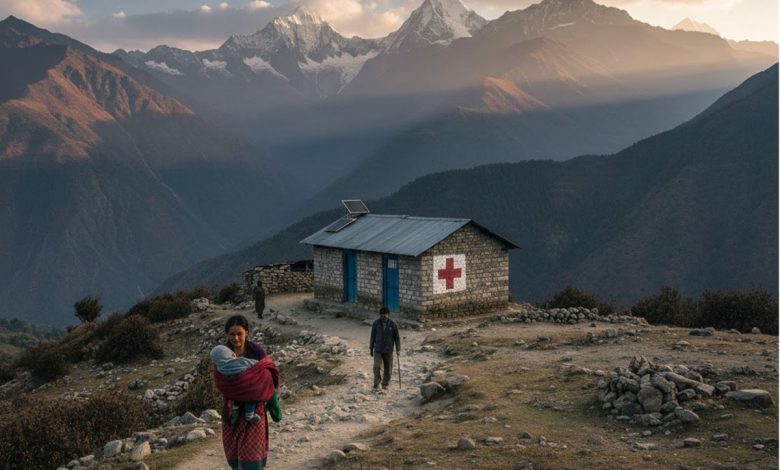
Nepal’s mountain skyline often symbolizes resilience and progress. Over the past two decades, the country has sharply reduced child deaths and expanded access to basic healthcare. Yet in its far-western corner, too many newborns are still not surviving their first years of life.
Under the United Nations Sustainable Development Goals (SDGs), Nepal has pledged to reduce under-five mortality to 20 deaths per 1,000 live births by 2030. Nationally, the rate stands at 27 per 1,000 – a major improvement compared to the early 2000s, but still off target. The heaviest burden lies in Sudurpaschim Province, where remoteness and socio-economic hardship continue to shape child survival.
A Province Falling Behind
According to the latest Nepal Multiple Indicator Cluster Survey (NMICS) published by the National Statistics Office, 26 newborns die for every 1,000 live births in Sudurpaschim. Infant mortality rises to 38 per 1,000 live births, and under-five mortality reaches 48 per 1,000 – the highest among Nepal’s seven provinces.
Provincial Health Directorate data shows that 86 newborn deaths were recorded by mid-December of the current fiscal year. Last fiscal year, 156 newborns died, while 237 infant deaths were recorded the previous year.
District-wise, Kailali District reported the highest number of newborn deaths, followed by Kanchanpur District and Achham District. Cases were also documented across Bajhang, Bajura, Darchula, Doti and Baitadi – districts known for rugged terrain and scattered settlements.
What Experts Say
Ramesh Kunwar, a public health expert, says the persistently high under-five mortality in Sudurpaschim is driven by poverty, malnutrition, early pregnancy and child marriage. He explains that limited access to quality healthcare services and low health awareness continue to put young lives at risk across western Nepal.
Provincial authorities maintain that interventions are ongoing. Ramesh Malasi, Chief of the Public Health Division in Sudurpaschim Province, says child health programs such as Community-Based and Facility-Based Integrated Management of Childhood Illness (IMCI) are being implemented through health posts, primary health centers and hospitals, alongside routine immunization services. However, he acknowledges that overall indicators in the province remain weaker compared to other parts of the country.
At the federal level, Dr. Prakash Budhathoki, spokesperson for Nepal’s Ministry of Health and Population, says national surveys show overall improvement in maternal and child health.
However, he notes that provincial and district breakdowns reveal that Sudurpaschim continues to record higher maternal and child mortality rates.
He attributes this to the province’s remoteness, delays in antenatal check-ups, poor maternal nutrition, lower vaccination coverage and long travel distances to health facilities. He also points out that widespread male labor migration to India leaves many women with limited exposure to health services and support systems.
The Challenge Ahead
Nepal’s progress in child survival has been internationally recognized, but experts stress that national averages can conceal deep regional inequalities. For Sudurpaschim, meaningful change will likely require stronger rural health infrastructure, improved transportation networks, better deployment of skilled health workers and expanded access to safe delivery services.
For many families in the far west, survival still depends not only on birth – but on access. As Nepal moves toward its 2030 deadline, the situation in Sudurpaschim stands as a critical test of whether national commitments can truly reach the country’s most remote communities.


Comments