
Nepali Congress Faces a Generational Shift
Sabika Shrestha
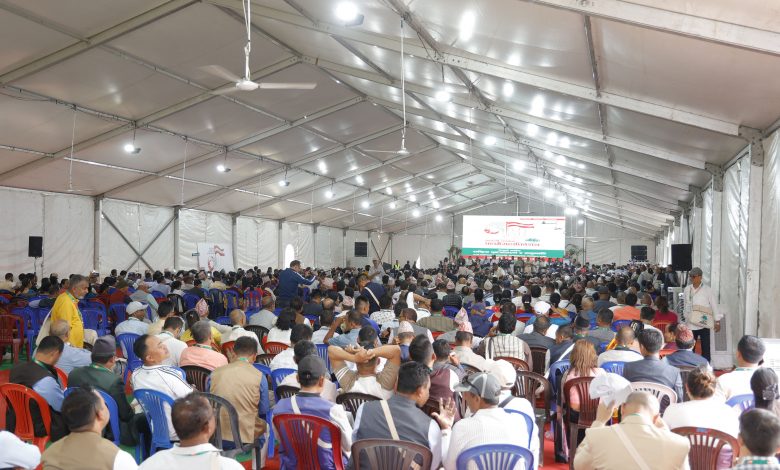
Nepal’s main opposition party, the Nepali Congress, has commenced its 15th General Convention in Kathmandu at a time when the country’s political landscape is undergoing a significant generational and political shift.
More than a routine organisational gathering, the convention offered a glimpse into how one of Nepal’s oldest political forces is responding to changing public expectations, internal divisions and the emergence of a more assertive generation of voters.
The tone was set from the opening session, where leaders from across the political spectrum reflected on the changing nature of Nepali politics.
Party President Gagan Kumar Thapa spoke of the need for political and organisational renewal, while leaders including ruling party RSP’s chair Rabi Lamichhane and Former PM Pushpa Kamal Dahal and Baburam Bhattarai addressed the broader political transition facing the country.
Their presence and messages made the convention more than an internal affair of the Nepali Congress.
They also reflected a wider political debate over the direction of Nepal’s established parties and their relationship with a new generation of citizens.
That question was particularly visible in the political report presented by party President Gagan Kumar Thapa.
The report acknowledged that, over the past two decades, the Congress had increasingly prioritised positions and power over its broader political purpose.
It proposed a significant rethink of the party from its organisational structure and internal accountability to its economic policies, relationship with young people and approach to governance.
The report also called for the Congress to move away from pre-election alliances, strengthen its connection with citizens beyond election cycles and introduce greater transparency within the party.
Its economic vision placed production, employment, private-sector participation, technology and innovation at the centre of development, while climate change was framed not simply as an environmental concern, but as an economic and national-security challenge.
The report also sought to respond directly to the concerns expressed by the Gen Z movement, proposing a special mechanism to study the demands and frustrations of younger citizens and bring them into the party’s policy process.
These proposals came against the backdrop of a deeper organisational divide.
A faction led by former party president Sher Bahadur Deuba stayed away from the convention and announced plans for a separate gathering, underscoring the unresolved question of unity and competing claims over the party’s political future.
That leaves the Congress facing two related challenges: how to manage its internal power structure, and how to redefine its relevance outside the party organisation.
For a party that has played a central role in Nepal’s democratic history, the question is therefore not simply who controls its leadership.
It is what the Congress wants to represent in a political environment where voters are demanding greater accountability, younger leadership, better governance and alternatives to traditional political practices.
The convention has offered one possible answer through its emphasis on organisational reform, generational participation and a different political and economic direction.
Whether those ideas translate into institutional change, however, will depend on what happens after the convention.
And that may ultimately be the more important story whether the Congress can turn a moment of political reflection into a sustained transformation, and in doing so, redefine its place in Nepal’s changing political landscape.


Comments