
Nepal Observes 76th Democracy Day
Sabika Shrestha
Nepal vibrantly celebrated its 76th National Democracy Day Thursday, honoring the historic 1951 revolution that ended a century of autocratic Rana autocracy. The celebrations in Nepal reverberated the call for good governance and fair elections.
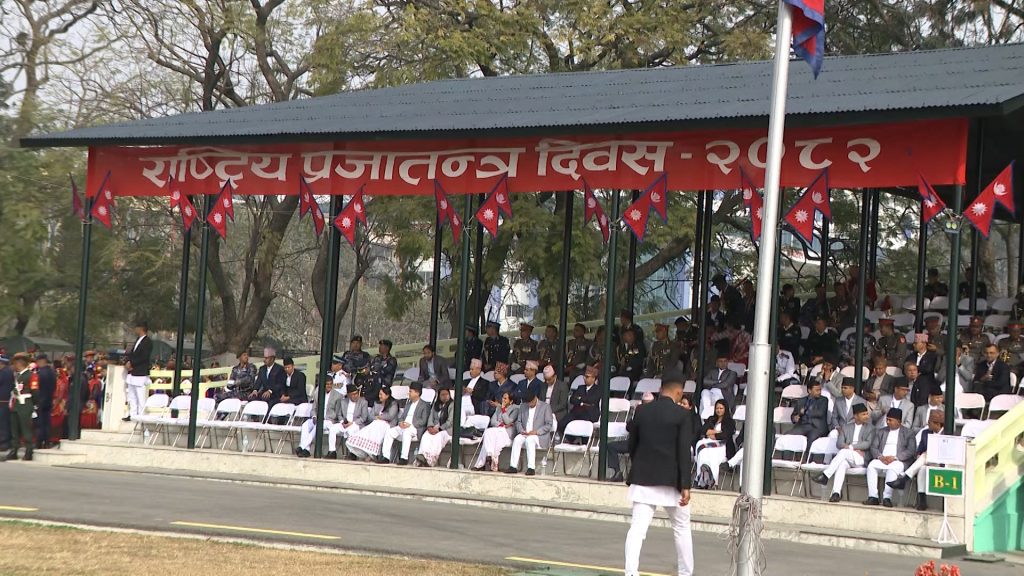
The festivities culminated in a traditional ceremony at the Army Pavilion, Tundikhel, where the nation’s leadership reflected on the journey from “subjects to citizens” as the country looks forward to the upcoming House of Representatives elections.
The main ceremony featured a distinguished assembly, including President Ram Chandra Paudel, Vice President Ram Sahaya Prasad Yadav, and Prime Minister Sushila Karki.
In his keynote address, President Ram Chandra Paudel emphasized that democracy is the bedrock of Nepal’s sovereignty.
Prime Minister Sushila Karki, the first woman to lead the country delivered a poignant speech linking the ideals of 1951 to the modern aspirations of the youth.
She stated, “Every ruler should remember: our youth are prepared to tolerate scarcity, but they are not prepared to tolerate injustice, insult, discrimination, and neglect. If future rulers continue to insult and neglect the youth, there will be rebellion again. In Nepal’s electoral history, we have the historical fact that the first democratic election began on February 18, 1959.Therefore, this day is not just Democracy Day, but also Election Day. Coincidentally, the House of Representatives member election is going to be held on March 5, 2026. We have put all our energy into the effort to open the door to a new era of sustainable democratic stability for the country by completing this election in a clean, impartial, peaceful, and fear-free environment.”
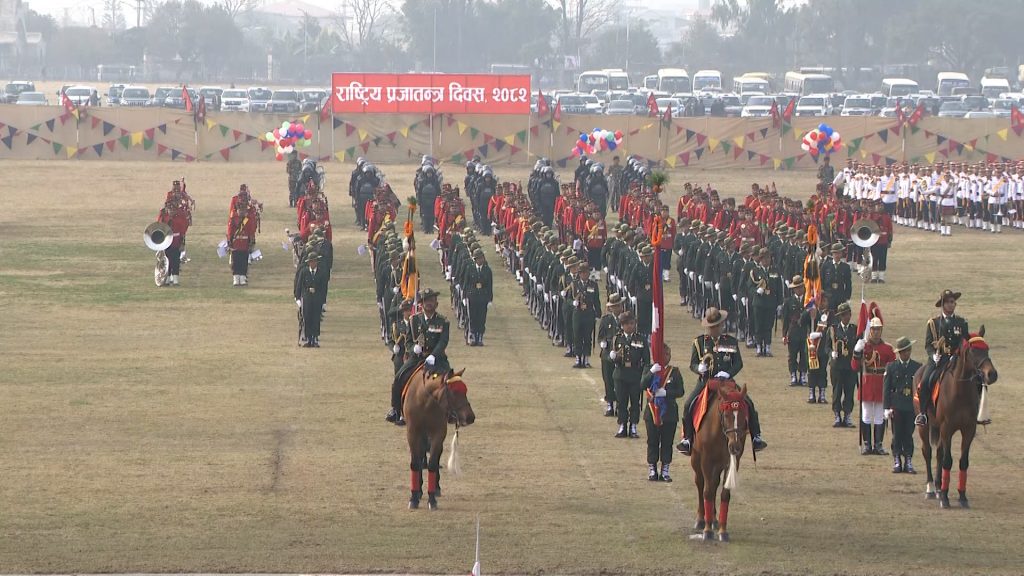
The event at Tundikhel showcased the nation’s cultural and security prowess, with march-pasts by the Nepali Army, Nepal Police, and Armed Police Force, alongside vibrant cultural tableaus from the municipalities of the Kathmandu Valley.
As the nation observes the dual significance of National Democracy Day and its democratic foundations, the proceedings at Tundikhel underscored a definitive mandate: the legacy of the 1951 (2007 BS) revolution is preserved not merely through ceremonial observance, but through a steadfast commitment to a transparent and inclusive democratic framework.


Comments