
Nepal in UNGA: Global South Should Shift from Compliance to Leadership: Foreign Minister Khanal
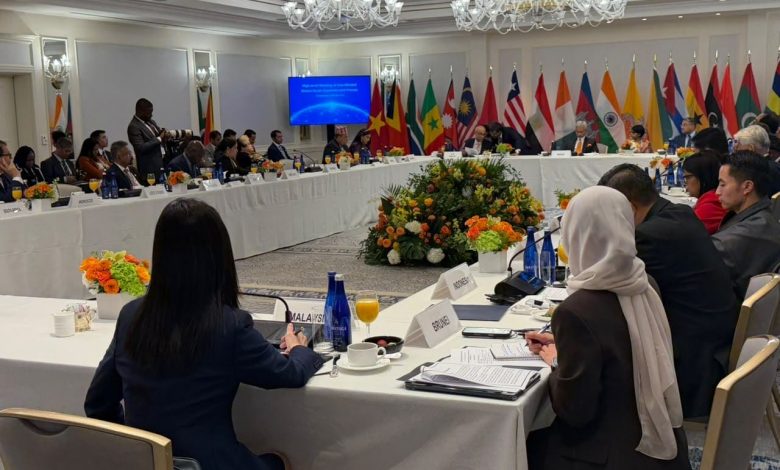
Foreign Minister Shishir Khanal has emphasized that countries of the Global South must move from being mere “rule followers” to becoming “rule makers” in global decision-making processes.
Addressing the High-Level Ministerial Meeting of like-minded Global South countries and partner nations organized by Indian Foreign Minister Dr. S. Jaishankar in New York during the High-Level Week of the 81st United Nations General Assembly, Minister Khanal stressed the need to make the collective voice of developing countries more effective in the global governance system.
“Empowerment means the Global South must transform from a rule-following position to a rule-making role. We should not remain confined to implementing agendas prepared by others; we must actively participate in shaping the rules, operating institutions, and making policies that determine our future,” he said.
Highlighting Nepal’s active membership in the Group of 77 and China, as well as the Non-Aligned Movement, he reaffirmed Nepal’s strong commitment to solidarity among developing nations. He noted that the Eastern philosophy of Vasudhaiva Kutumbakam reflects humanity’s shared future. “Global prosperity cannot be sustainable when half of humanity remains marginalized in decision-making,” he added.
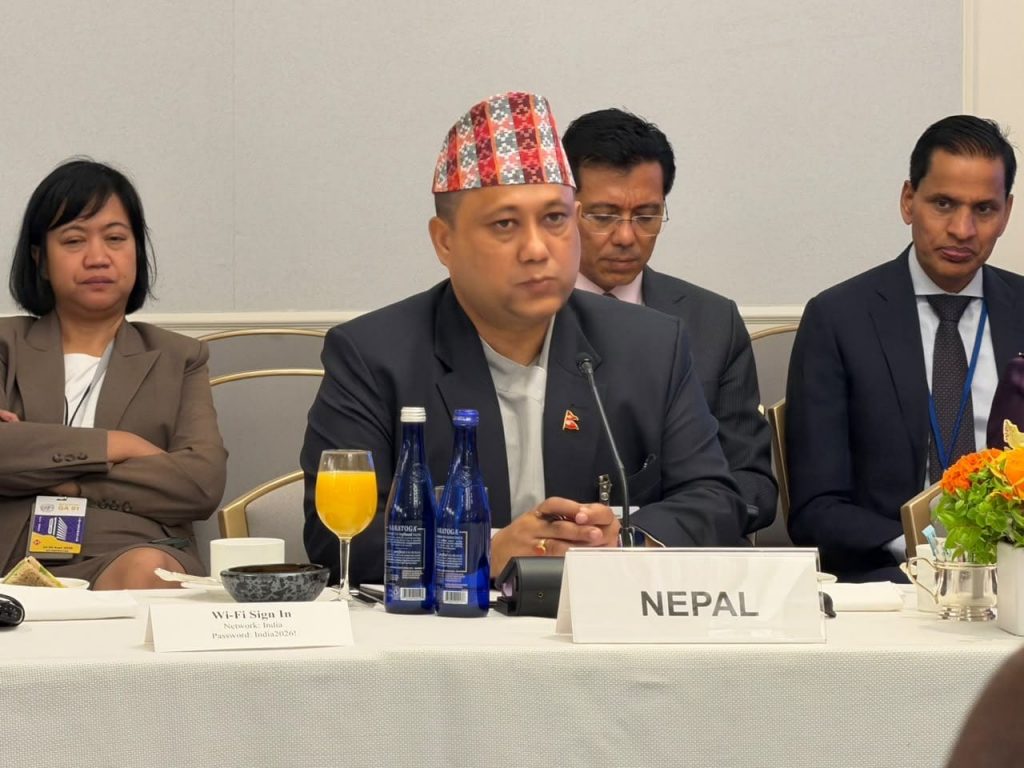
Minister Khanal called for urgent democratization of the global governance system. He stressed the need for comprehensive reforms in the structure of the UN Security Council and international financial institutions, arguing that these must reflect today’s realities rather than the power equations of 1945.
Drawing attention to the heavy debt burdens faced by developing countries, he underscored the need for fair and equitable access to financial resources for sustainable development. He also emphasized the importance of safeguarding an open, fair, and rules-based multilateral trading system centered on the World Trade Organization (WTO).
“For developing and least-developed countries, predictable market access, meaningful special and differential treatment, aid for trade, and integration into regional value chains are essential foundations,” he stated.
Minister Khanal reaffirmed Nepal’s continued support for strengthening the United Nations as the cornerstone of international law and sovereign equality. He highlighted the “UN–80” initiative as an important effort to reduce institutional fragmentation, stressing that reforms must decisively strengthen the pillars of development and climate action.
He noted that the deepest impacts of divisions in multilateralism are borne by weak and vulnerable countries, and urged advancing dialogue, technology partnerships, and South–South cooperation instead of pressure based on power politics.
“Empowering the Global South means revitalizing multilateralism itself,” he concluded. “With courage, shared resolve, and an authentic collective voice, let us march shoulder to shoulder to build a just and brighter future for all.”


Comments