
State Liability to Asset: Nepal Drug Limited’s Revival
Kamala Aryal/Sabika Shrestha
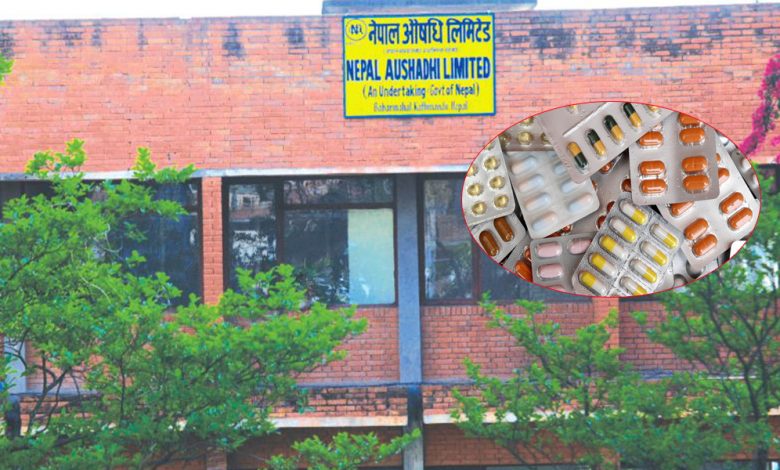
The government-owned Nepal Drug Limited has returned to profitability after nearly 25 years, marking a major turnaround for the state-run pharmaceutical company.
Nepal Drug Limited has returned to profit, earning more than 30 million rupees in the last fiscal year — its first profit since 2001.
Though the profit amount in itself is not worth discussing but the revival of an ailing state institution that was marred for decades by mismanagement and politicization definitely is.
Under the current government’s 100-point governance reform programme, target of producing 98 types of free medicines through Nepal Drug Limited within three years was set.
Accordingly, the company plans to produce 37 types of medicines within the next two to three months and eventually expand production to 98 types.
However, the company did not make this profit solely from the sale of medicines.
It earned profits by renting out its buildings and after deducting management and operating expenses.
Similarly, the company has raw materials worth around 15 million rupees in stock.
Established in 2001, the company sold medicines worth around 120 million rupees in the first year after which it never saw profit.
The attempt to revive the company started in 2016 with then minister for Industry Nabindra Raj Joshi allocating 50 million rupees in 2016.
But extreme politicization of the company and massive backlog of mismanagement was the main hurdle then.
The actual revival started with the company implemented the World Health Organization WHO’s Good Manufacturing Practices standards last year. This has contributed to an increase in production as well as an improvement in profits.
Kailash Kumar Paneru, General Manager of Nepal Drug Limited said, “Our sources of income are basically twofold: the sale of medicines and rental income from unused spaces leased to government offices. We have also reduced costs by cutting overtime and overstaffing. From the beginning, our focus has been on G2G transactions, as the Procurement Act allows one government entity to directly purchase from another. We shifted our focus from the private to the government sector, and today around 90 percent of our sales come through G2G.”
The company currently produces 320 thousand tablets of paracetamol and 48,000 units of oral rehydration solution daily.
The company has been unable to operate at full capacity due to financial and human resource constraints.
With the government allocating a budget of 240 million rupees this year, the company plans to increase production by adding human resource as well as equipment.


Comments