
Lomanthang Hosts Media Summit
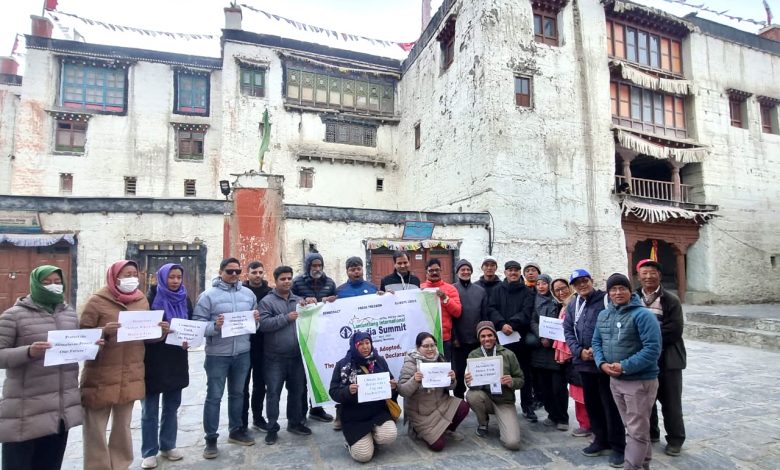
The International Media Summit 2025 on Democracy, Media Freedom and the Climate Crisis concluded today with the Lomanthang Declaration. The summit hosted by Nepal Press Union was held from 9 to 13 May starting in Kathmandu and going to Pokhara and finally ending in Lomanthang, Upper Mustang.
The participants included journalists, media professionals, civil society members, federal government ministers, trade union leaders, province chief minister and ministers, chiefs and representatives of the local governments, political activists, development professionals, advocates and activists of democracy, freedom of the expression, media freedom, and climate crisis mitigation as well as the representatives from the International Federation of Journalists (IFJ) and delegates from different countries.
The participants adopted various resolutions as ‘Lomanthang Declaration’ on democracy, media freedom and climate crisis, with commitment and call for actions in themes such as Democracy, Press Freedom, Climate Crisis, including a special mention to Lomanthang, Mustang, where the final leg of the summit was held. The Declaration calls for promoting collaborative and consistent dialogue for advancing mutual collaboration among journalism, political parties and civil society for strengthening public trust on democracy and the political system.
“This collaboration can defend civic space including freedom of the association, assembly and access to information and free press.” Stating that rising intolerance in multiple fronts has increased threats to freedom of expression and the press, while global populism, terrorism, extremism and authoritarianism as well as big tech have posed serious threats to democracy and press freedom, the Declaration calls for countering rising attacks on free press in the name of digital space regulation in the South Asian nations and beyond.
Pointing out the need to build further awareness of journalists’ rights, better digital literacy, and a more connected media for defending democracy and media freedom as well as countering climate crisis, the Declaration calls for development of a credible and public interests media realizing the importance of strong information ecosystem and integrity.
On climate crisis, the Declaration states that climate crisis is main agenda of the region so the political parties here should prioritize and express solidarity for addressing climate crisis at political level. It also calls for eco-friendly inclusive and sustainable development policy, planning, approaches and infrastructure while noting that access to information and transparency are connected.
Remaining aware of many media professionals facing growing economic pressure, shrinking civic space, and digital insecurity as well as the issues of labour rights and sustainability, it takes cognizance of the threats the climate crisis creates for the enjoyment of human rights and, in particular, freedom of expression, access to information and media freedom, which are essential for societies to address environmental and climate challenges. (RSS)

Comments