
Ghantakarna Festival Being Observed across Kathmandu Valley
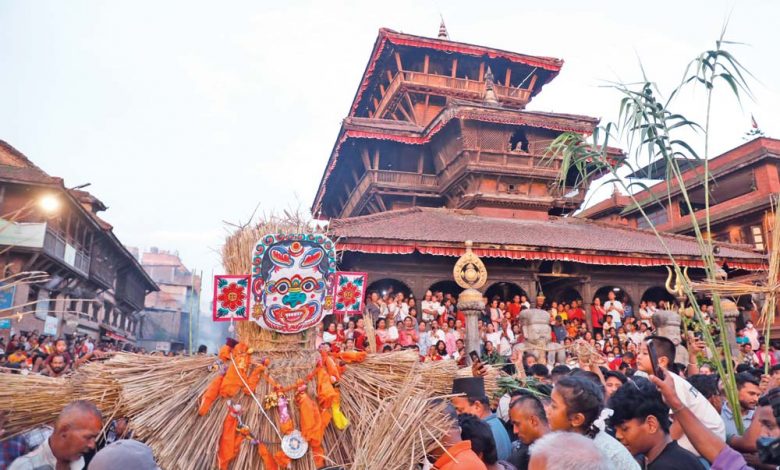
The traditional Ghantakarna festival, also known as Gathamangal, is being observed today across the Kathmandu Valley, particularly by the Newar community.
The festival is observed on the 14th day of the waning moon in the Nepali month of Shrawan according to the lunar calendar. It commemorates the defeat of Ghantakarna, a mythical three-legged, man-eating demon.
According to tradition, the rituals are performed to drive away evil and protect households from misfortune.
As part of the centuries-old tradition, effigies of Ghantakarna are made from green reeds, bamboo or wheat straw and erected at crossroads and junctions. People begin the day by bathing, cleaning their homes and courtyards, and performing prayers and rituals.
Children traditionally stretch ropes across roads and ask passersby for money, known as jagat, adding to the festive atmosphere.
In the evening, torches are lit and the effigy of Ghantakarna is dragged through the streets before being set ablaze, symbolizing the banishment of evil.
According to cultural scholar Prakash Shrestha ‘Sakkwa’, Gathamangal is described in the Gopala genealogy as representing the three gunas (fundamental qualities): satva (associated with purity, knowledge and clarity), rajas (signifying passion and desire) and tamas, (representing darkness, inertia and ignorance).
Ghantakarna is also associated with Bhairav, revered in the Newar faith as a fierce protector and manifestation of Lord Shiva.
The tradition also requires newly married Newar couples to pay homage to Ghantakarna on this day.
The festival is traditionally believed to protect people from physical, psychological and external obstacles while bringing prosperity, material well-being and protection from enemies. (RSS)


Comments