
Flights Cancelled, Futures Uncertain: Are Regional Tensions Deciding Future?
Sabika Shrestha
The international travel chaos ensued after US-Israeli joint military operations into Iran and Teheran’s retaliatory attacks have affected nearly a thousand flights on a daily basis.
While Saturday remained the worst day with sudden closure of the air space of the entire region leaving passengers high and dry at the airport, it’s uncertain when the situation will improve.
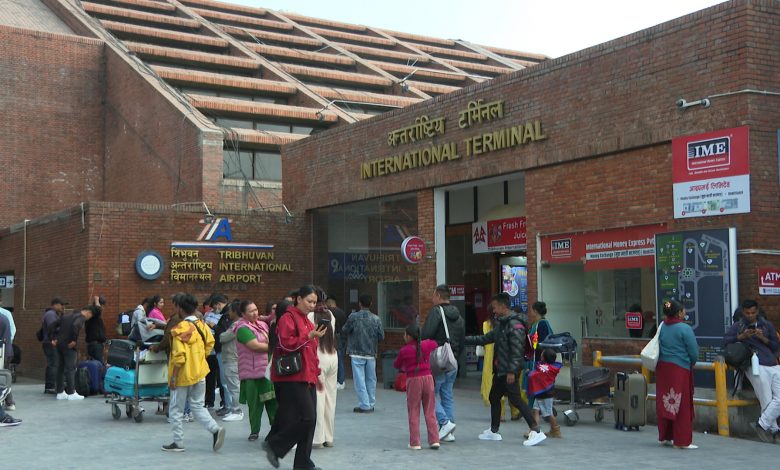
The sudden shift in regional security has forced a near-total suspension of air traffic between Nepal and several of its most critical international destinations, creating a bottleneck at the country’s only functional international gateway.
Kathmandu’s Tribhuvan International Airport confirmed that all afternoon and night international flights from Kathmandu to several Middle Eastern destinations from the Airport have been cancelled due to flight restrictions imposed at those airports.
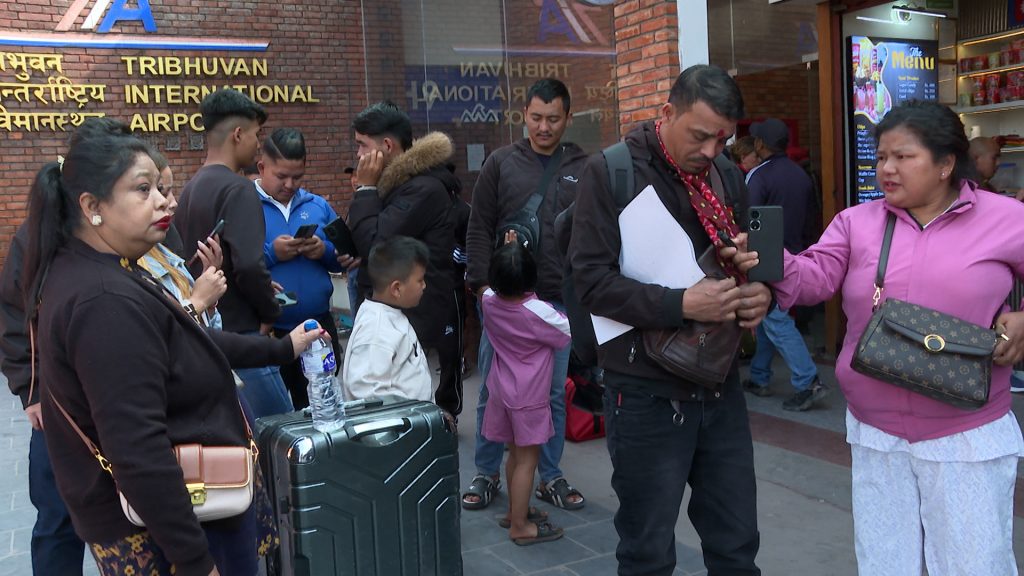
These affected destinations include Sharjah, Doha, Dubai, Kuwait City, Abu Dhabi, Qatar, and Dammam.
These cities serve as key transit and employment hubs for thousands of Nepali migrant workers, many of whom were seen waiting anxiously at the terminal.
TIA added airspace and operational restrictions at these destinations forced airlines to suspend scheduled departures from Nepal to ensure passenger safety.
Santusta Kumar Basnet, Spokesperson of TIA said, “Since we received the information on flight cancellations all off sudden, we now are collaborating with all the airliners to facilitate and ease situation for the passengers. We also have issued notices through our main office’s media group and TIA to inform the public and passengers, advising them not to arrive at the airport without prior information.”
Basnet added, “We also have activated various help desks and are working with security personnel and airlines to resolve any issues that may arise for anyone. We are still working to address any problems that passengers might encounter at this time.”
The sudden cancellations have created immense confusion and congestion at the international terminal, with many passengers arriving unaware of the suspensions.
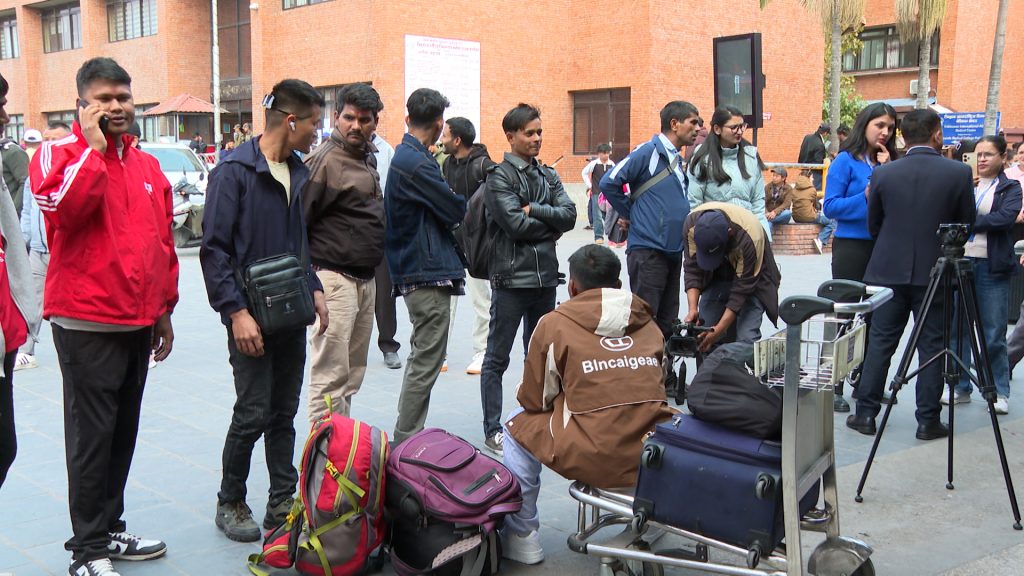
The pre-informed cancellation of course is much better but for most of the migrant workers traveling with dumped out pocket and tight deadline, there is no respite.
Neither they can afford a hotel room or they have much access to information whether their employer would still welcome them.
One of the outbound passengers said, “The airliners themselves are uncertain about the situation. They just say nothing can be done now. But, we are suffering here. Should we return back home or stay here at the airport? When will the flights resume, tomorrow or will it take a week? We don’t know.”
He added “We came with only enough money for today’s flight. Now, should we use it for a return ticket or stay here? It’s very difficult for us said a traveler who has been waiting since Saturday after his flight got cancelled.
Currently, airlines are reportedly monitoring the evolving geopolitical situation and coordinating closely with foreign aviation authorities.
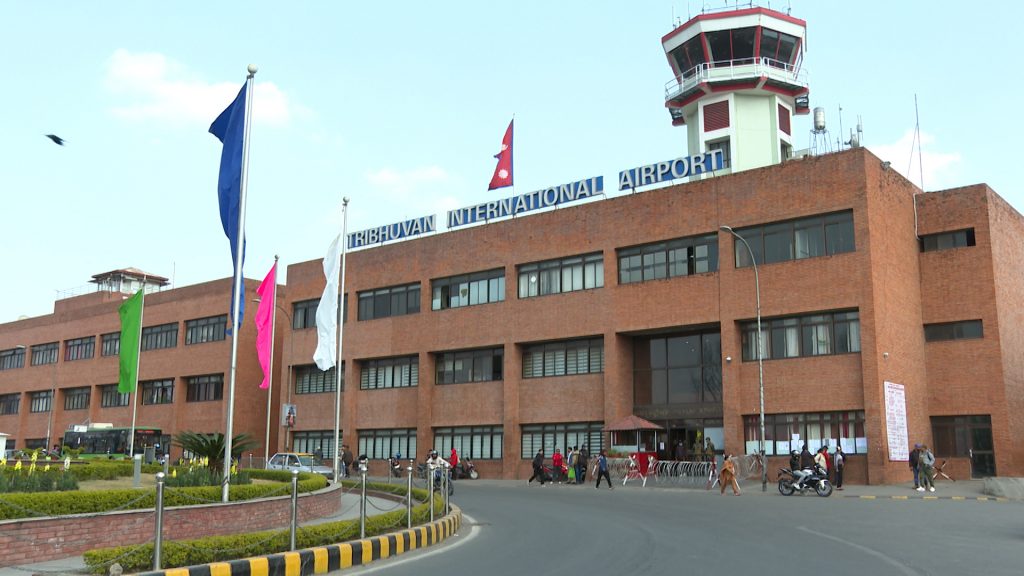
The disruption highlights Nepal’s heavy reliance on Middle Eastern air routes, which serve as both final destinations and major transit corridors to Europe and other regions.
With geopolitical tensions continuing to impact regional airspace, a cloud of uncertainty looms over when normal flight schedules will resume.
For now, passengers are strongly advised to stay in close contact with their carriers and monitor official updates as authorities assess the ongoing developments in the Middle East and their broader implications for international air travel.





Comments