
EC Tightens Campaign Spending Rules
Sabika Shrestha
With less than a month remaining for Nepal’s House of Representatives election, tighter financial regulations from the election commission has affected parties and candidates’ campaigns.
Financial transparency and regulated expenditure underscore EC’s effort to strengthen democratic processes and ensure that money power does not overshadow political competition.
The aim according to the commission is to promote transparency, control rising election costs and curb the influence of money in politics.
The Commission has divided the country’s 165 constituencies into five categories and fixed different campaign expenditure ceilings based on voter numbers, geography and accessibility.
Spending limits range from a minimum of Rs 2.5 million to a maximum of Rs 3.3 million, with variations applied even within the same district.
According to the commission, candidates in 26 constituencies are allowed to spend up to Rs 3.3 million, while 52 constituencies have a ceiling of Rs 3.1 million.
Similarly, candidates in 65 constituencies can spend up to Rs 2.9 million, 17 constituencies have a cap of Rs 2.7 million, and five constituencies have been assigned the lowest limit of Rs 2.5 million.
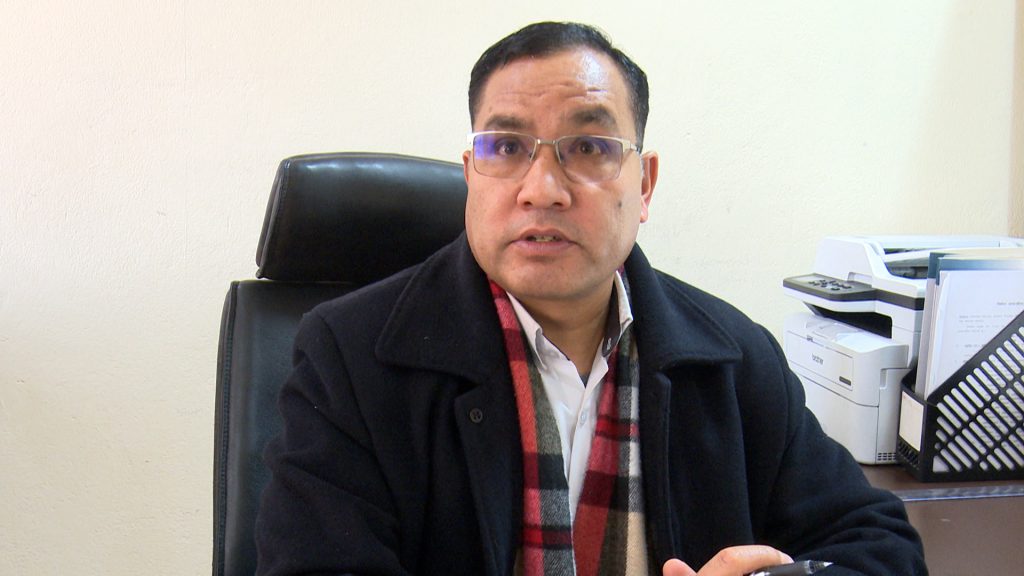
Assistant Spokesperson of the Election Commission, Kul Bahadur GC, said that in expenditure limits everything should be included, whether it is in rallies, campaigns, advertisements, or in other activities. All those spending should be included together. Then it should not be beyond the given limitation. According to the PR system, they have to spend as per the number of their closed list candidates whereas in First Past the Post system, each candidate can spend from Rs 2.5 million to Rs 3.3 million. It is depending on the number of polling centers, number of the voters, and also the area of the constituency.
Constituencies permitted to spend the maximum Rs 3.3 million include Taplejung, Panchthar, Sankhuwasabha, Solukhumbu, Khotang, Dolakha, Ramechhap, Humla, Jajarkot, Bajhang, Doti and Baitadi.
To further enhance financial transparency, the EC has implemented the Election Campaign Bank Account Operation and Management Procedures, 2082.
Under the rules, political parties and candidates must operate campaign income and expenditure exclusively through designated bank accounts.
Donations must be deposited directly into these accounts, and cash transactions above Rs 25,000 are prohibited.
The Commission has warned that failure to comply with spending limits or reporting requirements could lead to legal action, including challenges to election results.

Comments