
Confrontational Rhetoric and President’s Icebreaker
Devendra Subedi
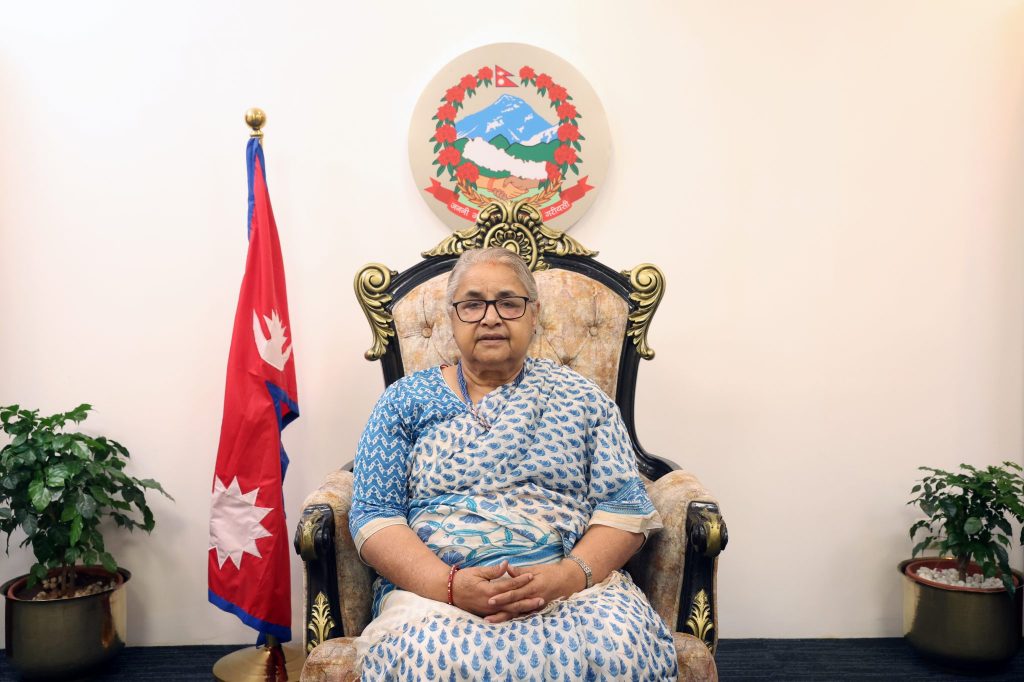
As Nepal stands at the crossroads of reassembling an elected government following the derailed parliament, retired chief justice Sushila Koirala led interim government is making every effort to bring the established political forces into confidence.
The Election Commission is moving at a war footing in preparations for the March 5, 2026 federal parliament election as per the government’s directive.
Though logistical, administrative and security arrangements are being finalized, the most pertinent question remains the response of the political parties, especially the big three; Nepali Congress, CPN UML, and newly unified Nepali Communist Party.
The lynchpins of the entities that have now dissolved into the new umbrella of Nepali Communist Party, namely CPN Maoist Center and CPN Unified Socialist, have not antagonized the election agenda.
Nepali Congress through its central committee passed a proposal stating the indispensability of the election to bring the country back to the right constitutional track.
CPN UML, that was leading the government earlier, held its 11th General Congress where KP Sharma Oli cemented his hold to power with a hat-trick, has yet to clarify its stance though there is no opposing the polls.
With little over two months left for the scheduled election, its but anyone’s guess that adhering to the March 5 calendar is too optimistic if not unlikely.
The emerging question is what will be the President Ram Chandra Paudel issued mandate of the Karki led government if the election dates are rescheduled?
The options are already being explored, especially after the release of Rastriya Swantra Party RSP chair Rabi Lamichhane.
Opinions are divided at the moment on whether the interim government should be allowed to fulfill its mandate even by extending its term or a new, not merely all-party but all-stakeholder, government be formed.
If this option comes to the table, the individual to lead the pro-election government will definitely be highly contested.
While parties are learnt to be lobbying for a former chief justice led government that includes all parties as well as the newly emerged force, branded Gen-Z, the other side including RSP is learnt to be lobbying for youth leadership like Balendra Sah.

While only time can tell whether this option will ever come to the table, it’s for certain that if it comes, that would not happen overnight.
If the first battle to be settled will be the person to lead the second battle will be the shape and size.
All concerned will likely look for a stake as per their self-determined strength, which definitely is immeasurable.
In between these agendas the only concern for common people is the likelihood of another confrontation.
Prime Minister Karki tried twice to break the ice by summoning all party meeting in Baluwatar, formed three-member team including her cabinet members and advisor to diffuse the situation.
But the move has not been effective enough to bring the parties into confidence, in-fact they have further tightened their fists while the release of Lamichhane has created a new wave with his rhetoric as well as engagements.
Underneath these seen engagements and heard rhetoric, there is much more to be perceived.
While parties have already started demanding the restoration of parliament, others are warning of serious consequences in case of the failure to hold the election in time.
External actors might have their own interests given the political fluidity, though the recall of US and Chinese ambassadors, one for a reason and the other at the end of his term, are purely coincidental.
Amid the Mt. Everest of the mountain to climb and the load of public expectations is the Karki led government.
While election is the only way-out to the somehow hewed constitutional replacement, the road to it surely is going to be bumpy.
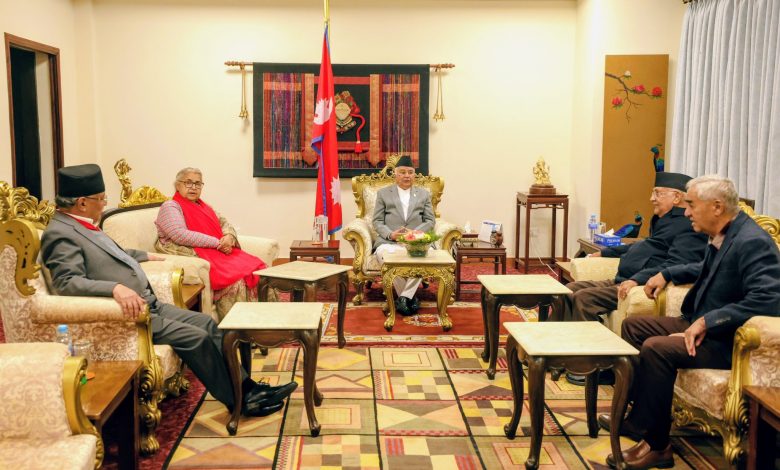
President Ram Chandra Poudel called all-party meeting Tuesday could not have been better timed.
This should serve as the ice-breaker for further negotiations as the people, at this point of time, want nothing but peace.
The country, that has seen bloody revolution against the rulers almost every decade, cannot afford another confrontation at this point.


Comments