
Reviving 300-year Old Hanuman Dance in Baglung
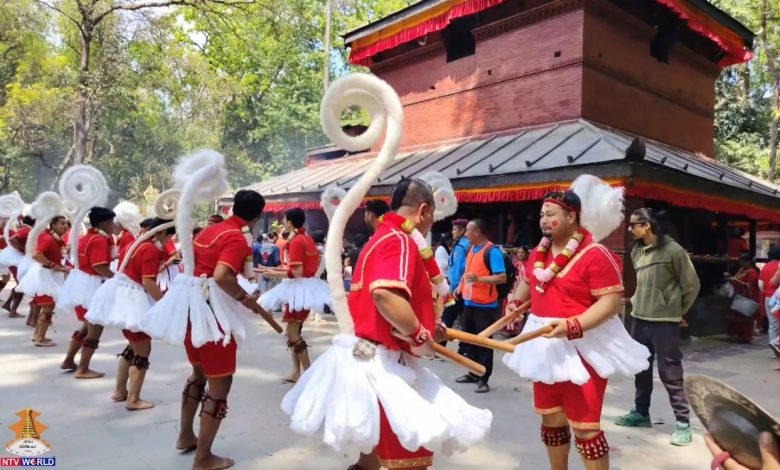
A 300-year-old traditional Hanuman Nach (Hanuman Dance) of the Newar community in Baglung, Nepal has been performed again after a nine-year hiatus.
This ancient dance has been preserved for centuries by the Newar community in western Nepal.
The Baglung Municipality, along with local conservation councils and other stakeholders, is also making efforts to propose its inclusion in the UNESCO World Heritage list.
Thirteen Hanumans, dressed in red costumes with skirts made of cloth tied around their waists, dance to the beats of traditional instruments at the Kalika Bhagwati Temple in western Nepal’s Baglung district.
These youths, embodying the spirit of Brahmacharya, perform as Hanuman in a centuries-old Hanuman Dance.
The age – old tradition was revived after a nine-year gap.
While dancing, they strictly follow rhythmic patterns (taals). It is a traditional Newar dance based on the Ramayana, embodying the courage, discipline, and devotion of Lord Hanuman.
Locals shared joy as the much-anticipated 300-year-old Hanuman Dance was finally showcased in the district once again.
Closely tied to Baglung’s cultural heritage, the performance is conducted after proper ritual worship within the temple premises.
Traditionally, the dance was performed every three years, but it was halted for nine years due to various challenges, including financial constraints and lack of support from the local government.
Mayor Basanta Kumar Shrestha stated that the local government has now begun initiatives to preserve and continue this historic religious dance.
This sacred Hanuman Dance, preserved by the Newar community of western Nepal as one of its oldest cultural traditions, is also being proposed for inclusion in the UNESCO World Heritage list.
The records of history show, the dance first introduced in 1740 by Newar migrants from the Kathmandu Valley and has since become a cornerstone of local cultural identity.
In recent years, there has been growing concern that traditions may lose their importance due to a decline in intergenerational transmission.



Comments