
Constitution Amendments Cannot Undermine Sovereignty: Taskforce
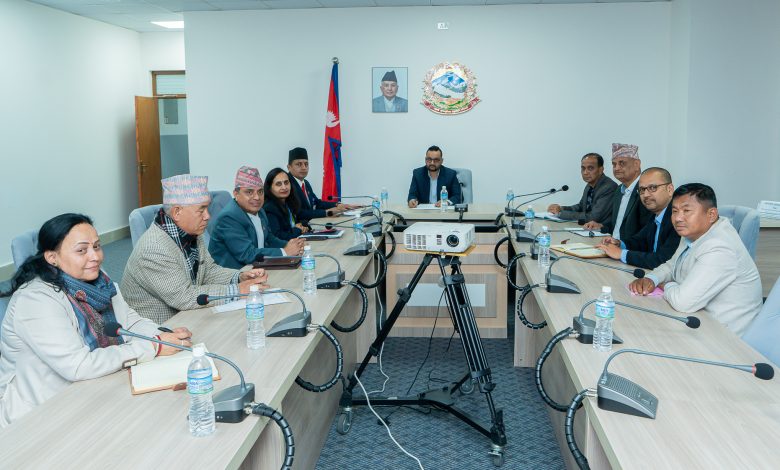
The Constitution Amendment Drafting Committee held its first meeting today at the Office of the Prime Minister and Council of Ministers.
The meeting was chaired by Asim Shah, political advisor to Prime Minister Balendra Shah and head of the committee.
The meeting decided to thank the Government of Nepal for forming the committee to prepare a discussion paper on constitutional amendments.
The meeting entrusted the responsibility of collecting issues raised in the meeting, compiling written positions of political parties, identifying constitutional amendment issues, and preparing and presenting the committee’s upcoming work plan was to Liladhar Subedi, Under-Secretary at the Prime Minister’s Office and member-secretary of the committee.
Chairperson Shah stated that the committee aims to advance constitutional amendment issues comprehensively.
Shah said the process will be based on national consensus, participation and factual analysis.
Shah noted that Article 274 of the Constitution clearly provides for amendments and that amendments cannot be made in a way that undermines sovereignty, territorial integrity, independence or the sovereignty vested in the people.
Representatives from various political parties attended, including Mohan Acharya (Rastriya Swatantra Party), Dr. Bhishmanath Adhikari (CPN-UML), former Law Minister Dev Prasad Gurung (Nepali Communist Party), Dhruvraj Rai (Shram Sanskriti Party), Gyanendra Shahi (Rastriya Prajatantra Party), Dr. Surendra Kumar Jha (Janata Samajwadi Party Nepal), Dr. Abhas Labh (Loktantrik Samajwadi Party) and Durga Paudel (Rastriya Janamorcha).
Also present were Law Secretary Pushkar Sapkota from the Prime Minister’s Office and Secretary Indira Dahal from the Nepal Law Commission.
Acharya of Rastriya Swatantra Party suggested removing repeated and contentious issues, making the constitution flexible for reforms and preparing for discussions on directly elected executives and full proportional representation.
Dr. Adhikari of CPN-UML requested not to rush, noting insufficient internal party discussion and emphasized studying international practices and consulting experts and stakeholders.
Nepali Communist Party leader Gurung suggested that both agreed and non-agreed issues should be brought into debate and amendments should proceed only after completing the constitutional process, including consultation with experts, judges and legal professionals.
Dhruvraj Rai of Shram Sanskriti Party stressed linking amendments to the economy and prioritizing issues directly affecting citizens.
Gyanendra Shahi of Rastriya Prajatantra Party suggested discussing Hindu state, monarchy, provincial structure and emphasized serious debate on national issues. Dr. Jha of Janata Samajwadi Party recommended careful and deliberate progress, consulting experts, civil society and various groups.
Dr. Labh of Loktantrik Samajwadi Party said amendments should ensure implementation of fundamental rights and include Madhesh movement issues, suggesting forming an impartial expert team to identify problems.
Durga Paudel of Rastriya Janamorcha emphasized considering long-term impacts and expressed opinions on abolishing provinces and proposing a two-tier federal system.



Comments