
Nepal’s Ballot After the Storm
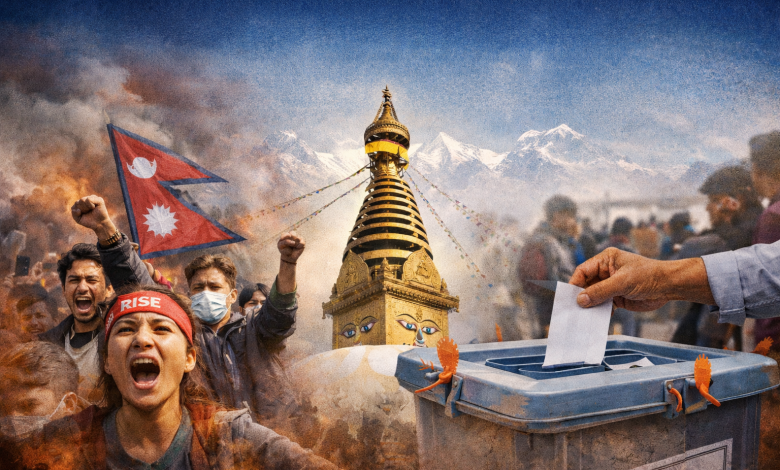
At a moment when political unrest and democratic uncertainty have become recurring themes across South Asia, Nepal has just done something quietly significant, it returned to the ballot box.
Millions of voters across the nation cast their ballots Thursday in parliamentary elections that may prove to be among the most consequential since the country embraced the federal democratic republican system.
The vote comes after months of political turbulence triggered by a youth-driven protest movement that forced a reset in Nepal’s leadership and pushed the country toward early elections.
In that sense, this election was not merely about choosing representatives. It was about restoring political direction.
Across parts of the world in recent years, crises of governance have frequently led to prolonged instability. In some countries, protests have delayed electoral processes; in others, elections themselves have deepened political divides. The upheaval in Sri Lanka, the dramatic political shifts surrounding Bangladesh’s elections, and rising economic pressures across the region have all contributed to a wider moment of democratic testing.
Against that backdrop, Nepal’s election has drawn unusual international attention.
Rarely does Nepal dominate global political headlines. But when it does, its developments often echo far beyond its borders.
For a country that had witnessed intense protests just months ago, largely led by a politically energized younger generation, the successful conduct of nationwide elections represents an important institutional milestone. Authorities deployed extensive security and administrative resources to manage polling across thousands of stations stretching from remote Himalayan districts to the densely populated plains of the Terai.
By most early accounts, the process remained largely peaceful and orderly. The Election Commission has indicated that the likelihood of re-polling in most constituencies remains minimal.
For the interim government led by former Chief Justice Sushila Karki, delivering elections on schedule despite skepticism and logistical challenges is already being viewed as a significant achievement.
Yet the deeper story of this election lies not in its mechanics but in what it represents politically.
Nepal’s political mood appears to be shifting.
Public frustration with traditional parties, mounting economic pressures, and the growing influence of a politically awakened youth population have reshaped the national conversation. The GenZ-led protests earlier this year amplified demands for accountability, reform, and a departure from entrenched political patterns that many young voters believe have stalled the country’s progress.
Those protests also transformed the tone of the election that followed.
Political parties were compelled to rethink leadership narratives, field younger candidates, and engage with a generation that has become far more vocal about governance and transparency. Social media platforms turned into powerful political arenas, amplifying campaigns, shaping public opinion, and often setting the tempo of the national debate.
In many ways, the election became a democratic outlet for the tensions that had been building across Nepal’s political landscape.
Elections do more than produce governments. They absorb political frustration, restore institutional legitimacy, and allow societies to renegotiate their political contract through peaceful means. After months of agitation and uncertainty, Nepal’s vote offered precisely that kind of reset, a chance for the country’s political forces to return to the people and seek a fresh mandate.
Preliminary estimates suggest voter turnout stood at around 60 percent. While that marks a decline from the 67 percent participation recorded in the first federal election in 2017, several factors appear to have influenced the numbers.
One is structural. Millions of Nepalis now live and work abroad, and without absentee or remote voting mechanisms, most of them remain effectively excluded from the electoral process. Many migrant workers who had hoped to return home to vote also faced travel disruptions linked to escalating tensions in West Asia, which led to widespread flight cancellations.
Another factor lies in the political moment itself.
This election unfolded in an environment where public sentiment appeared caught between dissatisfaction with traditional parties and uncertainty about the capacity of newer political forces to govern. For some voters, the choice was less about enthusiastic support and more about deciding how or whether to break with established political loyalties.
Even so, millions of Nepalis participated in shaping their country’s next chapter.
And for many observers watching from outside the country, the central question now is simple but profound.
Will Nepal’s restless youth translate street momentum into electoral change?
Or will the country once again return to a familiar outcome, a fragmented parliament shaped by traditional party loyalties that run deep through generations?
The answers will begin to emerge as ballots are counted.
For now, one thing is clear… Nepalis have spoken through the ballot box.
Whether this vote produces a political earthquake or another chapter of cautious continuity is what the nation and a watching region will soon find out.

Comments