
Earthquake Safety Day: Lessons from Past, Action for Future
Dikshya Awasthi
Recently, Nepal marked the 28th Earthquake Safety Day 2026 under the slogan “Preparedness of all levels of government, readiness of every citizen: Earthquake-resilient Nepal is our shared responsibility.”
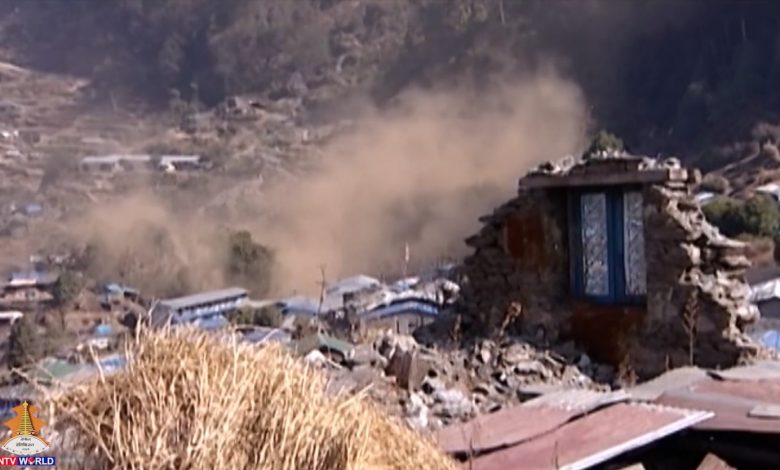
While we observe this day, it has not even been a decade since the major devastation of the 2015 Gorkha earthquake, the memories have slowly faded away.
As the country sits on one of the world’s most active tectonic zones, has Nepal learned lessons from past devastations and are all sections of society taking ownership of their responsibility to stay prepared?
The weak infrastructure and country’s vulnerability to seismic risks was exposed not more than ten years ago in Nepal but the memories have slowly faded away despite the fact that Nepal lies in one of the most active tectonic plates of earth.
The scars of the April 25, 2015, Gorkha Earthquake are still visible as the country tried to strictly enforce the national building code which otherwise was overlooked by common people.
To ensure public safety, health, and welfare, Nepal introduced the National Code for Seismic Design in 1990, following the Udayapur earthquake of 1988.
The objective has been to set minimum construction standards, make buildings resilient to disasters such as earthquakes and promote efficient land use, and standardize construction practices across all building types.
The National Building Code, first published in 1994, has now been revised for the second time recently in 2025, introducing several modifications.
Section Chief at the Building Code at the Department of Urban Development and Building Construction Rupak Acharya said the code has undergone major changes in the latest amendment.
Despite continuous efforts like introducing updated codes, guidelines, and various programs and subsidies from stakeholders, experts say Nepal still remains vulnerable when earthquake risks are assessed realistically.
Experts believe there is a huge gap in the code, its understanding among the general public and its implementation.
Seismologist at National Academy of Science and Technology Dr. Shiva Subedi said lack of awareness in the rural areas and indifference in the urban areas are major reasons for the code’s poor implementation.
As the country marks another Earthquake Safety day, it’s the responsibility of every individual to adhere to the code that aims to minimize loss of lives and property by making our homes resilient and resistant.



Comments