
China’s Shenzhou 21 Crew Docks with Tiangong Space Station in Record Time
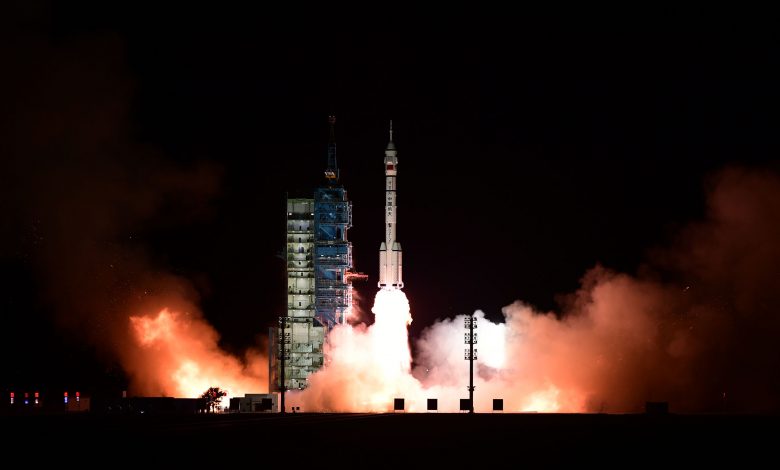
China achieved another milestone in its rapidly advancing space program, as its Shenzhou 21 spacecraft successfully docked with the Tiangong space station early Saturday, setting a new national record for the fastest docking to date.
According to the China Manned Space Agency (CMSA), the docking process was completed in just 3.5 hours, three hours faster than previous missions.
The swift maneuver underscores China’s growing sophistication in crewed spaceflight operations.
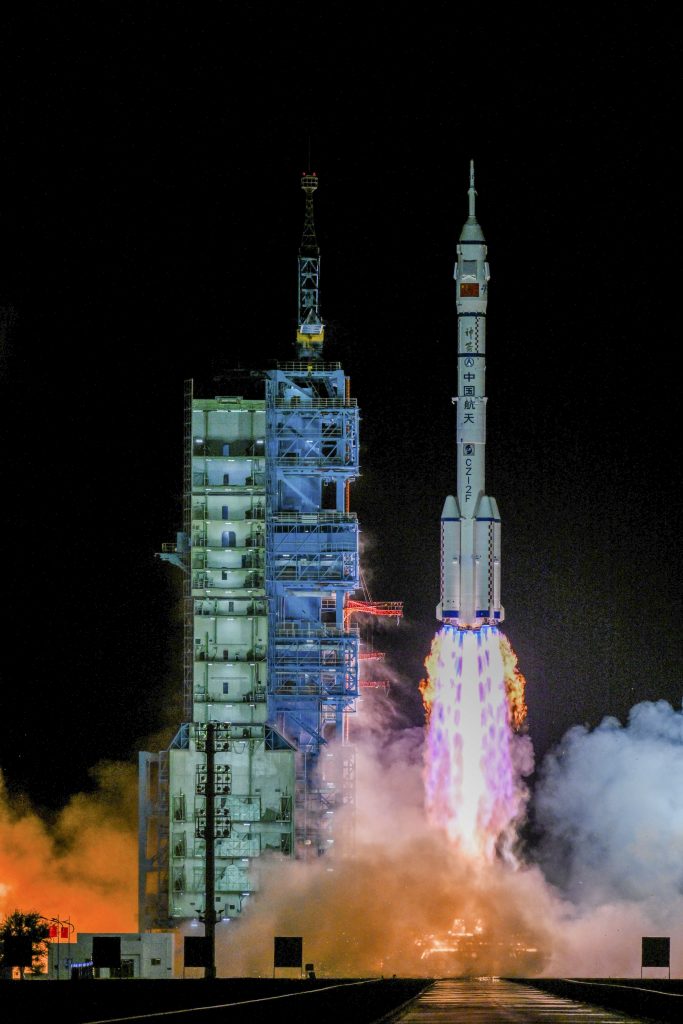
The Shenzhou 21 lifted off from the Jiuquan Satellite Launch Center in northwestern China at 11:44 p.m. local time Friday, carrying a three-member crew bound for the Tianhe core module of Tiangong.
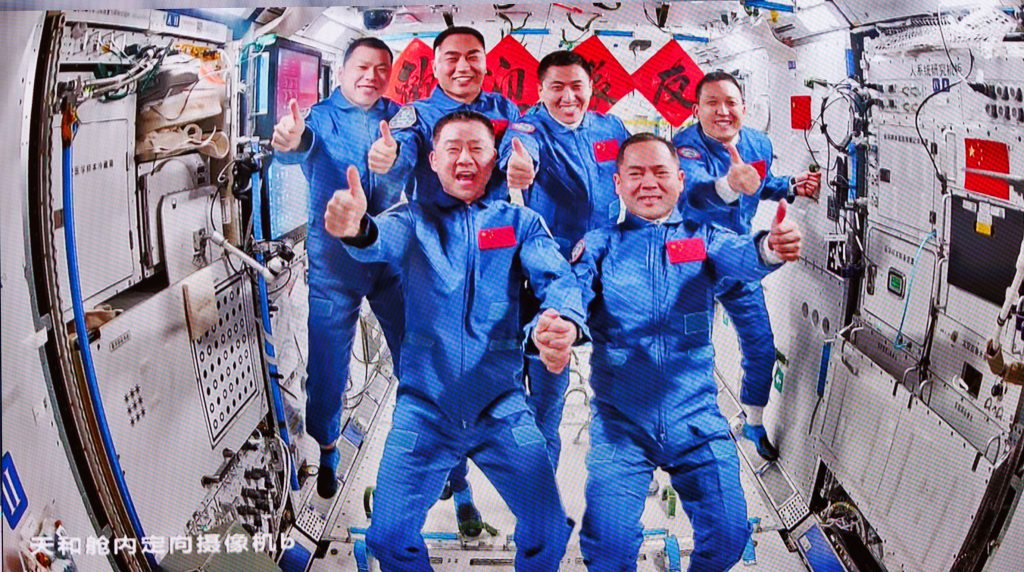
The mission is commanded by Zhang Lu, a veteran astronaut who previously flew on Shenzhou 15. He is joined by Wu Fei, a 32-year-old engineer and China’s youngest astronaut to date, and Zhang Hongzhang, a payload specialist and former materials researcher.
The crew will spend approximately six months aboard the station, conducting 27 scientific and applied research projects spanning biotechnology, aerospace medicine, and materials science.
In a lighter moment before launch, commander Zhang said the team hoped to turn Tiangong into a kind of “utopia”, one where they could practice tai chi, tend to a small garden, and even read poetry while orbiting Earth.
This mission marks a first for China’s space program: four mice, two male and two female, have joined the astronauts to help study how weightlessness and confinement affect small mammals.
The experiment, overseen by the Chinese Academy of Sciences, aims to advance understanding of long-term life support and reproduction in space.
“The study will help us master key technologies for breeding and monitoring small mammals in space,” said Han Pei, an engineer with the Academy.
The “space mice,” selected from 300 candidates after two months of intensive training, are expected to return to Earth aboard the upcoming Shenzhou 20 capsule.
China’s space program has become a symbol of national pride and technological progress.
Since launching its first crewed mission in 2003, the country has joined the former Soviet Union and the United States as the only nations to independently send humans into space.
CMSA spokesperson Zhang Jingbo reaffirmed China’s lunar ambitions, saying, “Our fixed goal of landing a person on the moon by 2030 is firm.”
The Tiangong, or “Heavenly Palace,” stands as a testament to China’s determination to develop a fully independent space presence.
Built entirely by Chinese engineers, it came to fruition after China was barred from participation in the International Space Station over U.S. national security concerns.
In a sign of China’s growing international outreach, Beijing has begun training two Pakistani astronauts, one of whom is expected to visit the Tiangong as a payload expert – marking the first foreign astronaut to join a Chinese space mission.
This collaboration with Pakistan signals Beijing’s intent to make its space station a platform for global scientific exchange, even as its program remains under the control of the People’s Liberation Army, the military arm of the ruling Communist Party. Agencies



Comments