
Experts Explore Regional Himalayan Climate Cooperation in New Delhi Dialogue
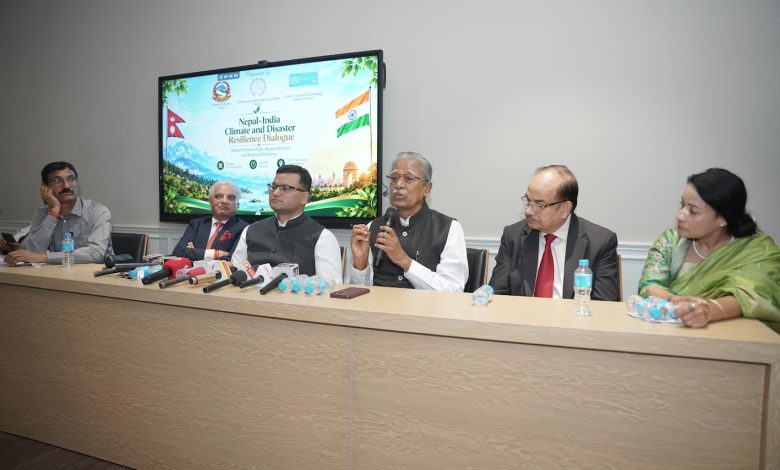
NEW DELHI: Nepal’s proposal for a trilateral Himalayan Climate Resilience Mechanism involving Nepal, India and China was reflected in discussions at a Nepal–India climate dialogue in New Delhi, where experts called for stronger regional cooperation to address growing climate and disaster risks.
Prime Minister Balendra Shah proposed the mechanism during his address to the 81st session of the United Nations General Assembly on September 24. The proposal calls for cooperation among the three countries in satellite data-sharing, glacial lake monitoring, early-warning systems and disaster response.
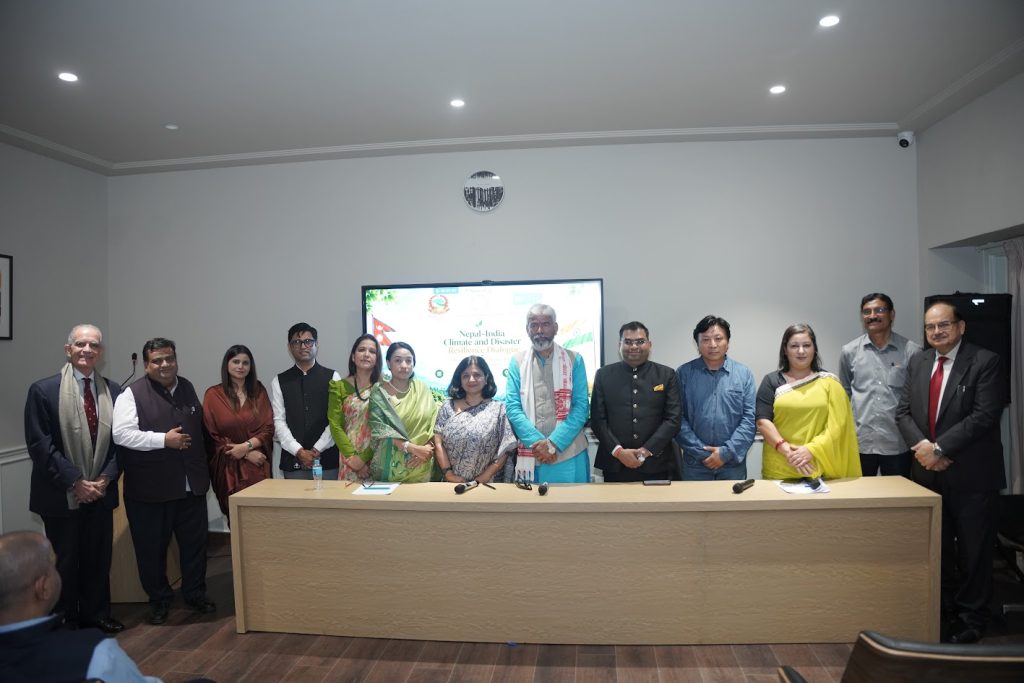
Against this backdrop, the Nepal–India Climate and Disaster Resilience Dialogue was held on October 27 in New Delhi. It was jointly organized by the Embassy of Nepal in India, Initiatives of Media Women (IMW) Nepal and Global Trade & Technology Council India (GTTCI).
Under the theme “Shared Climate Risks, Responsibilities and Regional Resilience,” the dialogue brought together diplomats, academics, environmentalists, disaster-management experts and media professionals.
Shared Rivers, Shared Risks
Dr. Surendra Thapa, Charge d’Affaires of the Embassy of Nepal in India, stressed the need for stronger cooperation between Nepal and India, particularly in sharing climate information and improving early-warning systems.
Dr. Rajendra Singh, a member of India’s National Disaster Management Authority (NDMA), said disasters do not recognize national boundaries. He highlighted the importance of timely warnings and coordinated preparedness along shared rivers such as the Koshi and Gandak.
Former Director of India’s Central Bureau of Investigation (CBI), Dr. D. R. Kaarthikeyan, spoke about glacier loss, rising sea levels and environmental degradation, calling for greater public awareness and responsibility towards nature.
Development and Environmental Protection
A panel featuring environmental activist and Padma Shri awardee Umashankar Pandey, Prof. Dr. Sangeeta Thapliyal of Jawaharlal Nehru University’s Centre for Inner Asian Studies, and policy professional Anand Verma discussed development and environmental challenges in the Himalayan region.
The speakers raised concerns about poorly planned roads, hydropower projects and tourism infrastructure in vulnerable mountain areas. They also stressed the importance of involving local communities in environmental protection and disaster preparedness.
Communities and Media in Focus
Ngawang Rinchen Wacher of Himalayan Glacier Waterkeeper shared experiences of major floods in the Himalayan region, highlighting the importance of responsible construction, protecting natural water channels and involving local communities in environmental conservation.
He also encouraged media professionals to raise public awareness about environmental risks, responsible tourism and sustainable practices.
The role of media was also highlighted by Ms. Laxmi Bhandari, President of IMW Nepal. She said coverage of disasters should continue beyond the immediate emergency, drawing attention to families who lose their homes and livelihoods and continue to face difficulties during recovery.
She stressed the importance of accurate reporting and keeping the concerns of affected communities visible.
Beyond Borders: Putting Nepal’s Proposal into Perspective
The discussions also echoed Nepal’s proposal for a Himalayan Climate Resilience Mechanism, with participants pointing to the need for better sharing of climate data, glacier monitoring, joint research and coordinated early-warning systems among countries in the region.
The program also highlighted the role of regional institutions such as the International Centre for Integrated Mountain Development (ICIMOD) in supporting scientific research and cooperation.
The dialogue highlighted the need to turn regional commitments into practical action, particularly in protecting communities exposed to floods, landslides and other climate-related hazards.
Speakers stressed that stronger cross-border coordination, safer infrastructure and community preparedness would be essential to reducing future risks.


Comments